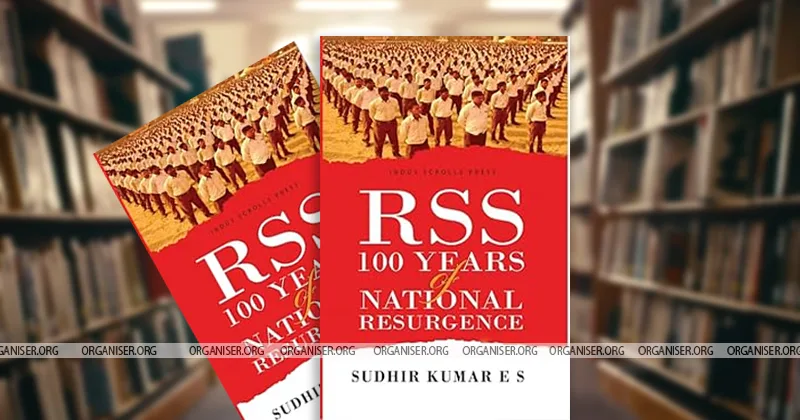
“RSS: 100 Years of National Resurgence” is a scholarly yet accessible historical account of the Rashtriya Swayamsevak Sangh (RSS), the world’s largest cultural movement. Written by Sudhir Kumar E S (Sudhir Neerattupuram), a former full-time RSS Pracharak with extensive insights into the organisation, the book provides a balanced and detailed exploration of the RSS’s evolution, philosophy, and its profound impact on India’s political and social landscape over the past century. The book, published by Indus Scrolls Press (New Delhi), offers readers a rare opportunity to understand the RSS not through ideological lenses but through factual historical analysis.
Introduction: A Balanced Historical Account
Sudhir Kumar’s book arrives at a crucial time as the RSS stands on the cusp of its centenary in 2025. The Sangh has grown from a small, local organisation founded by Dr Keshav Baliram Hedgewar in 1925 into a global movement that has shaped India’s identity. Despite its tremendous growth, the RSS has often been a subject of polarised opinions, with critics and supporters alike offering divergent narratives. Sudhir’s work seeks to bridge this divide, presenting an unbiased account based on rigorous research and firsthand experience as an RSS Pracharak.
Through 21 meticulously researched chapters, Sudhir delves into the genesis of the RSS, its ideological evolution, leadership transitions, organisational structure, and its often-misunderstood role in India’s freedom struggle and post-independence politics. The book seeks to provide clarity, countering misconceptions and offering an informed perspective on the RSS’s contributions to the socio-political fabric of India.
The RSS Philosophy: Vision of National Resurgence
At the heart of the book is the exploration of RSS’s core ideology—spiritual nationalism. Sudhir articulates how the organisation’s foundational principles of discipline, service, and national reawakening resonate through its various initiatives. The author emphasises that RSS is more than just a social organisation; it is a movement that seeks to revive India’s civilizational ethos, with a focus on spiritual and cultural nationalism.
The chapters dedicated to the RSS prayer, worldview, and leadership offer insights into how the organisation has shaped its identity through philosophical underpinnings that are rooted in India’s ancient traditions. Sudhir highlights the transformation of the RSS under the leadership of figures like Dr Keshav Baliram Hedgewar, Madhav Sadashiv Golwalkar, Balasaheb Deoras, Prof. Rajendra Singh, K S Sudharsan and Dr Mohan Bhagwat, each of whom brought unique perspectives and strategies to the organisation.
Leadership and Evolution: From Dr Hedgewar to Dr Mohan Bhagwat
A significant strength of the book lies in its comprehensive coverage of the RSS leadership. Through detailed examinations of prominent leaders such as Dr Hedgewar, M.S. Golwalkar, and the current Sarsanghchalak, Dr Mohan Bhagwat, Sudhir traces how their leadership has shaped the organisation’s growth and direction. The author also provides context on their personal philosophies, leadership styles, and their responses to key historical events, such as the partition of India and the emergency period.
The book gives special attention to the evolving political landscape of India, including the RSS’s interactions with the Indian National Congress and left-wing movements. Sudhir makes a compelling case that the RSS’s growth and sustained influence are due not only to its ideological coherence but also to its ability to adapt to changing political realities, maintaining its core principles while engaging with contemporary issues.
Social Impact and Interventions: The RSS in Action
In addition to its ideological and political roles, the RSS is also known for its social initiatives. Sudhir meticulously outlines the Sangh’s community service activities, from disaster relief operations to educational programs and rural development. This section emphasises how the RSS’s work at the grassroots level has helped it build a strong, loyal network of volunteers and supporters.
The author highlights lesser-known facets of the organisation’s social interventions, showcasing how its efforts to foster discipline, self-reliance, and national pride have made a lasting impact on India’s socio-political fabric. He notes that despite the controversies surrounding the RSS, its unwavering commitment to service and nation-building has earned it a deep-rooted place in the Indian heartland.
Criticism and Controversy: An Honest Reflection
Sudhir does not shy away from addressing the criticisms that the RSS has faced over the years. He provides an honest examination of the controversies surrounding the organisation, particularly its association with religious and political movements. Rather than dismissing such criticisms, he engages with them thoughtfully, presenting the reader with a balanced view that helps contextualise the RSS’s actions and its ideological position in modern India.
While the book acknowledges the polarised opinions about the RSS, it challenges readers to look beyond ideological bias and consider the organisation’s long-term contributions to India’s cultural, political and social life.
Conclusion: A Timely Contribution to Understanding RSS
“RSS: 100 Years of National Resurgence” is a valuable resource for anyone seeking to understand the RSS’s multifaceted role in India’s history and its continuing influence in shaping the nation’s future. Sudhir Kumar’s first-hand experience as an RSS Pracharak, combined with his rigorous research, gives this book a unique authenticity that is rare in contemporary literature on the subject.
The foreword by J. Nandakumar (Pranja Pravah, National Convenor), a senior RSS pracharak, further adds credibility to the book, ensuring that readers get a genuine insight into the organisation’s ethos and history. For those looking for an honest, well-researched, and accessible account of the RSS, this book serves as an essential read.
Final Thoughts: Essential Reading for Understanding RSS
In a time when the RSS continues to play a pivotal role in India’s political and cultural discourse, Sudhir Kumar’s book is an essential addition to the library of anyone interested in understanding the realities behind this complex organisation. Whether you are a supporter, critic, or simply curious, “RSS: 100 Years of National Resurgence” offers a comprehensive and factual account of a movement that has profoundly shaped the modern Indian nation.
Book Details
- Title: RSS: 100 Years of National Resurgence
- Author: Sudhir Kumar E S (Sudhir Neerattupuram)
- Publisher: Indus Scrolls Press, New Delhi
- Price: Rs. 599/- (Discounted Price: Rs. 479/-)
- Pages: 346
- Available at: https://amzn.to/4b83cEZ
This book is an important study for anyone seeking to understand the RSS’s enduring legacy and its role in India’s national resurgence over the past century.