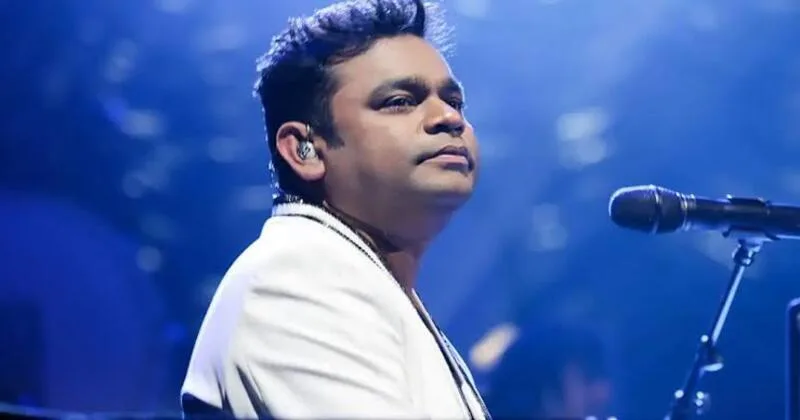
A R Rahman remains one of the most influential figures in global music, yet his career has recently been marked by a series of public debates and controversies. On January 14, 2026, during an interview with the BBC Asian Network at Birmingham Symphony Hall, Rahman suggested that the noticeable slowdown in his Bollywood projects over the last eight years might be linked to shifting power dynamics or a subtle “communal thing.” While he clarified that he had never faced direct discrimination, the remark was widely interpreted as an allegation that his Islamic identity had impacted his professional standing, leading to significant online backlash.
In response to the growing criticism, Rahman released a clarification on Instagram on January 16, 2026. He emphasised that his intentions were never to cause hurt and reaffirmed that India remains the soul of his life and musical journey. He pointed toward his current high-profile projects as evidence that his work transcends religious boundaries, insisting that music is a universal language meant to unite rather than divide.
Despite these concerns regarding communal bias, many observers point to Rahman’s current portfolio as a contradiction to the idea of industry-wide marginalisation. He is presently scoring the music for Nitesh Tiwari’s Ramayana, a project considered to be one of the most significant cultural and ideological cinematic undertakings in modern India. By collaborating with legendary composer Hans Zimmer on a film that sits at the very heart of the national zeitgeist, Rahman continues to hold a central position in the most prestigious tiers of the Indian film industry.
A R Rahman is a world-famous Indian composer, singer, and music producer. Born as A. S. Dileep Kumar, he is celebrated for his unique style of mixing traditional Indian classical music with modern, global sounds. He became a household name in India after the success of the 1992 film Roja and has since created music for over 100 films in Hindi, Tamil, and international cinema.
Rahman’s talent has earned him the highest honors in the world of entertainment, including two Oscars for the movie Slumdog Millionaire, as well as Grammy and Golden Globe awards. The Government of India has also recognized his massive contribution to the arts, honouring him with the Padma Shri in 2000 and the Padma Bhushan in 2010.
Early life and the shift in faith
Born on January 6, 1967, in Madras as A.S. Dileep Kumar, the composer was raised in a Tamil Vellalar Hindu family. His father, R.K. Shekhar, was a noted composer. Following his father’s battle with cancer and subsequent death, the family came under the influence of a Sufi saint. Around 1988-89, Dileep Kumar and his family officially embraced Islam, with the composer taking the name A.R. Rahman. Reports suggest that during this transition, Rahman attributed his father’s death to the Hindu deities his father had worshipped, a sentiment that marked a significant departure from his ancestral roots.
Allegations of professional communalism and “communal bias”
On January 14, 2026, speaking from Birmingham Symphony Hall, Rahman sparked a nationwide debate during an interview with the BBC Asian Network. He suggested that the slowdown in his Bollywood career over the past eight years was due to a “power shift” involving “non-creative” people, adding, “It might be a communal thing also.” This remark, seen by many as an attempt to play the victim card based on his religious identity, drew heavy criticism. Critics pointed out that the industry has consistently lauded him, and his current involvement in Nitesh Tiwari’s Ramayana—a massive project centered on Hindu ethos—contradicts his claims of being marginalized for his faith.
Criticism of Hindu symbolism in “Chhaava”
In the same January 2026 interview, Rahman took aim at the film Chhaava, a historical drama about Chhatrapati Sambhaji Maharaj for which he himself composed the music. Rahman described the film as “divisive,” alleging that it “cashed in on divisiveness through symbolism targeting a community.” His public distancing from a film celebrating a legendary Hindu warrior—while having accepted the professional fee for it—led to accusations of hypocrisy and a perceived bias against projects that highlight Hindu bravery and history.
“This is Not My India”: The Gauri Lankesh remark
In 2017, Rahman faced significant backlash for his comment, “This is not my India,” made in response to the murder of journalist Gauri Lankesh. Critics argued that such blanket statements from a global icon serve to tarnish the country’s image on the international stage. While Rahman claimed he wanted a “soft-hearted” country, many viewed his reaction as a selective expression of grief that overlooked broader national perspectives.
Anti-Hindi stance and the stage walk-off
Rahman’s perceived linguistic bias became a major talking point in May 2021 during a promotional event for his film 99 Songs. When the anchor switched from Tamil to Hindi to address lead actor Ehan Bhatt, Rahman reacted with a sharp “Hindi?” and walked off the stage. Though he later dismissed the incident as a joke, the moment was widely condemned as a display of anti-Hindi sentiment and regional chauvinism, further alienating him from a large section of the Indian audience.
Intolerance toward Hindu religious symbols
One of the most serious allegations against Rahman involves religious intolerance within his own home. The late Tamil poet and lyricist Piraisoodan, who played a key role in Rahman’s early career, claimed that he was treated with intolerance at Rahman’s residence. Piraisoodan alleged that he was asked to remove his Vibuthi (sacred ash) and Kumkum—essential Hindu religious markings—before entering. Piraisoodan’s refusal to comply highlighted a perceived lack of respect for Hindu traditions within the composer’s inner circle.
Refusal to sing “Vande Mataram”
Despite his fame being bolstered by the song “Maa Tujhe Salaam,” Rahman has faced questions regarding his personal patriotism. Journalist Swati Chaturvedi once claimed that Rahman declined to sing Vande Mataram or Maa Tujhe Salaam during an interview, an incident that deeply hurt her. This refusal triggered a massive online debate, with many questioning whether the composer’s personal religious beliefs prevent him from honoring the national song, leading to persistent doubts about his ideological alignment with the nation’s cultural pillars.
While A.R. Rahman remains an undisputed titan of the music world, the recurring patterns of controversy suggest a complex relationship with the very industry and country that elevated him to stardom. Whether it is his remarks on “communalism” in Bollywood, his perceived stance against the Hindi language, or allegations of intolerance toward traditional Hindu symbols, these incidents have created a visible divide in public perception. As he takes on monumental projects like Ramayana, the contrast between his professional assignments and his personal statements continues to be a subject of intense debate. Ultimately, Rahman’s legacy appears to be a dual narrative: one of a brilliant artist and another of a public figure whose ideological leanings often find him at odds with the cultural heartbeat of the nation.