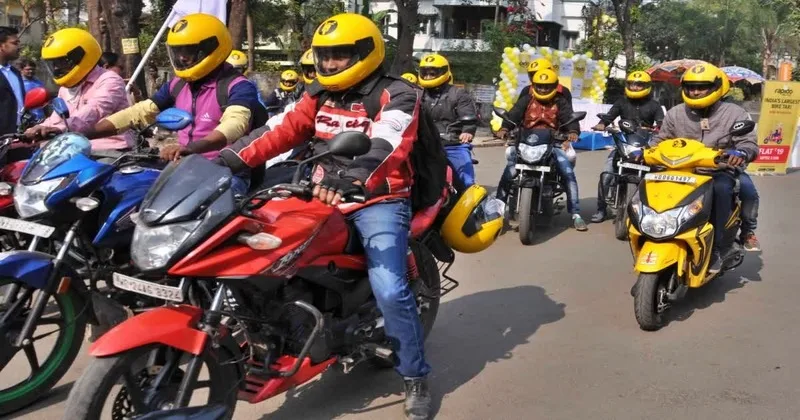
BENGALURU: In a significant setback to the Karnataka government, the High Court has set aside the earlier single-judge bench order that had effectively upheld the state’s ban on bike taxi services. The division bench ruled that two-wheelers can be permitted to operate as transport vehicles (bike taxis) subject to conditions, even in the absence of specific state-framed rules, thereby reopening the door for bike taxi operations in the state.
The verdict was delivered by a bench comprising Chief Justice Vibhu Bakhru and Justice C.M. Joshi, which allowed the appeals filed by aggregators such as Ola and Uber, along with bike taxi owners. These appeals had challenged the single-judge order that supported the government’s stand that bike taxis could not operate unless specific rules were notified.
By overturning the earlier ruling, the High Court has clearly indicated that the lack of dedicated regulations cannot be cited as a blanket reason to deny permission for bike taxis. The bench held that authorities must consider applications seeking permission to use two-wheelers as transport or contract carriage vehicles under the existing legal framework.
The court directed that bike owners or aggregators intending to run bike taxi services must submit applications to the transport department. The state government, in turn, has been instructed to consider such applications and impose appropriate conditions under the law, instead of outrightly rejecting them. This direction is being viewed as a direct blow to the state government’s policy decision to keep bike taxi services suspended.
Importantly, the bench observed that authorities cannot deny permission solely on the ground that specific rules have not been framed or are pending consideration. It clarified that the Regional Transport Authority has the power under Section 74(2) of the Motor Vehicles Act to impose conditions it deems necessary while granting permits. Aggregators have also been given the liberty to file fresh applications, which must be examined in light of the court’s observations and the prevailing statutory framework.
During earlier hearings, counsels representing bike taxi operators had argued that other states such as Tamil Nadu and Kerala, which initially imposed bans, later allowed bike taxi services after framing guidelines. They pointed out that Bengaluru, despite having multiple metro lines, lacks last-mile connectivity, making bike taxis a practical and efficient solution. Reference was also made to global cities, including those in Japan, where multi-line metro networks coexist with robust last-mile connectivity services.
Another key argument presented to the court concerned traffic congestion. Bike taxi proponents claimed that the ban had contributed to an 18 per cent increase in traffic congestion in Bengaluru. They also alleged that opposition from auto-rickshaw unions played a role in restricting the service, under the pretext of safety concerns, particularly for women.
Women commuters who had filed an intervention application strongly supported the continuation of bike taxi services. Their counsel argued that bike taxis are safe, affordable, and convenient for daily travel, especially for working women. They contended that the government had imposed the ban, citing women’s safety, without consulting women users themselves. The counsel further pointed out that several independent national-level reports have recommended bike taxi services as a cost-effective and secure mode of urban transport.