Integral Humanism more relevant for present and future
September 12, 2026
  • Read Ecopy
  • Circulation
  • Advertise
  • Careers
  • About Us
  • Contact Us
Android AppiPhone AppArattai
Organiser
  • ‌
  • Bharat
    • Assam
    • Bihar
    • Chhattisgarh
    • Jharkhand
    • Maharashtra
    • View All States
  • World
    • Asia
    • Europe
    • North America
    • South America
    • Africa
    • Australia
  • Editorial
  • International
  • Opinion
  • RSS @ 100
  • More
    • World Hindu Congress 2026
    • Op Sindoor
    • Analysis
    • Sports
    • Defence
    • Politics
    • Business
    • Economy
    • Culture
    • Special Report
    • Sci & Tech
    • Entertainment
    • G20
    • Azadi Ka Amrit Mahotsav
    • Vocal4Local
    • Web Stories
    • Education
    • Employment
    • Books
    • Interviews
    • Travel
    • Law
    • Health
    • Obituary
  • Subscribe
    • Subscribe Print Edition
    • Subscribe Ecopy
    • Read Ecopy
  • ‌
  • Bharat
    • Assam
    • Bihar
    • Chhattisgarh
    • Jharkhand
    • Maharashtra
    • View All States
  • World
    • Asia
    • Europe
    • North America
    • South America
    • Africa
    • Australia
  • Editorial
  • International
  • Opinion
  • RSS @ 100
  • More
    • World Hindu Congress 2026
    • Op Sindoor
    • Analysis
    • Sports
    • Defence
    • Politics
    • Business
    • Economy
    • Culture
    • Special Report
    • Sci & Tech
    • Entertainment
    • G20
    • Azadi Ka Amrit Mahotsav
    • Vocal4Local
    • Web Stories
    • Education
    • Employment
    • Books
    • Interviews
    • Travel
    • Law
    • Health
    • Obituary
  • Subscribe
    • Subscribe Print Edition
    • Subscribe Ecopy
    • Read Ecopy
Organiser
  • Home
  • Bharat
  • World
  • Operation Sindoor
  • Editorial
  • Analysis
  • Opinion
  • Culture
  • Defence
  • International Edition
  • RSS @ 100
  • Magazine
  • Read Ecopy
Home Bharat

“Integral Humanism more relevant for present and future, answers beyond political power,” says BL Santosh in Vijayawada

Addressing a gathering at the re-enactment of the historic 1965 Bharatiya Jana Sangh national conference, he said Ekatmata Manava Darshan, propagated by Pandit Deendayal Upadhyaya, was never introduced as a theoretical or debating concept, but consciously evolved into a principal guiding philosophy after rigorous intellectual engagement

Kunti SurenderKunti Surender
Jan 23, 2026, 07:00 pm IST
inBharat, Telangana
Follow on Google News
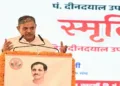
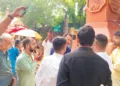
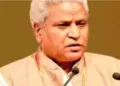
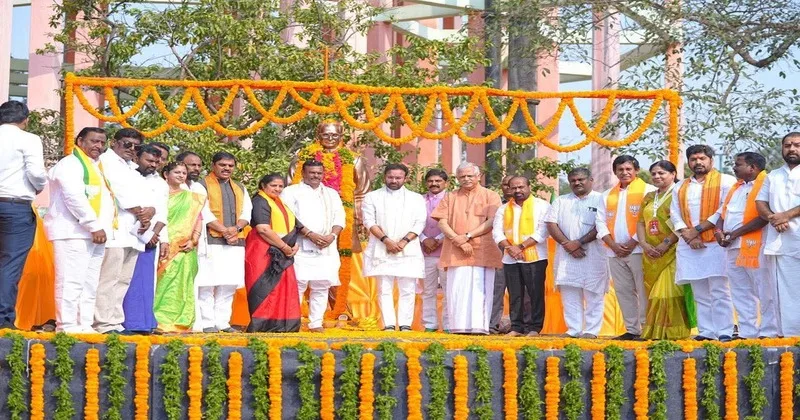
BJP National General Secretary (Organisation) BL Santosh along with other dignitaries at the re-enactment of the historic 1965 Bharatiya Jana Sangh national conference

BJP National General Secretary (Organisation) BL Santosh along with other dignitaries at the re-enactment of the historic 1965 Bharatiya Jana Sangh national conference

Facebook
Twitter
WhatsAppTelegramEmail

Vijayawada, on January 22, witnessed a renewed articulation of Integral Humanism as a guiding philosophy for both present and future governance, with BJP National General Secretary (Organisation) BL Santosh asserting that the doctrine remains deeply relevant, even though it was originally propagated when the party was not in power.

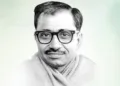
Addressing a gathering at the re-enactment of the historic 1965 Bharatiya Jana Sangh national conference, BL Santosh said Ekatmata Manava Darshan, propagated by Deendayal Upadhyaya, was never introduced as a theoretical or debating concept, but was consciously evolved into a guiding principle for the political party after rigorous intellectual engagement.

He said that during the 12th National Conference of the Bharatiya Jana Sangh, held from January 23 to 25, 1965, Ekatmata Manava Darshan was adopted as the party’s core principle under the leadership of Pandit Bachyara Vyas, firmly laying the ideological foundation of the organisation in Vijayawada.

Santosh underlined that Integral Humanism is not merely a political idea but a way of life intrinsic to Bharat’s civilisational ethos. He clarified that the philosophy did not invent anything new but explained eternal ideas in the context of contemporary times, much as the Bhagavad Gita has been interpreted across generations since Bhagwan Krishna, each time relating it to the realities of the age.

Also Read: “Major success for Naxal-free campaign”: Union Home Minister Amit Shah on Jharkhand encounter

Tracing its evolution, he said the ideas were first articulated in 1964 at an RSS camp, discussed extensively in 1965, and formally consolidated by 1966. He noted that while many ancient civilisations, such as the Mayan and Persian, have disappeared over time, only two civilisations — China and the Sanatana civilisation — have shown unbroken continuity for over 5,000 years. Bharat’s survival, he said, was possible because it was sustained by a lived societal lifestyle rather than by political systems alone.

Calling for a rejection of colonial and slavery-era mentalities, Santosh echoed Prime Minister Narendra Modi’s repeated appeal to move beyond colonial mindsets. He said Bharat was never a blind follower of the West and cited festivals such as Makara Sankranti and Deepavali as examples of traditions rooted in scientific and cultural reasoning, unlike the blind adoption of January 1 as New Year, which has no civilisational relevance to Bharat.
Reflecting on governance, Santosh said Bharat historically functioned even without formal kings, police, or governments, as society was regulated by values rather than force. He cited the example of a village in Gujarat where, for the last 137 years, there have been no police complaints, and society has been guided purely by dharma. He explained that dharma encompassed all aspects of life — personal, social, economic, and political — and this holistic worldview was later articulated as Ekatmata Manava Darshan.

Addressing its contemporary relevance, Santosh pointed out that while the philosophy was adopted when the party lacked political power, today it is practised by a party that has one Prime Minister, 18 Chief Ministers, over 1,800 MLAs, and around 400 MPs committed to it. He said this transition underscores the enduring relevance of the philosophy.

He further referred to Pandit Deendayal Upadhyaya’s framework of interconnectedness between the individual, society, nature, and the supreme reality, stressing that development must be anchored in moral accountability. Citing Mahatma Gandhi, he contrasted Bharat’s ethical view of power with Western power politics driven by unchecked ambition.

Santosh highlighted Antyodaya as the evolution of governance thought — from Rama Rajya to Sarvodaya and finally to Antyodaya — focusing on the last person in society. He cited data from UN agencies indicating that nearly 25 crore people have been lifted out of extreme poverty and said initiatives such as Swachh Bharat have restored dignity across social classes. Environmental indicators, including the increase in fish species in the Ganga, were cited as outcomes of policy aligned with this worldview.

In conclusion, Santosh said that resolutions and ideologies hold value only when translated into social practice. He outlined key commitments, including making India developed by 2047, free of poverty, decolonising the national mindset, and strengthening civic responsibility. He stressed that while the party is in power today, the task of embedding Integral Humanism in everyday life remains a work in progress and requires collective participation.
Topics: Rama RajyaPM Narendra ModiIntegral HumanismBL SantoshDeendayal Upadhyaya12th National Conference of the Bharatiya Jana SanghEkatmata Manava Darshan
Share
Tweet
SendShareSend
✮ Subscribe Organiser YouTube Channel. ✮
✮ Join Organiser's WhatsApp channel for Nationalist views beyond the news. ✮
Previous News

Ghar Wapsi in Chhattisgarh: More than 200 people return to Sanatan Dharma

Next News

Ram Mandir: A landmark of a blessed era!

Related News

RSS Sarsanghchalak Dr Mohan Bhagwat

RSS at 100: Dr Mohan Bhagwat’s global dialogue highlights Bharat’s civilisational message to the world

"SRCC Alumni Are OGs": PM Narendra Modi Leverages Youth Lingo

‘OGs’ and ‘Dhurandhar’: PM Modi brings Gen Z lingo to SRCC centenary celebrations, contrasts pre-2014 era

PM Narendra Modi addressing the gathering at SRCC

“Homeopathic pill exposed Dimagi Naxals”: PM Modi addresses SRCC centenary celebrations

PM Narendra Modi addressing the gathering at SRCC

From ‘Glass Full’ vision to centenary milestone: PM Narendra Modi returns to SRCC 13 years later

PM Modi hails SRCC

“Nurturing generations of leaders…”: PM Modi hails Shri Ram College of Commerce ahead of centenary event

(Left) PM Narendra Modi (Right) Russian President Vladimir Putin

“Time to move away from endless war to end of war”: PM Modi tells Russian Prez Putin on sidelines of SCO summit

Load More

Latest News

‘Samuel Could Never Do This’: Mother Rejects Blasphemy Allegations Against Son in Lahore

Pakistan Blasphemy Case: Mother of Christian man Samuel Arif claims false implication, seeks justice

Prime Minister Narendra Modi, along with Chinese President Xi Jinping, Russian President Vladimir Putin and other world leaders, poses for a picture at a joint tree plantation initiative during the BRICS Summit

BRICS Summit 2026: India as the voice of Global South, shared responsibilities & scripting inclusive world order

Chinese President Xi Jinping and Prime Minister Narendra Modi

BRICS Summit 2026: PM Modi hold talks with President Xi; Stresses border peace & tranquility as key to India-China ties

Tamil Nadu: Hindu Munnani flags TVK govt’s restrictions on Vinayaka pandals, barring women, children from processions

Lashkar-e-Toiba founder Hafiz Saeed. (File image)

J&K Terror Case: Hafiz Saeed gets second NBW; NIA says he operates from Pakistan

Pakistan’s push for a place in the expanding BRICS bloc faces a difficult diplomatic road ahead, despite backing from key partners.

Pakistan knocking BRICS Door: Why Islamabad’s 2023 membership bid remains elusive despite Chinese and Russian support

BRICS Bazaar

BRICS Bazaar: Global traditions and cultural diplomacy take center stage at New Delhi’s National Crafts Museum

(From Left to Right): Russian President Vladimir Putin, PM Modi & Chinese President Xi Jinping

BRICS New Delhi Declaration | Key Takeaways: Cross-border payment, counter-terrorism to tech ties & supply resilience

New Delhi, Sep 12 (ANI): Prime Minister Narendra Modi, along with Chinese President Xi Jinping, Russian President Vladimir Putin and other world leaders, poses for a picture at a joint tree plantation initiative during the BRICS Summit at Bharat Mandapam, in New Delhi on Saturday. (Narendra Modi Photo Gallery/ANI Photo)

BRICS Summit 2026: Multilateralism through strategic partnership; Charting the roadmap for future

Kerala Governor Rajendra Vishwanath Arlekar inaugurates the silver jubilee celebrations of Mar Baselios College of Engineering and Technology

Jantar Mantar protests highlight erosion of civility; character formation vital for students: Keralam Governor Arlekar

Load More
  • Privacy
  • Terms
  • Cookie Policy
  • Refund and Cancellation
  • Delivery and Shipping

© Bharat Prakashan (Delhi) Limited.
Tech-enabled by Ananthapuri Technologies

  • Home
  • Search Organiser
  • Bharat
    • Assam
    • Bihar
    • Chhattisgarh
    • Jharkhand
    • Maharashtra
    • View All States
  • World
    • Asia
    • Africa
    • North America
    • South America
    • Europe
    • Australia
  • Editorial
  • Operation Sindoor
  • Opinion
  • Analysis
  • Defence
  • Culture
  • Sports
  • Business
  • RSS @ 100
  • Entertainment
  • More ..
    • Sci & Tech
    • Vocal4Local
    • Special Report
    • Education
    • Employment
    • Books
    • Interviews
    • Travel
    • Health
    • Politics
    • Law
    • Economy
    • Obituary
  • Subscribe Magazine
  • Read Ecopy
  • Advertise
  • Circulation
  • Careers
  • About Us
  • Contact Us
  • Policies & Terms
    • Privacy Policy
    • Cookie Policy
    • Refund and Cancellation
    • Terms of Use

© Bharat Prakashan (Delhi) Limited.
Tech-enabled by Ananthapuri Technologies