BHUBANESWAR: Thirteen members of three families in Odisha’s Nabarangpur district have returned to Santan Dharma after earlier converting to Christianity under the influence of missionaries. The families stated that they realised their mistake over time and voluntarily returned to their ancestral faith through a formal ghar wapsi (homecoming) ceremony.
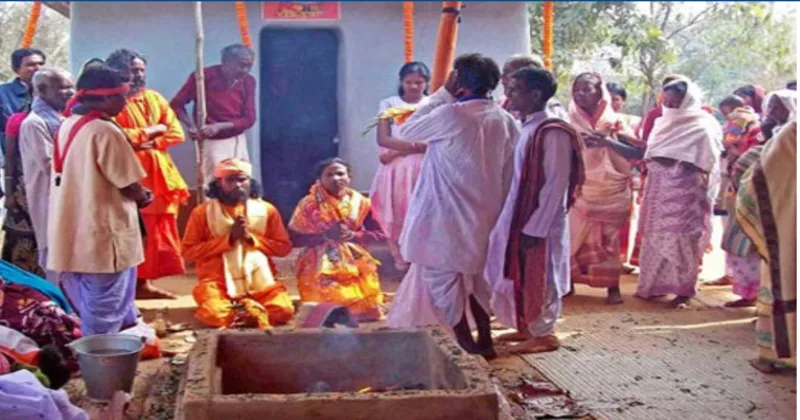
According to available information, the individuals who reconverted belong to three families from Kamata and Amalabhata villages under the Tentulikhunti block of Nabarangpur district. The return to Hinduism was carried out willingly and formally through a religious ritual conducted at Tapovan Ashram. The Ghar Wapsi ceremony was organised in accordance with traditional Vedic rites and rituals.
Sources said that Dilip Kumar Garda, from Kamata village, returned to Santan Dharma along with five members of his family. From Amalabhata village, six members of Gagan Bihari Garda’s family and two members of Praveen Kumar Garda’s family also reconverted. All the families participated together in the religious yagna and symbolically reaffirmed their faith by offering prayers at the feet of Bhagwan Jagannath Mahaprabhu, marking their return to Sanatan Dharma.
Several members of the local community were present on the occasion, including Garda community leader Prahlad Garad, Subhash Harijan, Loknath Harijan, Laxman Khura, Din Harijan and Trilochan Bisoyi. The religious ceremonies and Vedic rituals were conducted by Pujari Sarveshwar Tripathi.
Speaking after the Ghar Wapsi ceremony, members of the reconverted families said that a few years ago they had been influenced by what they described as misleading assurances made by Christian missionaries, which led them to distance themselves from the culture and traditions of their ancestors. They said that after conversion, their families gradually drifted away from traditional festivals, customs and social practices, and began following what they referred to as an alien culture. This, they said, caused a sense of regret and inner conflict.
The families further stated that, after discussions with local Vishva Hindu Parishad workers, they reconsidered their decision and chose to return to their ancestral faith. Following the completion of the yagna and rituals, all the members expressed happiness and said they were committed to leading disciplined, value-based and culturally rooted lives in the future.
The Ghar Wapsi ceremony concluded peacefully in a religious and harmonious atmosphere, with participation and support from local residents.
Meanwhile, local activists working in the area alleged that Christian missionaries, backed by foreign funding, are attempting to disconnect people from their ancestral culture and traditions. They claimed that religious conversions lead to social disharmony and unnecessary tensions within communities, and accused foreign forces of attempting to weaken Indian society through such activities.
They further emphasised the need for strict enforcement of laws against illegal religious conversions. While noting that Odisha already has legal provisions to prevent unlawful conversions, the activists alleged that implementation remains weak. They called on the government to enforce existing laws more rigorously to prevent conversions carried out through inducement or coercion.