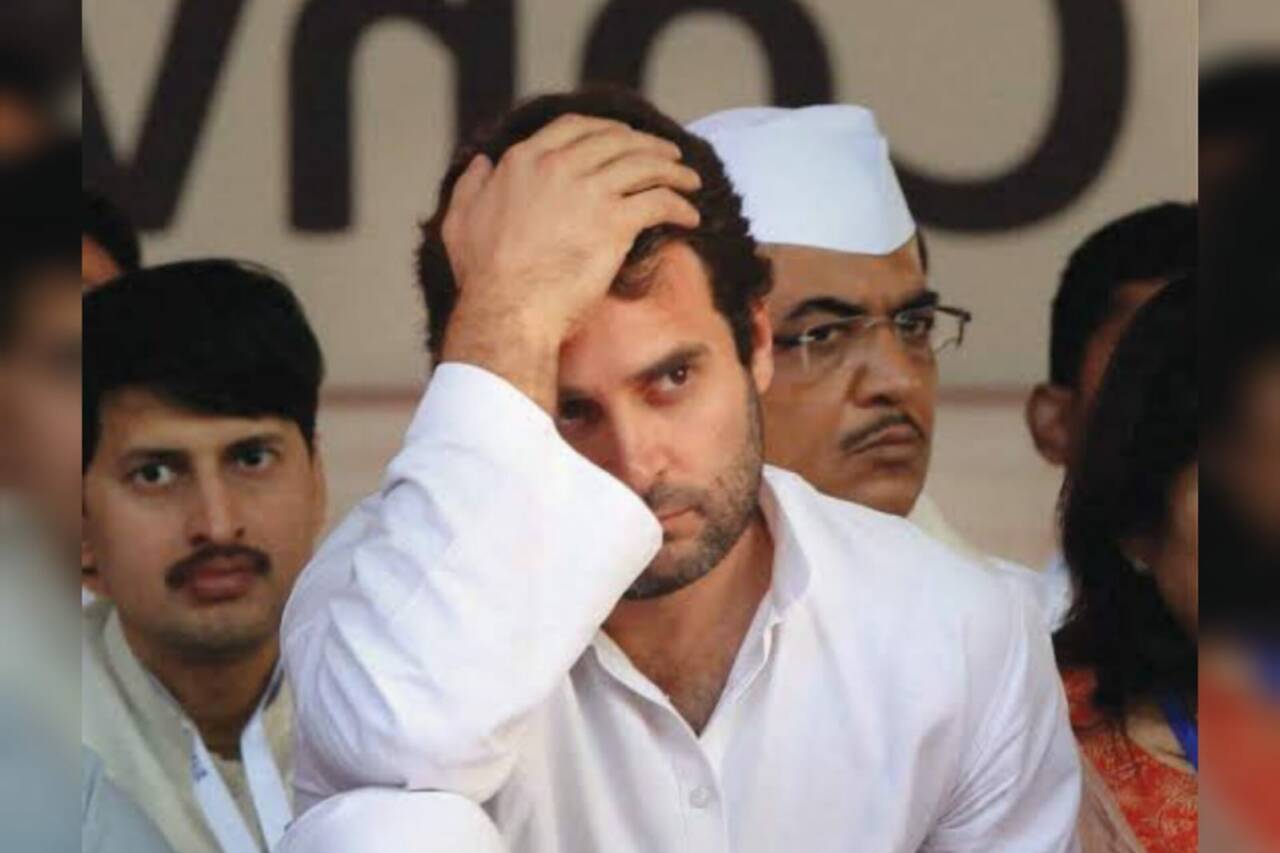
For decades, the Congress party survived and often thrived on the glue of coalition politics. From the UPA’s carefully stitched alliances to tactical state-level adjustments, pragmatism defined its electoral playbook. Today, however, the party finds itself at a crossroads. Under Rahul Gandhi’s leadership as Leader of the Opposition, the Congress is increasingly questioning whether alliances have diluted its identity rather than strengthened it. The slogan guiding this rethink is borrowed from Tagore: Ekla chalo re – walk alone.
This shift is not merely rhetorical. It is now shaping electoral decisions, alliance negotiations, and internal debates within the party. Rahul Gandhi has made it clear to colleagues that he would rather preserve the Congress’s ideological core than win elections through what he sees as humiliating compromises. At a rally, he summed up this philosophy bluntly: “We will not compromise on our principles, even if we are wiped out.”
Direct rejection of Sonia Gandhi’s coalition model
At the heart of this debate lies a generational and strategic contrast between Rahul Gandhi and his mother, Sonia Gandhi. Sonia, a seasoned political tactician, understood early, especially after the BJP’s rise in the late 1990s, that the Congress could no longer dominate Indian politics on its own. Her decision to align with regional heavyweights like the DMK in 2004 was not born of weakness, but realism. That alliance helped keep the BJP out of power and allowed the Congress to lead the government while retaining national relevance.
Rahul Gandhi, however, believes that this very model has eroded the Congress from within. According to his assessment, playing junior partner to assertive regional parties has reduced the Congress to a shadow of its former self, especially in states where allies dictate terms. In his view, coalition politics may deliver short-term power, but it hollows out the organisation in the long run.
The Brihanmumbai Municipal Corporation (BMC) elections became, in many ways, a testing ground for this new thinking. By largely avoiding deep alliance entanglements, the Congress attempted to assess whether it could still stand independently in an urban, high-stakes political contest.
The outcome was sobering. The party failed to make a significant impact, and the results exposed internal fissures as well as organisational weaknesses. While leaders publicly blamed electronic voting machines and external factors, privately many conceded that the Congress struggled to define a clear narrative or voter base.
Yet, for Rahul Gandhi’s camp, the BMC experiment was less about immediate victory and more about long-term recalibration. Aligning too closely with the Thackerays, they argue, could have damaged the Congress’s national positioning, especially ahead of elections in Tamil Nadu and Kerala, where regional sensitivities run high.
Contradictions in alliance choices
Critics within the party, however, point to inconsistencies in this approach. If avoiding alliances was the principle, why did the Congress align with Uddhav Thackeray’s faction in Pune while steering clear of similar arrangements elsewhere? The selective application of the “go-it-alone” philosophy has left many party workers confused.
Some argue that tactical compulsions still dictate decisions, undermining the claim that the Congress is pursuing a clean ideological break from coalition politics. Others believe the party is caught between two worlds, neither fully independent nor comfortably allied.
Nowhere is this tension more visible than in Tamil Nadu. The Congress’s long-standing alliance with the DMK has been both a lifeline and a constraint. The DMK delivers seats and power, but at the cost of Congress visibility and bargaining power.
Rahul Gandhi has reportedly asked the Tamil Nadu unit to reconsider over-dependence on the DMK. Seat-sharing negotiations have become tougher, with the Congress unwilling to accept a token presence. The emergence of actor-politician Vijay and his party TVK is being viewed by the Congress leadership not just as a potential ally, but as leverage, a tool to pressure the DMK into offering better terms.
The upcoming round of top-level meetings on Tamil Nadu is therefore crucial. On the table are not just seat numbers, but questions of cabinet representation and political dignity. The DMK is said to be demanding a substantial share of seats and at least six ministers if the alliance forms the government – terms the Congress is reluctant to accept without pushback.
Internal resistance and fear of irrelevance
Within the Congress, Rahul Gandhi’s strategy has sparked unease. Several senior leaders argue that abandoning reliable allies like the DMK could be politically suicidal. They warn that ideological purity means little if the party is locked out of power indefinitely.
There is also a growing sentiment that the Congress needs “lal batti,” actual positions of power to revive cadre morale and organisational strength. Without electoral victories, even the most principled stance risks appearing hollow.
This concern is amplified by past experiences. In Delhi and Punjab, where the Congress chose to confront the Aam Aadmi Party head-on rather than seek accommodation, the results were disastrous. The party was wiped out in Delhi and severely weakened in Punjab, raising doubts about the viability of solo contests in bipolar or regionalised political landscapes.
The BMC results also highlighted a deeper structural problem: erosion of the Congress’s traditional vote banks. The strong showing of the AIMIM in municipal elections indicates that Muslim voters, once a reliable Congress constituency are drifting towards more assertive alternatives like AIMIM and, in some pockets, the Samajwadi Party.
This trend has implications far beyond Maharashtra. If the Congress continues to lose minority support in urban and semi-urban areas, its claim to being a pan-Indian centrist force weakens further.
Idealism versus electoral reality
Rahul Gandhi’s Ekla chalo re moment is rooted in a genuine desire to reclaim the Congress’s ideological identity. After years of being perceived as a subordinate partner, the party wants to rediscover its voice. But Indian politics is unforgiving to parties that mistake symbolism for strategy.
Sonia Gandhi understood that alliances were not a sign of surrender, but survival. Her 2004 gamble with the DMK and other regional forces kept the Congress relevant in an era of BJP dominance. The question now is whether Rahul Gandhi’s rejection of that model represents visionary leadership or political overreach.
From jalebi in North India to litti chokha in Bihar and rasmalai in Maharashtra, the Congress’s electoral journey in recent years has been more bitter than sweet. The road ahead, under Rahul Gandhi’s leadership, promises clarity of purpose but also significant risk.
In politics, staying in the game often matters as much as rewriting its rules. Whether the Congress can afford to walk alone in a landscape dominated by strong regional players and an entrenched BJP remains the defining question of its future.