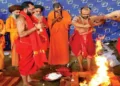
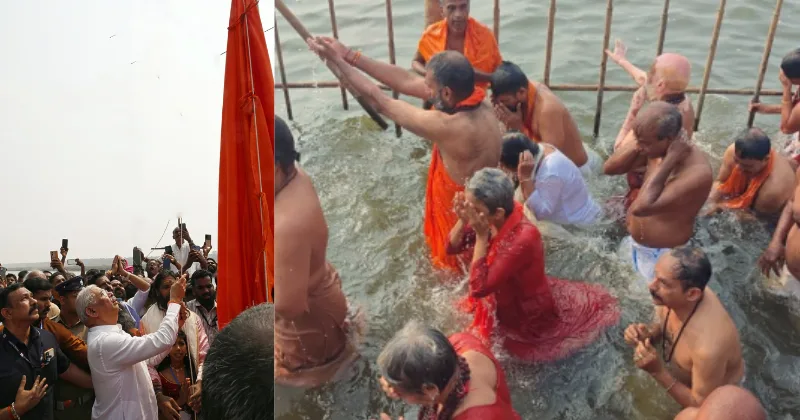
Kerala’s Kumbh Mela, the Tirunavaya Mahamagha Kumbhmela, began on January 19 with Kerala Governor Rajendra Viswanath Arlekar inaugurating the once-in-twelve-years Maha Festival by hoisting the Dharma (saffron) flag and lighting the traditional lamp on the banks of the Nila, also known as the Bharatapuzha river, at Tirunavaya in Malappuram district.
In his inaugural address, the Governor said the Kumbhmela reminisces the return of Sree Ram to Ayodhya. The ritual festivities are scheduled to culminate on February 3.
The Dhwaja Ghosha Yatra, which began from the Kalari at Kenthott il Periyedath in Aliparamba Malamel, reached the precincts of the Tirunavaya Navamukunda Temple, where the Governor performed the Dhwaja Rohanam.
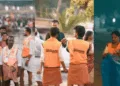
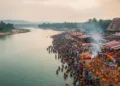
At the Maha Magha Mahotsavam being held at Tirunavaya, the Magha Snana, accompanied by Vedic chants, mantras and collective japa resonances, commenced at 8.30 am on January 19 at the Trimurti Sangam Ghat. Thousands participated in the holy dip along with Mahamandaleshwar Swami Anandavanam Bharati Maharaj. Vedic chanting was led by Gayatri Gurukulam under the leadership of Acharyan Arun Prabhakarji.
The Hon’ble Governor of Kerala, Shri Rajendra Vishwanath Arlekar, participated as the Chief Guest at the Dharmadhwajarohanam ceremony held as part of the Mahamagha Mahotsavam, known as the Kumbh Mela of Kerala, at Thirunavaya in Malappuram district. pic.twitter.com/wl2uXZAd48
— Kerala Governor (@KeralaGovernor) January 19, 2026
The Mahamagha Maha Kumbhmela is one of Kerala’s oldest Hindu religious gatherings and is traditionally held once every 12 years. However, the ritual was discontinued around 250 years ago. The present Mahotsavam, which began on January 19, will conclude on February 3, 2026. Historically, the ancient Maha Magha Mahotsavam at Tirunavaya followed a 12-year cycle linked to planetary positions, similar to the Kumbhmela elsewhere in Bharat. It has now been revived as “Kerala’s Kumbh Mela”.
Organisers are planning a structured roadmap to restore the 12-year cycle. Activities include holy dips in the Nila river, Nila Aarti (Arathi in Malayalam), Vedic rituals and participation by various monastic orders. This year’s Kumbhmela marks the end of a 250-year hiatus and lays the foundation for future observances.
During the sacred Magha month, when all rivers are believed to merge into the Bharatapuzha, Nila Aarti is being performed on the riverbanks. Under the guidance of Mohanji, the Mohanji Foundation has brought the priests who perform the Ganga Aarti in Kashi to conduct the Nila Aarti, adding spiritual grandeur to the Maha Magha Mahotsavam. The Nila Aarti is being held every evening at 6.30 pm from January 19 at Kumbhmela Nagari.
The Governor’s inaugural speech focused on faith, spirituality, Bharat’s cultural heritage, unity, rejuvenation, ethical values and the transformative power of such sacred gatherings. He emphasised the Kumbhmela as a source of inner reflection, deeper connection with the divine and a revolution in thinking for humanity. The Governor also highlighted Bharat’s role as a spiritual guide through Sanatana Dharma, drawing global attention through faith and culture.
Governor Arlekar stressed unity in diversity and the inclusive nature of Hinduism. He underlined ethical values by citing the life and teachings of Bhagwan Ram, advocating truth, compassion and universal brotherhood to build a better society. He also spoke on how ancient traditions continue to blend with modern technology.
On January 18, Shmashana Shraddha rituals were performed at the Tirunavaya Navamukunda Temple premises as part of the Maha Magha Mahotsavam. The rituals were conducted under the leadership of Ivarmatham Ramesh Korappathji.