Somnath: Civilisational continuity and the resurgence of Bharat
August 23, 2026
  • Read Ecopy
  • Circulation
  • Advertise
  • Careers
  • About Us
  • Contact Us
Android AppiPhone AppArattai
Organiser
  • ‌
  • Bharat
    • Assam
    • Bihar
    • Chhattisgarh
    • Jharkhand
    • Maharashtra
    • View All States
  • World
    • Asia
    • Europe
    • North America
    • South America
    • Africa
    • Australia
  • Editorial
  • International
  • Opinion
  • RSS @ 100
  • More
    • Op Sindoor
    • Analysis
    • Sports
    • Defence
    • Politics
    • Business
    • Economy
    • Culture
    • Special Report
    • Sci & Tech
    • Entertainment
    • G20
    • Azadi Ka Amrit Mahotsav
    • Vocal4Local
    • Web Stories
    • Education
    • Employment
    • Books
    • Interviews
    • Travel
    • Law
    • Health
    • Obituary
  • Subscribe
    • Subscribe Print Edition
    • Subscribe Ecopy
    • Read Ecopy
  • ‌
  • Bharat
    • Assam
    • Bihar
    • Chhattisgarh
    • Jharkhand
    • Maharashtra
    • View All States
  • World
    • Asia
    • Europe
    • North America
    • South America
    • Africa
    • Australia
  • Editorial
  • International
  • Opinion
  • RSS @ 100
  • More
    • Op Sindoor
    • Analysis
    • Sports
    • Defence
    • Politics
    • Business
    • Economy
    • Culture
    • Special Report
    • Sci & Tech
    • Entertainment
    • G20
    • Azadi Ka Amrit Mahotsav
    • Vocal4Local
    • Web Stories
    • Education
    • Employment
    • Books
    • Interviews
    • Travel
    • Law
    • Health
    • Obituary
  • Subscribe
    • Subscribe Print Edition
    • Subscribe Ecopy
    • Read Ecopy
Organiser
  • Home
  • Bharat
  • World
  • Operation Sindoor
  • Editorial
  • Analysis
  • Opinion
  • Culture
  • Defence
  • International Edition
  • RSS @ 100
  • Magazine
  • Read Ecopy
Home Bharat

Somnath: Civilisational continuity and the resurgence of Bharat

That which truly exists is never born and never dies. Somnath belongs to this ontological grammar. Its material form could be damaged; its civilisational essence could not. As the first among the twelve Jyotirlingas, Somnath signifies Śiva not as a confined icon, but as jyoti—the self-luminous principle underlying creation, dissolution and renewal

Dr. Veenu PantDr. Veenu Pant
Jan 18, 2026, 11:00 am IST
inBharat, Analysis, Culture, Gujarat
Follow on Google News
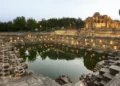
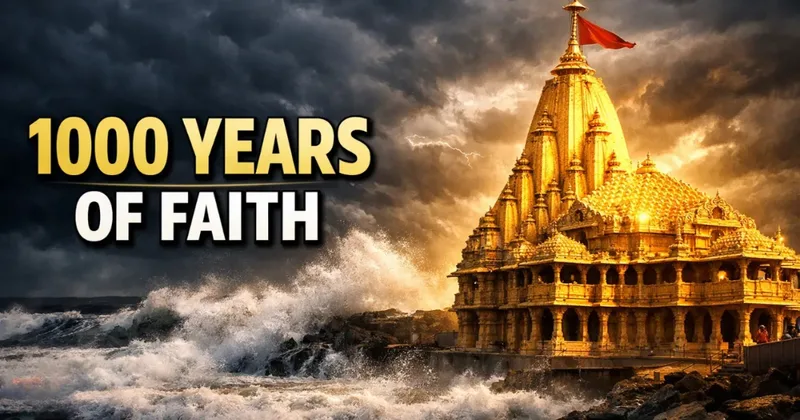
Somnath temple is a civilisational statement

Somnath temple is a civilisational statement

Facebook
Twitter
WhatsAppTelegramEmail

Somnath does not stand merely as a temple on the western edge of Bharat; it stands as a civilisational statement. Facing the Arabian Sea at Prabhāsa, Somnath represents the civilisational fact which could never be extinguished in the Bharatiya experience—the inner continuity of dharma, memory and sacred order. Its stones were shattered, its walls dismantled, yet Somnath never disappeared from the civilisational consciousness of this land. Its repeated resurrection tells us something fundamental about Bharat: that destruction does not possess finality and history does not have the last word.

In Bharatiya Knowledge Systems, civilisation is not understood as a linear sequence of rise and fall. It is understood as sanātana—that which renews itself across time. History, therefore, is not merely a record of events, but a rhythm of loss and renewal. The Upaniṣadic vision expresses this civilisational truth with clarity:

न जायते म्रियते वा कदाचित्

नायं भूत्वा भविता वा न भूयः।

(Kaṭha Upaniṣad 2.18)

That which truly exists is never born and never dies. Somnath belongs to this ontological grammar. Its material form could be damaged; its civilisational essence could not. As the first among the twelve Jyotirlingas, Somnath signifies Śiva not as a confined icon, but as jyoti—the self-luminous principle underlying creation, dissolution and renewal. The Śiva Purāṇa affirms:

न मूर्तिर्न च लिङ्गं स्यात्

ज्योतिरेव सनातनम्।

The sacred in Bharat is not imprisoned in stone. It resides in consciousness, practice and remembrance. This is why repeated destruction could not erase Somnath from the civilisational landscape. What endured was not architecture alone, but smṛti—collective memory sustained through ritual time and lived participation. Prabhāsa occupies a distinctive place in Bharatiya sacred geography. The Skanda Purāṇa declares:

प्रभासं तीर्थमासाद्य

नरो मुच्येत किल्बिषात्।

Prabhāsa is not merely a pilgrimage destination; it is a space of moral recalibration. Even the Mahābhārata situates here the end of the Yādava lineage. This is a striking indication of civilisational maturity. Bharatiya civilisation does not suppress its moments of rupture. It integrates them into ethical reflection. Loss becomes a source of wisdom, not erasure.

This perspective explains why Somnath was rebuilt again and again. Each reconstruction was not an act of retaliation, but of punarsthāpana—the restoration of civilisational balance. In the Bharatiya tradition, rebuilding after destruction is not political assertion; it is dharmic responsibility. When a sacred centre falls silent, society responds to reawaken it.

Somnath’s position by the sea deepens this understanding. Bharat has never been a closed, inward-looking civilisation. The Arabian Sea before Somnath symbolises movement, exchange, pilgrimage and dialogue. For millennia, this coastline connected Bharat with the wider world—economically, culturally and spiritually. Bharatiya civilisation absorbed influences without losing itself, just as the ocean receives rivers without surrendering its identity.

This civilisational resilience explains why Somnath survived even when it stood without walls. Pilgrimage continued. Ritual calendars endured. Oral memory carried meaning forward. Continuity in Bharat has never depended solely on unbroken stone; it has depended on unbroken participation.

The reconstruction of Somnath in 1951 must be understood within this framework. It was not a reaction against history, nor an act of grievance. It was an affirmation of continuity after a long interruption. It expressed national self-respect rooted in cultural confidence, not antagonism. Independent Bharat signalled that it would no longer treat its sacred geography as a closed chapter, but as a living inheritance.

Yet Somnath also places a responsibility upon the present. Civilisation does not survive by memory alone; it survives through practice. Heritage in the Bharatiya sense is not a possession, but a discipline. Sacred spaces live only when society returns to them—not merely physically, but ethically and intellectually.

Somnath cautions us against a shallow understanding of resurgence. Renewal is not about recreating an imagined past, nor about denying historical complexity. It is about restoring balance. Each rebuilding of Somnath was a re-anchoring in civilisational purpose, not a performance of grievance. True resurgence is quiet, steady, and inwardly anchored.

Bharatiya civilisation also teaches restraint in remembrance. Prabhāsa is remembered both for sanctity and for loss. A civilisation that forgets its fractures loses wisdom; one that dwells only on them loses balance. Somnath holds both memory and renewal together.

In the Bharatiya worldview, temples are not museums of faith. They are institutions of civilisation—organising ritual time, transmitting values, sustaining memory, and integrating society with cosmic order. Even when Somnath stood without walls, it lived through pilgrimage, oral tradition and recurring ritual. Continuity lay not in preservation alone, but in participation.

Somnath therefore is not a relic of the past. It is a living centre of cultural resurgence. It affirms a deeper truth: that the ātman of Bharat, like the sea before Somnath, cannot be conquered or silenced. Waves of history may rise and fall, but the ocean remains.

Somnath teaches us that Bharat did not endure because it was never wounded, but because it possessed the wisdom to renew itself. What could never be destroyed was not merely a temple, but the civilisational self—rooted, resilient and enduring beyond time.

Also Read: Lohri 2026: A celebration of harvest, cultural heritage, family unity & gratitude toward farmers and nature

Why Somnath matters today

Somnath matters today because it reminds Bharat that civilisation survives not by avoiding rupture, but by renewing meaning after it. In an age inclined to treat heritage as spectacle or history as grievance, Somnath offers a different lesson: continuity is sustained through smṛti, practiceand ethical responsibility.

Somnath also matters because it restores confidence without hostility. Its reconstruction affirmed cultural self-respect rooted in remembrance, not resentment. It demonstrated that reclaiming sacred geography need not be an act of confrontation, but of quiet civilisational assertion.

At a time when Bharat is rediscovering its place in the world, Somnath stands as a reminder that strength lies in balance—between memory and renewal, tradition and engagement, inward depth and outward openness. Like the sea before it, Bharat can absorb disruption without losing direction. Above all, Somnath matters because it teaches that what truly endures is not stone, but civilisation itself—lived, remembered and renewed across generations.


Topics: civilisationSomnathGujaratCultureHistory
Dr. Veenu Pant
Dr. Veenu Pant
Dr. Veenu Pant is Professor at the Department of History, Sikkim University [Read more]
Share
Tweet
SendShareSend
✮ Subscribe Organiser YouTube Channel. ✮
✮ Join Organiser's WhatsApp channel for Nationalist views beyond the news. ✮
Previous News

Manikarnika is sacred – so is dignity: Why development at the eternal ghat of Kashi is not a sin

Next News

136 Startups a Day: How Bharat quietly built one of the world’s most stable startup ecosystems

Related News

California state adopts resolution to celebrate Diwali Day on November 8

US: California to celebrate Deepawali as a symbol of wisdom, growth & unity; Hails contribution of Indian Americans

They Stole the Indian Saree! Western fast-fashion label JW PEI slammed for cultural extraction & heritage rebranding

Partition Horrors Remembrance Day: A painful chapter & an attempt to erase civilisational consciousness

India corner opens at Kenya school library; Echoes nation’s freedom struggle, civilisational heritage & growth story

India presents peacocks to UN Geneva

India’s Peacock Diplomacy: New Delhi presents 5 peacocks to UN Geneva; Resonates cultural heritage & soft power

Representative Image

The significance of Shatrubodh: Bharat’s legacy of being a strong and enduring civilization

Load More

Latest News

A representative image

PM-AASHA: How the government steps in when farm prices crash

UP CM Yogi Adityanath has ordered strict action, including under the Essential Services Maintenance Act, against hoarding and black-marketing of Sugar

No Sugar Shortage in Uttar Pradesh: CM Yogi orders crackdown on hoarders, black-marketers

Swami Laxmanananda Saraswati

Swami Laxmanananda Saraswati Death Anniversary: A legacy of service, education and social reform

CGHS wellness centre to remain open

Fact Check: Health Ministry says wellness centres not closing for NEET-PG exam duty, check official update

Beyond the familiar festivities, Onam carries a layered Hindu civilisational memory shaped by Bhagwan Vamana, Mahabali, sacred texts and centuries of tradition.

Onam’s Forgotten Roots: How a Hindu civilisational tradition was recast in modern Keralam’s political narratives

AIAPGET 2026 Disrupted in Jaipur; NTA Issues Notice to Eduquity (This image is generated by AI)

AIAPGET 2026: NTA suspends Eduquity after power failure disrupts exam at Jaipur centre; Show-cause notice served

MEA exposes Telangana CM Revanth Reddy real agenda of Telangana CM Revanth Reddy's visit to US. Stops him from visiting US

MEA exposes Telangana CM Revanth Reddy’s anti-Bharat agenda masked as ‘State Development’

(Left to Right) Congress MP and former Punjab chief minister Charanjit Singh Channi, Late former Congress leader Sajjan Kumar, Deepender Hooda

‘Mind your tongue’: Channi Vs Hooda clash over ‘role model’ praise for 1984 anti-Sikh riots perpetrator Sajjan Kumar

EAM Jaishankar(File Photo)

EAM Jaishankar decodes geopolitical reality with 3Cs; Outlines 4Ds as strategic solutions to fortify national security

Pakistan PM Shehbaz Sharif and Former PM Imran Khan

Pakistan: Contempt plea filed against PM Shehbaz Sharif & 2 ministers for defying Supreme Court order on Imran Khan

Load More
  • Privacy
  • Terms
  • Cookie Policy
  • Refund and Cancellation
  • Delivery and Shipping

© Bharat Prakashan (Delhi) Limited.
Tech-enabled by Ananthapuri Technologies

  • Home
  • Search Organiser
  • Bharat
    • Assam
    • Bihar
    • Chhattisgarh
    • Jharkhand
    • Maharashtra
    • View All States
  • World
    • Asia
    • Africa
    • North America
    • South America
    • Europe
    • Australia
  • Editorial
  • Operation Sindoor
  • Opinion
  • Analysis
  • Defence
  • Culture
  • Sports
  • Business
  • RSS @ 100
  • Entertainment
  • More ..
    • Sci & Tech
    • Vocal4Local
    • Special Report
    • Education
    • Employment
    • Books
    • Interviews
    • Travel
    • Health
    • Politics
    • Law
    • Economy
    • Obituary
  • Subscribe Magazine
  • Read Ecopy
  • Advertise
  • Circulation
  • Careers
  • About Us
  • Contact Us
  • Policies & Terms
    • Privacy Policy
    • Cookie Policy
    • Refund and Cancellation
    • Terms of Use

© Bharat Prakashan (Delhi) Limited.
Tech-enabled by Ananthapuri Technologies