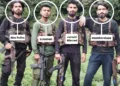
A new terror threat has emerged from Pakistan-occupied J&K, as a video surfaced showing Lashkar-e-Taiba operative Abu Musa Kashmiri openly calling for jihad and violence against Hindus near the Line of Control. This comes just a day after Indian Army Chief General Upendra Dwivedi warned that India would respond firmly to acts of terrorism.
🚨🚨🚨 Exclusive 🇵🇰👹:
"Yeh bheek maangne se nahi milegi; Hinduon ki Gardan'ein kaatne se azaadi milegi."
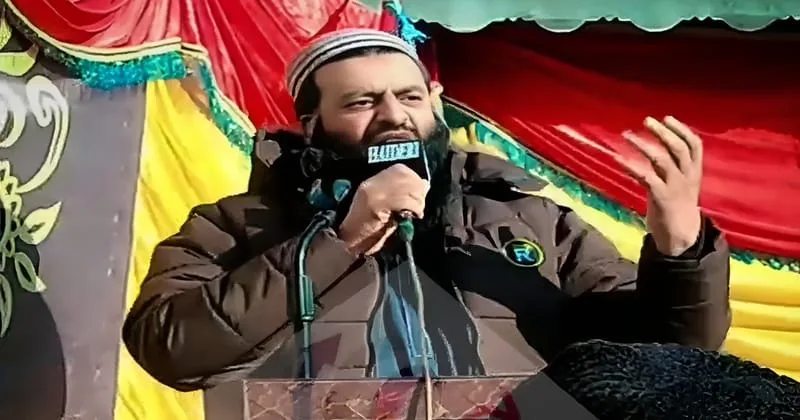
Notorious Abu Musa Kashmiri, senior LeT (JKUM) commander, speaking near LoC in Tatrinote, Hajira tehsil, Rawalakot, Poonch dist, PoJK.
He says he has told the Prime… pic.twitter.com/jGnLQPhcCi
— OsintTV 📺 (@OsintTV) January 14, 2026
In the video shared by open-source intelligence handle OsintTV, Abu Musa Kashmiri, a senior commander of Lashkar-e-Taiba’s Jammu and Kashmir United Mujahideen (JKUM), is seen addressing a gathering in Tatrinote, located in the Hajira tehsil of Rawalakot district in Pakistan-occupied Jammu and Kashmir, where he openly calls for violence and claims that the Kashmir issue can only be resolved through jihad.
“This will not be achieved through begging; freedom will come by cutting the throats of Hindus,” he said, adding that he had conveyed the same message to Pakistan’s Prime Minister and other senior ministers.
“The Kashmir issue can only be resolved through terrorism under the guise of jihad,” he said, once again underscoring Pakistan’s direct ideological and political backing of jihadist violence against India.
The timing of Kashmiri’s speech is noteworthy, as he had delivered a similar address shortly before the Pahalgam terror attack, which claimed 26 lives in Anantnag district of J&K on April 22.
The timing of Kashmiri’s speech is notable, coming just a day after Indian Army Chief General Upendra Dwivedi, in his first briefing of the year, described India’s counter-terror Operation Sindoor as “just a trailer” and emphasised that the armed forces are ready for any future contingencies. Speaking at the curtain-raiser of the Chanakya Defence Dialogues in New Delhi, Dwivedi highlighted that the 88-hour offensive demonstrated India’s capability to respond swiftly to provocations.
The Army chief reaffirmed India’s stance that dialogue cannot resume alongside terrorism. “Terrorists and those supporting them will be treated the same way,” he said, adding that India would act against any attempt to obstruct its progress and would not be deterred by external pressure.
Dwivedi outlined three key lessons from Operation Sindoor: the need for faster decision-making across command levels, stronger integration among the Army, Navy, Air Force, CAPF, and other security agencies, and preparedness for long-duration conflicts. While the operation lasted 88 hours, he warned that future engagements could extend over months or even years.
#WATCH | Delhi: Indian Army Chief General Upendra Dwivedi says, "As you may be aware, Operation Sindoor remains ongoing, and a future misadventure will be resolutely responded to. I must acknowledge the proactive role of all stakeholders at the national level, including CAPFs,… pic.twitter.com/HooY8OfHyj
— ANI (@ANI) January 13, 2026
Tensions between India and Pakistan escalated following the Pahalgam terror attack, after which India launched Operation Sindoor on May 7, targeting terror infrastructure and air bases across Pakistan and Pakistan-occupied J&K. Although the standoff eased after Pakistan’s Director General of Military Operations initiated talks, New Delhi stressed that the operation is paused, not concluded. Prime Minister Narendra Modi has stated that any future terror attack would be treated as an act of war.
Dwivedi also observed that terrorist incidents in J&K have declined significantly since the abrogation of Article 370 in August 2019, attributing the improvement to political clarity and sustained counter-terror operations.