India expands Pharma exports as Pakistan–Afghan trade halts
June 5, 2026
  • Read Ecopy
  • Circulation
  • Advertise
  • Careers
  • About Us
  • Contact Us
Android AppiPhone AppArattai
Organiser
  • ‌
  • Bharat
    • Assam
    • Bihar
    • Chhattisgarh
    • Jharkhand
    • Maharashtra
    • View All States
  • World
    • Asia
    • Europe
    • North America
    • South America
    • Africa
    • Australia
  • Editorial
  • International
  • Opinion
  • RSS @ 100
  • More
    • Op Sindoor
    • Analysis
    • Sports
    • Defence
    • Politics
    • Business
    • Economy
    • Culture
    • Special Report
    • Sci & Tech
    • Entertainment
    • G20
    • Azadi Ka Amrit Mahotsav
    • Vocal4Local
    • Web Stories
    • Education
    • Employment
    • Books
    • Interviews
    • Travel
    • Law
    • Health
    • Obituary
  • Subscribe
    • Subscribe Print Edition
    • Subscribe Ecopy
    • Read Ecopy
  • ‌
  • Bharat
    • Assam
    • Bihar
    • Chhattisgarh
    • Jharkhand
    • Maharashtra
    • View All States
  • World
    • Asia
    • Europe
    • North America
    • South America
    • Africa
    • Australia
  • Editorial
  • International
  • Opinion
  • RSS @ 100
  • More
    • Op Sindoor
    • Analysis
    • Sports
    • Defence
    • Politics
    • Business
    • Economy
    • Culture
    • Special Report
    • Sci & Tech
    • Entertainment
    • G20
    • Azadi Ka Amrit Mahotsav
    • Vocal4Local
    • Web Stories
    • Education
    • Employment
    • Books
    • Interviews
    • Travel
    • Law
    • Health
    • Obituary
  • Subscribe
    • Subscribe Print Edition
    • Subscribe Ecopy
    • Read Ecopy
Organiser
  • Home
  • Bharat
  • World
  • Operation Sindoor
  • Editorial
  • Analysis
  • Opinion
  • Culture
  • Defence
  • International Edition
  • RSS @ 100
  • Magazine
  • Read Ecopy
Home Bharat

Pakistan seals Afghan border, India opens billion-rupee pharma pathway to Kabul as regional trade map shifts

Pakistan’s closure of its border with Afghanistan has reshaped regional trade, unexpectedly creating a major economic opening for India. The shift is particularly visible in pharmaceuticals, where India is emerging as a key supplier to a medicine-starved Afghanistan

Dr Vishnu AravindDr Vishnu Aravind
Jan 15, 2026, 12:00 pm IST
in Bharat, World, South Asia, Asia, International Edition
Follow on Google News
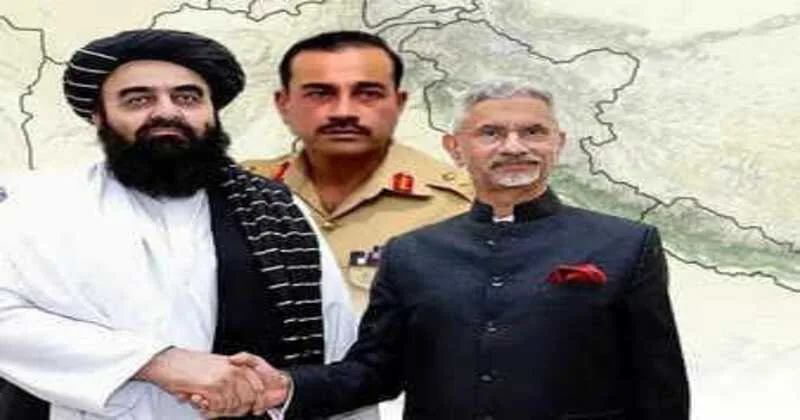
India–Afghanistan economic ties deepen as Pakistan’s border closure and regional tensions reshape trade routes, healthcare supply chains, and strategic equations

India–Afghanistan economic ties deepen as Pakistan’s border closure and regional tensions reshape trade routes, healthcare supply chains, and strategic equations

FacebookTwitterWhatsAppTelegramEmail

Pakistan’s decision to close its land border with Afghanistan has created a major commercial opportunity for India, opening up a market estimated to be worth billions of rupees. The Pak–Afghan border has remained shut since October last year, despite repeated requests from the Taliban administration in Kabul to reopen trade routes even during periods of heightened conflict. Pakistan, however, refused to relent. In response, the Taliban declared that Afghanistan would no longer maintain trade relations with Pakistan, a move that has significantly altered regional trade dynamics. This shift has directly benefited India, particularly in the pharmaceutical sector.

According to new estimates, India now has an opportunity worth nearly Rs 1,800 crore in pharmaceutical exports to Afghanistan. These figures emerged after the central government clarified that India would continue its trade engagement with Afghanistan. This clarification came amid reports suggesting that India had temporarily halted trade due to the Iran conflict, claims that were officially dismissed as incorrect.

Afghanistan is a landlocked country, dependent on neighbouring states for access to ports and overland trade routes. Until recently, goods arriving at Pakistani ports entered Afghanistan through the Torkham and Chaman border crossings. However, following renewed tensions last year, Pakistan closed both routes. As a result, Afghanistan has increasingly turned towards India to meet its critical import needs, especially in essential sectors such as healthcare. Under Taliban rule, Afghanistan is currently facing an acute shortage of medicines. To address this crisis, an agreement was reached in December between Afghanistan, the Pharmaceutical Export Promotion Council (PEPC), and Indian stakeholders to expand the supply of medicines. In addition to exports, India is also assisting Afghanistan in setting up healthcare infrastructure, including medical laboratories and hospitals.

India’s pharmaceutical exports reached Rs 2.7 lakh crore in the 2024–25 financial year. Of this, approximately Rs 970 crore worth of medicines were exported to Afghanistan. While this accounts for less than 0.5 per cent of India’s total pharmaceutical exports, it represents a nearly 20 per cent increase compared to the previous year.

Also Read: Bangladesh: Custody neglect & mob violence kill Proloy and Samir as Hindus face attacks by radical Islamist elements

Industry experts expect this figure to rise steadily in the coming years. There is also a growing trend of Afghan nationals travelling to India for treatment, with an estimated 48,000 Afghan citizens visiting India for medical purposes in 2024 alone. Despite political complexities, the Indian government has decided to maintain trade relations with Afghanistan. Although the Taliban took control in 2021, the regime has not been formally recognised by most countries, with Russia being the only exception so far. Several nations have limited trade engagements with Kabul, but none have established full diplomatic ties.

The absence of an internationally recognised and stable government poses economic and political challenges.  Meanwhile, Pakistan has expressed growing concern over the strengthening of India–Afghanistan trade ties. Frequent visits by Afghan leaders to India have reportedly unsettled Islamabad. Pakistani Information Minister Attaullah Tarar has alleged that closer India–Afghanistan engagement is part of a broader attempt to destabilise Pakistan, even accusing both countries of supporting Baloch rebel groups. These allegations, however, have been categorically denied by both India and Afghanistan.

Govt of India rejects false claims on Afghan trade

The government of India has firmly denied claims that India has suspended trade with Afghanistan, calling such reports false propaganda circulated by certain Pakistani social media accounts. Officials clarified that India’s trade relations with Afghanistan continue uninterrupted and that rumours linking a halt in trade to tensions involving Iran are completely baseless. According to  India, misleading posts on social media falsely alleged that India had stopped trade with Afghanistan due to the Iran conflict. A fabricated letter was also circulated online to lend credibility to the claim. Official trade data, however, clearly contradicts these assertions. During the 2024–25 financial year, India exported goods worth $318.9 million to Afghanistan, while imports from Afghanistan stood at $689.8 million, underlining the continuity of bilateral trade.

At the same time, the rift between Pakistan and Afghanistan is showing signs of sharp escalation, adding another layer of complexity to regional geopolitics. Reports suggest that after India, the Afghan Taliban may also be preparing to deliver a significant setback to Pakistan in the form of a potential water crisis. This comes after India halted the flow of water from the Indus River to Pakistan following the Pahalgam terrorist attack, making it clear that water cooperation cannot coexist with cross-border terrorism. Prime Minister Narendra Modi had underscored this stance by stating that “water and blood do not flow together,” a position India later reiterated at the United Nations.

India’s decision has already had a severe impact on Pakistan’s agriculture sector, which forms the backbone of its economy. Now, Afghanistan appears to be considering a move that could further strain Pakistan’s water security. The Taliban is reportedly planning to construct a dam on the Kunar River, a crucial water source for Pakistan.

The Kunar River originates in Pakistan’s Chitral region, flows through Afghanistan’s Kunar and Nangarhar provinces, and then re-enters Pakistan. The proposed dam would allow Afghanistan to divert water towards reservoirs in Nangarhar through the Gambiri desert. If implemented, the project could significantly reduce water availability in Pakistan’s Khyber Pakhtunkhwa province, affecting agriculture, drinking water supplies, and hydropower generation.

Analysts warn that such a move could deepen tensions between Kabul and Islamabad and potentially create conditions for renewed conflict. Pakistan’s earlier decision to close key border checkpoints amid bilateral tensions has already dealt a serious blow to Afghanistan’s trade sector.

With trade routes through Pakistan blocked and relations strained, the Taliban has made it clear that it no longer considers Pakistan a trade partner. Instead, Afghanistan is increasingly relying on India, Iran, and Central Asian nations for its export and import needs, marking a decisive shift in regional trade alignments.

 

Topics: India–Afghanistan TradePakistan–Afghanistan Border ClosureAfghanistan Healthcare CrisisTaliban Economic PolicyAfghanistan Import–Export Shiftindia pakistan relationsIndian pharmaceutical exports
ShareTweetSendShareSend
✮ Subscribe Organiser YouTube Channel. ✮
✮ Join Organiser's WhatsApp channel for Nationalist views beyond the news. ✮
Previous News

Jharkhand: 3 people killed in explosion in Hazaribagh, probe underway

Next News

Indian Railways rolls out OTP-based ticketing to curb fake bookings, strengthen passenger verification

Related News

From Partition to the National Advisory Council in 2004, Congress-led decisions are seen as having lasting impacts on India’s territorial integrity

Dark Chapter of Congress: How partition, territorial concessions and political decisions shaped India’s troubled legacy

Ops Sindoor Anniversary: Revisiting India’s largest multi-domain military strike against terrorism in Pakistan

Pakistan PM Shehbaz Sharif

After losses in trade and water access post Operation Sindoor, Pakistan reels under mounting health crisis

India's Prime Minister Narendra Modi and Pakistan's Prime Minister Shehbaz Sharif

India holds key to Pakistan’s BRICS entry as New Delhi prepares to lead the bloc in 2026

A representative image

Indian pharma exports surge past USD 30 billion, mark 9.4% growth in FY 2024-25

External Affairs Minister Dr. S Jaishankar

India bluntly flags democratic failure in Pakistan and surge in terror export; Remarks rattle Islamabad

Load More

Latest News

RSS Sarsanghchalak Dr Mohan Bhagwat

The time of Bharat has arrived; we need to expedite our preparation: Dr Bhagwat at RSS Karyakarta Vikas Varg 2

Padma Bhushan awardee and noted industrialist Kumar Mangalam Birla Kumar Mangalam Birla addressing the Samapana Samaroh (Valedictory Function) of the Rashtriya Swayamsevak Sangh Karyakarta Vikas Varg – Dwitiya at Nagpur, on June 4, 2026

“RSS always stood by the society and nation”, Kumar Mangalam Birla at RSS Karyakarta Vikas Varg 2 in Nagpur

Arunachal Pradesh seals all 15 illegal Mosques; Bandh called off by APIYO

MK Stalin with Sonai Gandhi; MK Stalin with Rahul Gandhi (File Photos) (Left to Right)

Tamil Nadu: DMK says no to INDIA Alliance meet in Delhi, blames Congress for political backstabbing

Union Finance Minister Nirmala Sitharaman

Karnataka: All-Women team powers Yadgir’s groundnut revolution; Nirmala Sitharaman inaugurates NABARD Unit

Keralam: Jamaat-e-Islami event features Hamas and Muslim Brotherhood ideologues, raises concerns over Political Islam

Representative Image (This is an AI Generated image)

Uttar Pradesh CM Abhyudaya Scheme: Apply for free civil services, JEE and NEET coaching from June 5

House worth Rs 2 crore of drug peddler bulldozed in J&K

Anti-narcotics campaign in J&K: Police demolish Rs 2 crore residential property linked to drug peddler Sheikh Tasaduq

As fuel shortages rippled across Asia, New Delhi expanded supplies to its neighbours while Beijing sought to turn energy security into strategic influence.

The Hormuz Test: How India’s energy assistance outshines China’s conditional approach

Demographic changes in Bharat’s border districts have raised concerns about migration, security, and social cohesion

Demographic Shift in Border Areas of Bharat: The dangerous design

Load More
  • Privacy
  • Terms
  • Cookie Policy
  • Refund and Cancellation
  • Delivery and Shipping

© Bharat Prakashan (Delhi) Limited.
Tech-enabled by Ananthapuri Technologies

  • Home
  • Search Organiser
  • Bharat
    • Assam
    • Bihar
    • Chhattisgarh
    • Jharkhand
    • Maharashtra
    • View All States
  • World
    • Asia
    • Africa
    • North America
    • South America
    • Europe
    • Australia
  • Editorial
  • Operation Sindoor
  • Opinion
  • Analysis
  • Defence
  • Culture
  • Sports
  • Business
  • RSS @ 100
  • Entertainment
  • More ..
    • Sci & Tech
    • Vocal4Local
    • Special Report
    • Education
    • Employment
    • Books
    • Interviews
    • Travel
    • Health
    • Politics
    • Law
    • Economy
    • Obituary
  • Subscribe Magazine
  • Read Ecopy
  • Advertise
  • Circulation
  • Careers
  • About Us
  • Contact Us
  • Policies & Terms
    • Privacy Policy
    • Cookie Policy
    • Refund and Cancellation
    • Terms of Use

© Bharat Prakashan (Delhi) Limited.
Tech-enabled by Ananthapuri Technologies