NEW DELHI: All India Majlis-e-Ittehadul Muslimeen (AIMIM) chief and Hyderabad Member of Parliament Asaduddin Owaisi has squarely blamed the Congress party for the Supreme Court’s refusal to grant bail to activists Umar Khalid and Sharjeel Imam in the 2020 Delhi riots larger conspiracy case, arguing that the stringent law under which they were booked was introduced and later reinforced under Congress regimes.
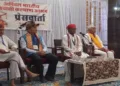
Owaisi made the remarks while addressing a public meeting in the Chandni Chowk area of Amravati in Maharashtra on Saturday, days ahead of the January 15 civic elections in the state.
Referring to the Supreme Court’s order dated January 5, Owaisi noted that the apex court had denied bail to Khalid and Imam while granting relief to five other accused in the same case. The court, in its ruling, cited a “hierarchy of participation” while distinguishing between the roles of different accused persons.
Khalid and Imam, both booked under the Unlawful Activities (Prevention) Act (UAPA), have been in judicial custody for nearly five years. The court’s decision to deny them bail has once again triggered political debate over the scope and severity of India’s anti-terror legislation.
Addressing the gathering, Owaisi argued that the denial of bail was rooted in Section 15A of the UAPA, which deals with the definition of terrorist acts. He said the provision’s broad wording makes it extremely difficult for accused persons to secure bail, regardless of the duration of their incarceration.
According to Owaisi, the law allows authorities to keep individuals in jail for prolonged periods without trial, effectively punishing them before guilt is established.
“These two have been in jail for almost five years, yet they could not get bail because of the way the definition of terrorism has been framed,” he said, calling the situation a reflection of systemic flaws in the law.
Owaisi directly blamed the Congress for the current situation, stating that the UAPA was introduced during a Congress-led government, with then Union Home Minister P Chidambaram playing a key role in its enactment. He claimed that he was the only Member of Parliament to oppose the legislation at the time.
“I warned Parliament then that this law would be misused by the police against Muslims, tribals, Dalits and intellectuals who question government policies,” Owaisi said.
He further accused the Congress of hypocrisy, alleging that despite now projecting itself as a defender of civil liberties, the party had supported the BJP government during the 2019 amendments to the UAPA, which made the law even more stringent.
Drawing attention to past cases, Owaisi cited the example of Father Stan Swamy, the 85-year-old tribal rights activist arrested in the Elgar Parishad case, who later died in custody. Owaisi said Swamy’s death highlighted the human cost of what he described as the misuse of draconian laws.
“His death showed how innocent lives can be destroyed by such legislation,” Owaisi said, adding that Khalid and Imam continue to suffer under the same legal framework.
Beyond the bail issue, Owaisi also attacked mainstream political parties for what he termed the misuse of secularism for electoral gain. He alleged that parties invoking secularism during elections often fail to protect the rights of minorities, Dalits, and tribals in practice.
“Those who speak of secularism only to win votes are, in reality, enemies of Muslims, Dalits and tribals,” he said.