New Delhi: In a major leap forward for India’s defence and aerospace capabilities, the Defence Research and Development Organisation (DRDO) has successfully completed a ground test of a full-scale, actively cooled, long-duration scramjet engine, an important milestone in the country’s Hypersonic Missile Programme.
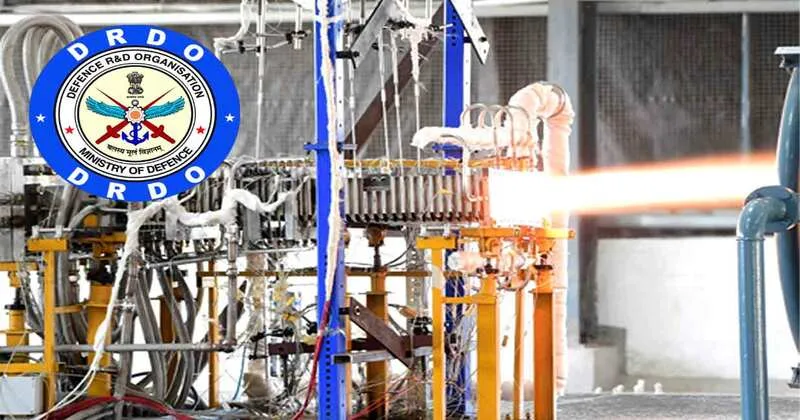
The test was conducted at the Scramjet Connect Pipe Test (SCPT) Facility by the Defence Research and Development Laboratory (DRDL) in Hyderabad. During the trial, the Actively Cooled Scramjet Full-Scale Combustor demonstrated sustained operation for over 12 minutes, validating both the advanced combustor design and the sophisticated test infrastructure.
This achievement places India among a small group of nations that have mastered hypersonic propulsion technologies. It builds upon an earlier subscale scramjet test conducted on April 25, 2025, which also demonstrated long-duration performance, marking steady progress toward operational hypersonic systems.
The combustor and the test facility were indigenously designed by DRDL and realised in collaboration with industry partners. Successful full-scale validation is a crucial step toward the development of hypersonic cruise missiles, weapon systems capable of transforming aerial warfare through extreme speed, high manoeuvrability, and reduced detectability.
Hypersonic missiles travel at speeds exceeding Mach 5 (over 6,100 km/h) and rely on air-breathing scramjet engines for sustained flight. Unlike conventional rocket engines, scramjets use atmospheric oxygen for combustion, enabling longer ranges, improved efficiency, and lighter vehicle designs.
Defence Minister Rajnath Singh described the test as a “solid foundation for the nation’s Hypersonic Cruise Missile Development Programme,” and congratulated DRDO, industry partners, and academia for their collaborative efforts. DRDO Chairman and Secretary, Department of Defence R&D, Dr Samir V. Kamat, also lauded the achievement, highlighting its importance in strengthening India’s self-reliance in cutting-edge aerospace technologies.
India’s hypersonic journey began in 2004 with the announcement of the Hypersonic Technology Demonstrator Vehicle (HSTDV) programme, aimed at proving scramjet propulsion through autonomous hypersonic flight. A landmark success was achieved in September 2020 when the HSTDV was flight-tested, validating supersonic combustion at hypersonic speeds.
The programme has since expanded to include advanced systems such as the Extended Trajectory–Long Duration Hypersonic Cruise Missile (ET-LDHCM), a scramjet-powered platform designed to deliver conventional or nuclear payloads over extended ranges. Active cooling technologies enable the missile to withstand the extreme thermal loads generated during prolonged hypersonic flight.
Progressive ground tests, including a 120-second scramjet run in January 2025 and a 1,000-second endurance test in May 2025, have steadily matured the technology. The latest 12-minute full-scale test represents a decisive step toward operational deployment and significantly enhances India’s strategic deterrence.
With this success, India joins an elite group of countries, including the United States, Russia, and China, that possess operational or near-operational hypersonic capabilities, underscoring its emergence as a major player in advanced missile and propulsion technologies.