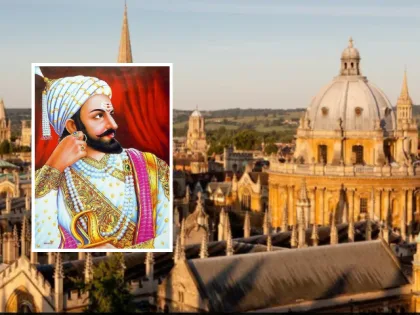
On January 6, 2026, Oxford University Press India published a public apology in newspapers, acknowledging that certain statements in a book on Chhatrapati Shivaji Maharaj published in 2003 were “unverified.” The apology was addressed to Udayanraje Bhosale, the 13th descendant of Shivaji Maharaj and a BJP Member of Parliament from Satara. It marked the culmination of a legal battle that had stretched over two decades and remained a sensitive issue in Maharashtra’s political, cultural, and academic landscape.
The apology was issued in compliance with directions from the Kolhapur bench of the Bombay High Court, which was hearing a criminal defamation case linked to the publication. In the notice, OUP India expressed regret for carrying the disputed statements and apologised to Bhosale and the public for the “distress and anguish caused.”
Book at the centre of the controversy
The controversy traces its origins to the 2003 publication of Shivaji: Hindu King in Islamic India, written by American historian James Laine and published in India by Oxford University Press. The book attempted a critical historical examination of the 17th-century Maratha ruler, situating Shivaji Maharaj within the broader political and religious context of medieval India.
However, certain passages in the book, particularly references to Shivaji Maharaj’s lineage and aspects of his personal life, were widely perceived as offensive and defamatory by his followers and members of the Maratha community. Critics argued that the book relied on speculative interpretations and unverified anecdotes that undermined the dignity of a figure revered not merely as a historical king but as a civilisational icon and symbol of resistance.
Public outrage and cultural backlash
The publication triggered intense backlash across Maharashtra, where Shivaji Maharaj is venerated as a national hero, a Hindu king who resisted Mughal expansion, and the founder of a just and people-centric governance system. For many, the book crossed the line between academic inquiry and cultural insult.
The anger was not limited to scholarly criticism. Protests erupted, political leaders weighed in, and the issue rapidly escalated into a larger debate on the responsibility of publishers when dealing with deeply revered historical figures. The matter became emblematic of a broader tension in India between academic freedom and respect for cultural and historical sensitivities.
The 2004 BORI Attack
The controversy reached a dramatic flashpoint in January 2004, when more than 150 activists of the Sambhaji Brigade vandalised the Bhandarkar Oriental Research Institute (BORI) in Pune. The institute was accused by the protesters of having assisted James Laine by providing research material that allegedly formed the basis of the objectionable content.
The attack on BORI shocked the academic community across India and abroad. Scholars condemned the violence, while others argued that the incident reflected long-standing frustration over what they described as repeated misrepresentation of Indian historical figures by Western academia. The episode intensified the national debate over whether academic institutions and publishers should be more accountable when dealing with culturally sensitive subjects.
The Legal Battle
In 2005, Udayanraje Bhosale filed a private criminal complaint in a court in Maharashtra’s Satara district. The complaint named OUP India’s then managing director, Sayeed Manzar Khan, along with academics Dr Shrikant Bahulikar and Sucheta Paranjape of Tilak Maharashtra Vidyapeeth, and V L Manjul, librarian at BORI.
The court ordered the registration of a case under Section 500 of the Indian Penal Code, which deals with criminal defamation. Though the IPC provision has since been repealed, the case continued under the legal framework applicable at the time. The accused subsequently approached the Bombay High Court, seeking relief from the proceedings.
Why the apology came now
The apology issued in January 2026 was the direct result of proceedings before the Kolhapur bench of the Bombay High Court. In a written submission dated December 17, 2025, Sayeed Manzar Khan expressed willingness to issue a public apology to Udayanraje Bhosale and to publish it prominently in major English and Marathi newspapers.
This submission effectively paved the way for the resolution of the case. The High Court directed that the apology be issued as part of compliance, leading to OUP India’s public acknowledgment that certain statements in the book, specifically on pages 31, 33, 34, and 93, were not adequately verified before publication.
In its public notice, OUP India admitted that the disputed statements were “unverified” and expressed regret for having included them. The publisher apologised not only to Bhosale but also to the wider public for the distress caused by the publication.
An OUP India spokesperson later clarified that the book had been available in India only for a brief period more than two decades ago and was withdrawn soon after the controversy erupted. The spokesperson reiterated that Oxford University Press publishes works reflecting diverse viewpoints but strives to remain sensitive to cultural contexts so that its publications are acceptable to a global readership.
The author’s apology
James Laine, the author of the book, had earlier issued his own apology. He stated that he loved India and had devoted much of his academic life to studying its culture and history. Laine maintained that he never intended to defame Chhatrapati Shivaji Maharaj, whom he described as a “great Maharashtrian hero.”
While his apology was noted by some, critics argued that the damage had already been done and that the responsibility lay not only with the author but also with the publisher and academic institutions that supported the research.
Welcoming the apology, Maharashtra Education Minister Dada Bhuse said that while the gesture was appropriate, the state government would continue to monitor the corrective steps taken by the publisher. His statement reflected a broader sentiment within Maharashtra that symbolic gestures must be accompanied by institutional accountability.
The issue has also continued to resonate politically, as Shivaji Maharaj remains central to Maharashtra’s cultural identity and political discourse, cutting across party lines.
A pattern of controversy for OUP
This episode is not without precedent in OUP India’s history. In 2011, the publisher faced criticism over alleged self-censorship when it decided not to reprint A K Ramanujan’s essay on the multiple tellings of the Ramayana following objections from right-wing groups.
Together, these controversies have positioned OUP India at the centre of recurring debates on academic freedom, self-censorship, and the responsibility of global publishers operating in culturally diverse societies like India.
The Shivaji Maharaj book controversy continues to be cited as a case study in the limits of academic freedom. Supporters of the book argue that history must allow space for critical inquiry and uncomfortable questions. Critics counter that academic freedom cannot become a shield for speculative claims about figures who are deeply revered and integral to a community’s identity.
For many in Maharashtra, Shivaji Maharaj is not merely a subject of academic debate but a living symbol of resistance, governance, and civilisational pride. Any perceived attempt to diminish his legacy is therefore seen not as scholarship, but as an affront.
The apology issued by Oxford University Press India brings formal closure to a legal and cultural conflict that has spanned more than two decades. Yet, the episode continues to influence how historical research is conducted, published, and received in India.