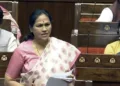
Bengaluru: Union Minister Shobha Karandlaje on January 4 accused the Karnataka Congress government of sacrificing honest officers to protect its own political interests, claiming that bidding and patronage politics involving Minister Zameer Ahmed Khan were behind the controversy over suspended Ballari Superintendent of Police Pavan Nejjuru. Her strong remarks at a BJP press conference have added a fresh layer of political heat to an already volatile law‑and‑order issue
Karandlaje said the Ballari unrest and its fallout should not be used to settle political scores or shield local leaders. She insisted that Nejjuru, who was suspended after clashes in Ballari on January 1, should be given justice and not turned into a scapegoat. At the same time, she accused the state government of hiding critical information, especially regarding a purported death note linked to Nejjuru.
Claims of cover‑up and demand for transparency
Karandlaje demanded that the government reveal the contents of the alleged death note. She asked, What is written in Pavan Nejjuru’s death note? Which names have been mentioned? and insisted that authorities make all details public, including the names of any officials referenced. Her demand reflects deep suspicion about the official narrative and a belief that crucial evidence is being withheld.
She also challenged the government’s actions and questioned the propriety of senior officials, including the Chief Minister, engaging with accused persons. Is it right for the Chief Minister to sit and talk with an accused? If the Chief Minister engages with criminals, where should people seek justice? Karandlaje asked, underscoring her view that the state administration was failing to uphold impartiality and public trust.
Bidding politics and administrative corruption
Beyond the immediate case, Karandlaje widened her critique to allege systemic corruption in administrative processes under the Congress government. She claimed that transfers, promotions and even recruitments were now linked to bribery. No transfer without corruption, no promotion without corruption, no recruitment without corruption, she asserted, saying this corrupt culture extended from Bengaluru to other parts of the state.
Karandlaje claimed officers are forced into a bidding system to retain postings or to secure desirable positions. She described a situation where officials had to “wander around” for 11 months and then pay more money to maintain their positions, or face replacement by someone who offered higher payments. She warned that such a system had eroded the morale of police, revenue and other officials, adding that officers and citizens were frustrated by the misuse of power.
Political context and official denials
Her allegations come as the state government and police sought to quash rumours about Nejjuru. A report from the Times of India on Saturday quoted senior police and the Home Minister denying any suicide attempt by Nejjuru, stating the claims were mere rumours and that he was fine. The report noted Nejjuru was resting at a farmhouse and that officials had spoken to him, describing an emotionally stressful situation but not a suicidal attempt.
This official position contrasts sharply with Karandlaje’s demand for accountability and transparency. Opposition leaders have used the episode to accuse the government of putting undue pressure on officials and to argue that Nejjuru was made a scapegoat for wider failures in law and order during the Ballari unrest.
Karandlaje called on the Chief Minister and senior officials to answer pointed questions about Nejjuru’s suspension, the alleged death note, and the broader pattern of political interference. She urged the government to stop protecting what she termed goonda legislators and instead focus on ensuring justice for officers like Nejjuru.