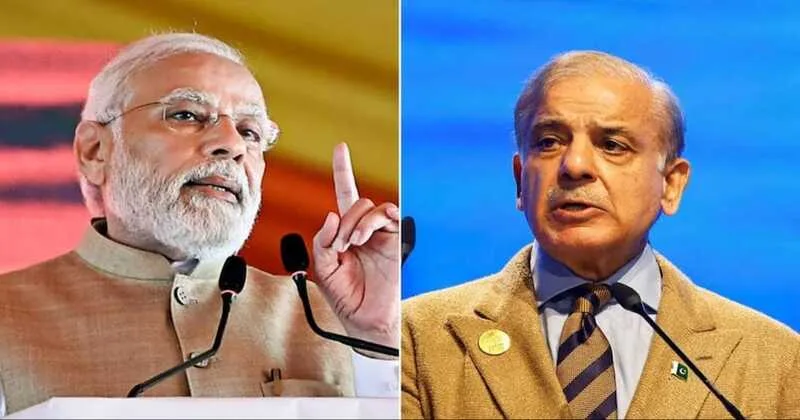
New Delhi: India, which will assume the presidency of the BRICS grouping in 2026, is expected to approach Pakistan’s membership application with firm caution and strategic clarity, ensuring that the bloc’s credibility and security interests are not compromised. Pakistan is among more than ten countries that have formally sought entry, but its bid is clouded by persistent concerns over its record on terrorism and regional destabilisation.
Russia has publicly backed Pakistan’s application, and China, Islamabad’s closest strategic patron, is also expected to extend support. This backing, however, does little to address the fundamental issues surrounding Pakistan’s candidacy. New Delhi’s position is shaped by long-standing evidence of Pakistan’s tolerance and, at times, patronage of terror groups that target India and undermine regional stability.
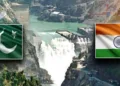
As the incoming chair, India will play a central role in guiding deliberations on BRICS expansion, but it will also face an application from its long-standing rival, Pakistan, whose conduct sharply contradicts the principles of cooperation and mutual trust that BRICS seeks to project. India has consistently maintained that international platforms should not be used to legitimise states that fail to act decisively against terrorism or continue to export instability beyond their borders.
The question of whether India will block or accommodate Pakistan’s entry has therefore drawn close international attention. For New Delhi, the issue goes beyond rivalry; it is about protecting BRICS from becoming a forum diluted by political expediency and shielding it from being exploited by countries seeking economic relief without undertaking genuine reforms. India’s approach is expected to emphasise accountability, responsible state behaviour, and the need for aspirant members to demonstrate a credible commitment to peace and stability before being considered for inclusion.
Countries seeking to join BRICS are driven by diverse motivations. Some are primarily interested in access to development finance, while others seek greater geopolitical relevance or wish to hedge their bets by participating in multiple global groupings without aligning too closely with any single power centre. The original BRICS members, Brazil, Russia, India, China, and South Africa, have steadily expanded the bloc’s footprint in recent years.
From 2024, Saudi Arabia, Iran, the UAE, Egypt and Ethiopia are set to join BRICS as full members, followed by Indonesia in 2025. With this expansion, BRICS has emerged as one of the most influential multilateral platforms, representing nearly half of the world’s population and close to one-third of global GDP. Malaysia, Thailand, Cuba, Uganda, Uzbekistan, Kazakhstan, Bolivia and Belarus currently hold partner status and are seeking full membership. Pakistan, however, is not even a partner member at present. For Islamabad, BRICS membership is seen as a pathway to enhanced global relevance and, crucially, potential access to funding from the New Development Bank. Pakistan remains heavily dependent on assistance from the International Monetary Fund, along with its stringent conditions, and hopes that BRICS could offer an alternative.
Yet BRICS operates on consensus. Aspirant members are expected to maintain cordial relations with existing members, and even a single objection can derail an application. This gives India the effective ability to block Pakistan’s entry. At the same time, India has been a leading advocate of BRICS expansion and is keen to prevent the grouping from becoming overly dominated by Chinese influence. How New Delhi balances these competing priorities will shape not only Pakistan’s prospects, but also the future trajectory of BRICS itself.