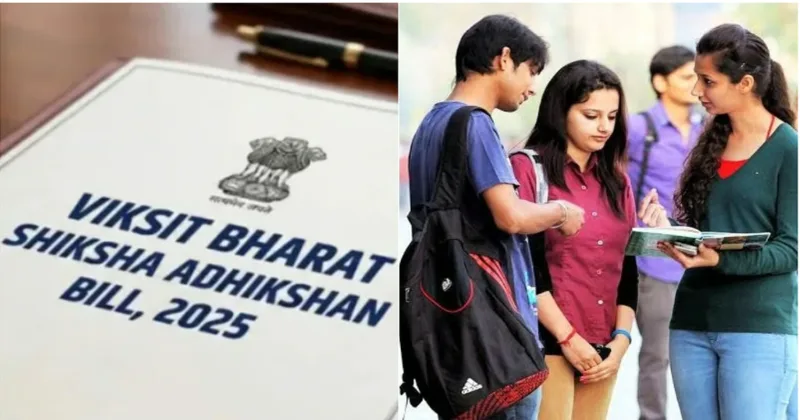
NEW DELHI: With the introduction of the Viksit Bharat Shiksha Adhishthan Bill, 2025, India’s higher education sector is on the verge of a historic transformation. The Bill seeks to modernise India’s higher education system through improved governance, quality, and global competitiveness, echoing Prime Minister Narendra Modi’s vision of a “Viksit Bharat” shaped by education and innovation. The reform aligns closely with the objectives of the National Education Policy (NEP) 2020, which advocates for flexibility, interdisciplinarity, and outcome-based education. By strengthening institutional autonomy, accreditation systems, and academic standards, the Bill sets the foundation for a more vibrant, future-ready education ecosystem.
One of the most significant features of the Viksit Bharat Shiksha Adhishthan Bill is the integration of multiple regulatory bodies under a single apex framework. Currently, higher education in India is regulated by different authorities such as the University Grants Commission (UGC), All India Council for Technical Education (AICTE), and National Council for Teacher Education (NCTE).
This fragmented structure often leads to overlaps, duplication of work, and delays in approvals. The new Bill resolves these challenges by merging these agencies into a single, technology-driven regulatory authority, ensuring cohesion, efficiency, and uniformity across disciplines. The unified body will function through three independent councils, each focusing on a crucial area:
Standards – to define academic norms and benchmarks,
Regulation – to oversee institutional compliance and governance, and
Accreditation – to evaluate performance, quality, and accountability.
This tri-council model replaces a rigid, rule-based system with one that emphasizes trust, transparency, and performance-based governance, echoing the NEP’s philosophy of “light but tight” regulation.
At the heart of this Bill is the principle of institutional autonomy. Recognizing that innovation and excellence flourish in environments of freedom and responsibility, the reform empowers Higher Educational Institutions (HEIs) to design their academic, research, and administrative strategies independently while adhering to transparent quality benchmarks. Autonomy will be encouraged through public disclosure-based quality standards, allowing institutions to demonstrate outcomes, innovations, and best practices. This shift from bureaucratic control to outcome-based self-regulation aims to create a culture of accountability, where performance and credibility drive institutional reputation. Moreover, this reform introduces a Council of Accreditation (CoA) that will act as a Professional Standards Setting Body (PSSB), ensuring continuous improvement in teaching quality, infrastructure, and student outcomes as envisioned in NEP 2020.
The Viksit Bharat Shiksha Adhishthan Bill also emphasizes the role of technology in governance. It proposes a faceless, single-window regulatory system that simplifies procedures for approvals, accreditation, and compliance through digital means. This shift to a technology-driven model enhances transparency and reduces human intervention, thereby minimizing red tape and potential irregularities. Institutions will be able to upload data, track their applications, and access performance analytics in real time.
Such a system not only improves accountability but also creates a data-driven feedback loop, helping policymakers make informed decisions and institutions identify areas for growth. This integration of technology into higher education administration marks a major leap toward a digital-first, future-ready regulatory framework.
Anchored in NEP 2020: Vision for Quality, Research, and Innovation
The NEP 2020 laid the groundwork for transforming Indian education into a globally competitive system rooted in Indian values yet aligned with international standards. The Viksit Bharat Shiksha Adhishthan Bill, 2025 carries this vision forward by reinforcing key NEP goals – multidisciplinary learning, research excellence, and innovation-driven education.
The Bill encourages HEIs to establish centers of excellence, promote collaboration between academia and industry, and expand research opportunities for students. It recognizes that the future of education lies in developing critical thinking, creativity, and problem-solving skills among learners. By streamlining governance and empowering institutions, the Bill enables universities to focus more on academic innovation rather than procedural compliance. It is expected to foster an environment conducive to knowledge creation, entrepreneurship, and global partnerships.
Another crucial dimension of the Bill is its focus on students, the core of the education system. It calls for reforms that enhance access, equity, and inclusion, ensuring that quality education reaches every corner of India. Special emphasis has been placed on expanding the Gross Enrollment Ratio (GER), which measures the percentage of eligible students enrolled in higher education. The Bill envisions steady GER growth through flexible academic pathways, digital learning platforms, and skill-oriented programs. Additionally, the Bill mandates robust grievance redressal mechanisms to safeguard students’ interests and improve institutional accountability.
To enhance global competitiveness, the Bill also promotes international benchmarking, encouraging Indian HEIs to adopt global best practices in curriculum design, evaluation, and governance. These reforms collectively aim to elevate India’s higher education institutions into the world’s top ranks, attracting international collaborations and learners.
The Viksit Bharat Shiksha Adhishthan Bill, 2025 replaces outdated, fragmented systems with a simplified and future-ready framework for higher education. It envisions universities as dynamic hubs of learning that are not just centers of teaching but also engines of innovation, research, and societal impact.
By ensuring uniform academic standards, transparent accreditation, and effective regulation, the Bill strengthens the trust of students, parents, and global partners in India’s education system. It also reinforces the idea that education is not merely a degree-oriented pursuit but a transformative process that builds citizens, innovators, and leaders for the nation’s future.