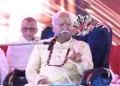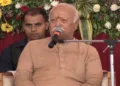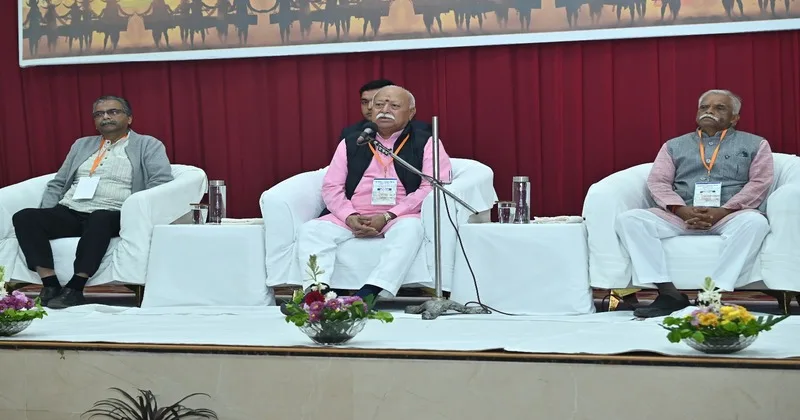
RAIPUR: “Across Bharat, people live together with their respective faiths and practices because of social harmony. Even a domestic worker in a household is addressed as ‘chacha’ by the family’s children and is given full respect. This spirit of harmony has existed in Bharat for many years”, said Rashtriya Swayamsevak Sangh Sarsanghchalak Dr Mohan Bhagwat at a Samajik Sadbhav baithak organised at Shri Ram Mandir in Raipur.
More than 500 representatives from different castes, communities and sects were present at the meeting
Dr Mohan Bhagwat said that the British did not leave Bharat voluntarily; our people united and struggled together for freedom. We forgot some threads of our unity and integrity, which led to differences in outlook. The British did not like our unity, so they made arrangements to ensure divisions, which also remained even later, but we have defeated their efforts from time to time,” he said.
“There is complete freedom in our country to progress while preserving one’s own distinctiveness. Where goodwill is strong, disruptive forces do not succeed. We must work to ensure that divisive forces fail. Every society has its own challenges and aspirations. We have preserved our diversity, and no one’s identity has been destroyed. As a society and a nation, we are one, and social harmony lies behind this unity. Some people come to Bharat but do not live according to Bharatiya traditions and therefore resort to aggression. We must move forward together. Where society is organised and harmonious, such forces fail. Awareness alone can counter this. There is a need to spread awareness on issues like love jihad, religious conversion and addiction. A sense of loneliness pushes people towards addiction,” Dr Mohan Bhagwat further said.
Dr Mohan Bhagwat further added that “we should ask ourselves what we can do for the empowerment of the weak and deprived among us, and move forward with determination. If we are capable, our capacity should be used for their benefit. Our entire society is one, with castes and sects as its limbs. Just as the entire body is one, similarly, despite different faiths and practices, our identity is one. Together, all castes, sects and communities should consider what they can do for the development of the area in which they live. This should be a collective thought process. There should be friends in every society; build a circle of friendly families.”
“There should be awareness within the home and family. Set aside one day each week when everyone gathers, sings bhajans, and shares a home-cooked meal. After that, discussions should be held—what are our family traditions, who were our ancestors, what were their qualities, and how much we follow their values. If there are shortcomings, they should be addressed. Discuss the nation within the family, what are the good things in the country and what are the challenges? Arrive at consensus on such issues and then implement them. Such auspicious dialogue should take place once a week. Similarly, one should decide how much time one can devote to social work.”
“Third is the issue of environmental protection. Save water, reduce the use of plastic and plant trees. These are tasks that all of us can do at an individual level. Fourth, speak one’s own language at home and learn at least one Indian language. Conversations at home should be in the mother tongue, and one should wear one’s traditional attire. Forgetting how to wear one’s own traditional dress is not appropriate. There should be pictures of one’s ideals, great personalities and saints at home. One should travel across the country and the world, but also occasionally visit nearby slums—they too are our own. Fifth, the Constitution mentions the Preamble, Fundamental Rights, Fundamental Duties and Directive Principles. Everyone should be aware of these. All laws and rules of the country must be followed. Some things are not written but are social values. When children respect elders, it inculcates humility. All these practices enhance harmony in society. Every community should strive to increase mutual cooperation. Such efforts should be undertaken at the block level, and people should actively work in this direction”, he said.
On this occasion, Dr Mohan Bhagwat had a community meal in a pangat. During the baithak, people from different communities shared inspiring examples of social work in their communities.