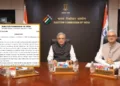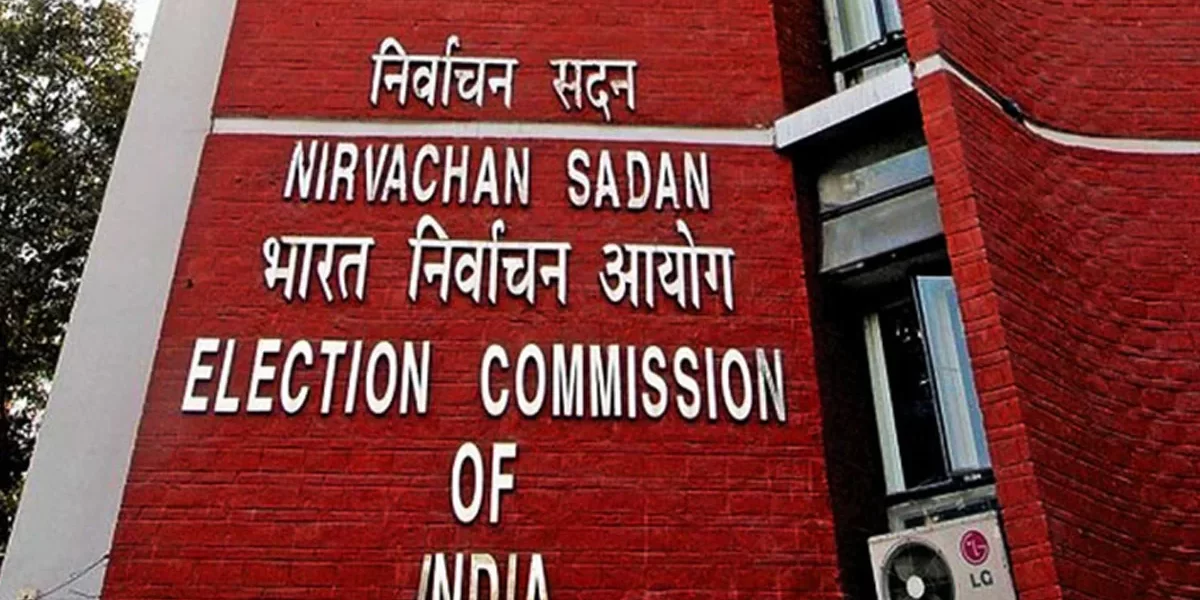
The Election Commission of India (ECI) on December 31, 2025, issued a sharp rebuttal to police complaints lodged against Chief Election Commissioner Gyanesh Kumar and West Bengal Chief Electoral Officer (CEO) Manoj Agarwal, describing the allegations as “premeditated, unsubstantiated and intimidatory” in nature. The poll body said the complaints appear to be a calculated attempt to browbeat election officials and disrupt a statutory electoral exercise.
In a series of official posts shared by the West Bengal CEO’s office on social media platform X, the Election Commission said it had taken note of media reports indicating that two police complaints had been filed against the senior election officials in connection with the ongoing Special Intensive Revision (SIR) of electoral rolls for 2026.
Reacting strongly, the Commission said the allegations were devoid of merit and appeared to be part of a larger design to intimidate the election machinery.
“The allegations contained therein appear to be premeditated, unsubstantiated and a crude attempt to browbeat the officers tasked with discharging statutory duties in connection with SIR 2026,” the statement said.
The poll body further warned that such efforts would not succeed. “Such intimidatory tactics designed to threaten the election machinery into submission and derail the statutory process are undoubtedly destined to fail,” it added.
The Commission underlined that electoral officers are constitutionally mandated to carry out periodic revisions of electoral rolls and that the ongoing SIR process is being conducted strictly in accordance with law and established procedures.
The ECI also indicated that it views the complaints as part of a coordinated pattern rather than isolated grievances. It asserted that it would investigate the circumstances under which these complaints were filed.
“No stone will be left unturned to unearth the conspiracy behind these serial and fabricated complaints. Rule of law and truth shall prevail,” the Commission said, reaffirming its commitment to impartiality and public interest.
Emphasising the resolve of election officials in the state, the Commission added that the election machinery in West Bengal would continue to function “with grit and rectitude, solely and wholly in public interest,” regardless of external pressure or intimidation.
The strong response from the Election Commission comes in the wake of police complaints filed by family members of two elderly voters in West Bengal, who died on Monday after receiving hearing notices linked to the SIR process.
In one of the cases, the son of an 82-year-old voter from Purulia district, identified as Durjan Majhi, alleged that his father’s name appeared in the physical electoral rolls prepared during the 2002 Special Intensive Revision but was missing from the corresponding list uploaded on the Election Commission’s website. According to the complaint, this discrepancy led to the issuance of a hearing notice, following which the elderly voter allegedly died by suicide just hours before his scheduled hearing.
The complainants have held the Chief Election Commissioner and the West Bengal CEO responsible, prompting the registration of police complaints and triggering political and administrative controversy.
Addressing concerns related to missing names in the electoral database, the Election Commission pointed to a clarification issued on December 27. In its notification, the Commission stated that approximately 1.3 lakh voters whose names appear in the physical 2002 SIR rolls but are absent from the online database due to a technical glitch will not be required to appear for hearings.
The Commission said this step was taken precisely to ensure that voters are not harassed or inconvenienced due to technical discrepancies arising from the digitisation of old electoral records.
Officials stressed that the SIR exercise is intended to improve the accuracy of electoral rolls by removing duplications, correcting errors and ensuring the inclusion of eligible voters, and not to exclude or intimidate genuine voters.
The Special Intensive Revision of electoral rolls is a sensitive exercise, particularly in politically charged states like West Bengal, where elections are closely contested and electoral processes often come under intense scrutiny.
The Election Commission has repeatedly maintained that the SIR 2026 is being conducted transparently and in line with legal provisions, with multiple safeguards in place to protect voter rights.