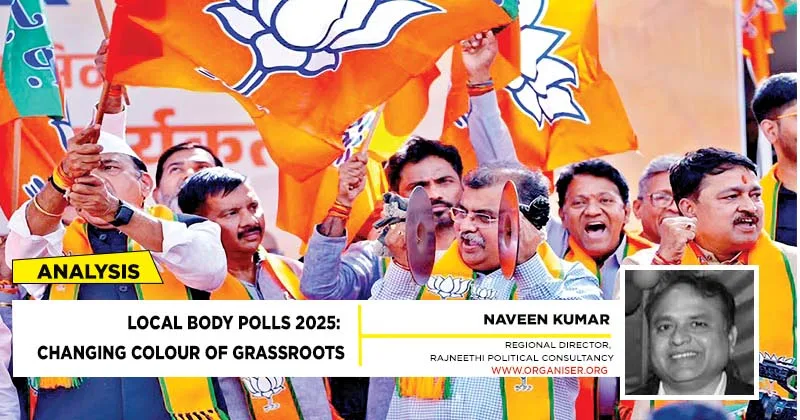
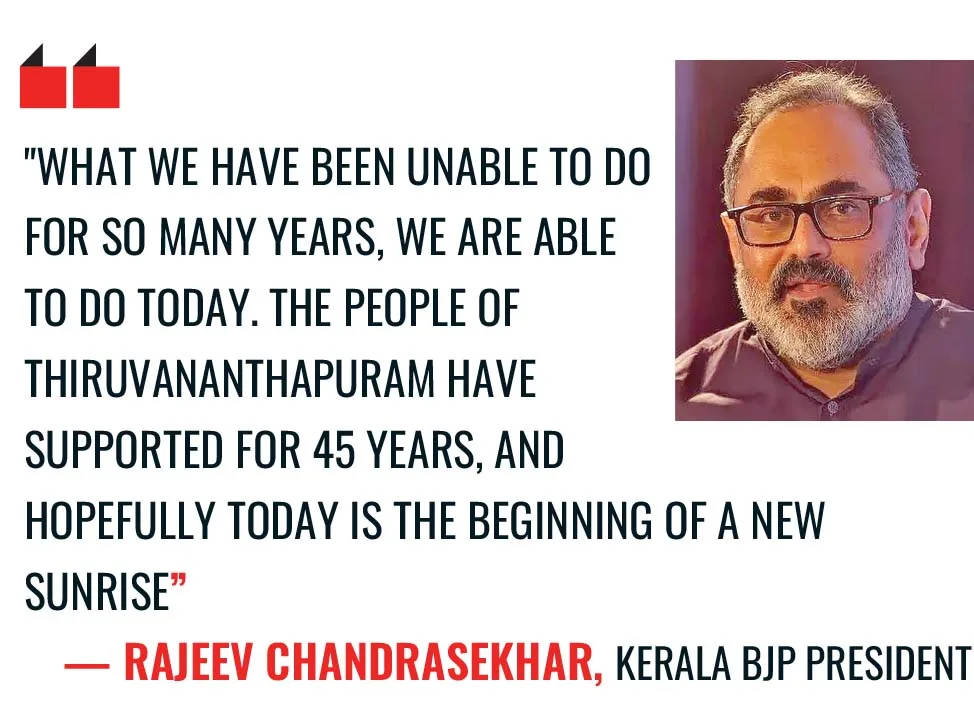
The Bharatiya Janata Party (BJP) in Bharat is shaping the country’s future. It is a party that has existed for the last 45 years, but today it has reached a position where it shapes the direction of development and empowerment in every part of the nation, till the very grassroots level. This reflects the party’s deep penetration into the basic roots of the country. In recent local elections, the BJP-led NDA won 50 wards in the 101-ward Thiruvananthapuram Corporation, while the LDF was reduced to 29 wards. This indicates that the great Sanatan Hindu ideology, which had remained dormant for a long time in many regions, is now resurfacing through the efforts of a national party like the BJP. This is likely to impact the entire country. As seen in recent elections, from Kerala to Arunachal Pradesh, and from Goa to Maharashtra and Karnataka, there is a surge of support for the BJP at the local level. In many local elections, particularly in rural Zila Panchayats in Maharashtra, the BJP is far ahead of all other parties, including its alliance partners.
In this sense, when we look at the recent election results of local municipalities and Zila Panchayats, it can be termed as “Grassroots Bharat turning saffron”. It implies the strategic localisation of a political ideology rooted in patriotism and Hindutva. Kerala shows resistance with visible cracks; Maharashtra and Karnataka reflect consolidation; Arunachal demonstrates pragmatic politics; and Goa reveals quiet institutional control.
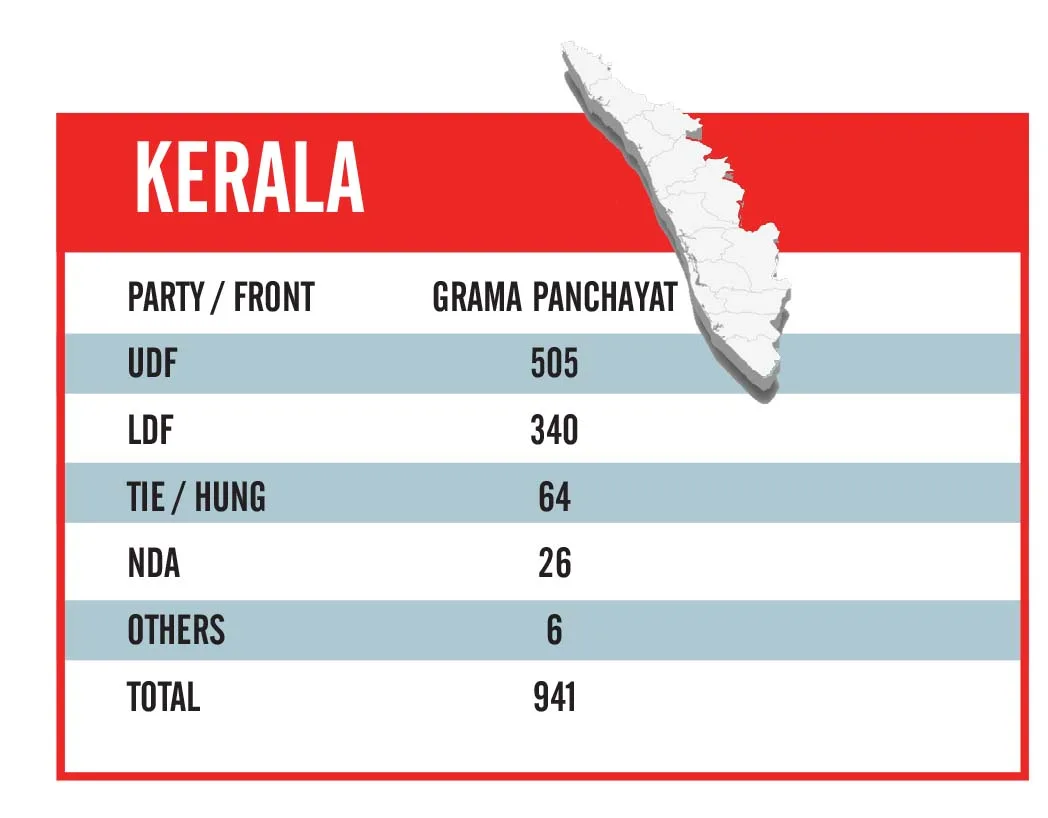
Kerala presents one of the most complex cases of grassroots saffronisation. Traditionally dominated by a bipolar contest between the Left Democratic Front (LDF) and the United Democratic Front (UDF), the state has long been resistant to the BJP’s electoral appeal. High literacy rates, strong social reform movements, and entrenched class politics have limited the immediate success of BJP. However, recent developments indicate a gradual ideological penetration. The BJP’s historic victory in winning its first Assembly seat in 2021 marked a symbolic breach in this resistance. More recently, the NDA won 50 seats in the 101-member Thiruvananthapuram Municipal Corporation, securing such a large mandate there for the first time. In these elections, the NDA won 50 seats, the LDF 29, and the UDF 19, with the remaining two going to Independents. The significance of this victory was underscored by Prime Minister Narendra Modi, who tweeted: “The mandate the BJP-NDA got in the Thiruvananthapuram Corporation is a watershed moment in Kerala’s politics.”
More importantly, the expansion of RSS Shakhas, temple-based mobilisations, and cultural campaigns around issues such as the Sabarimala controversy demonstrate a shift towards identity-based political engagement. In Kerala, saffronisation remains largely cultural and ideological rather than electoral, suggesting a long-term strategy aimed at reshaping social discourse rather than immediate political dominance. However, results are now beginning to emerge, manifested in the BJP’s control of the state capital, Thiruvananthapuram.
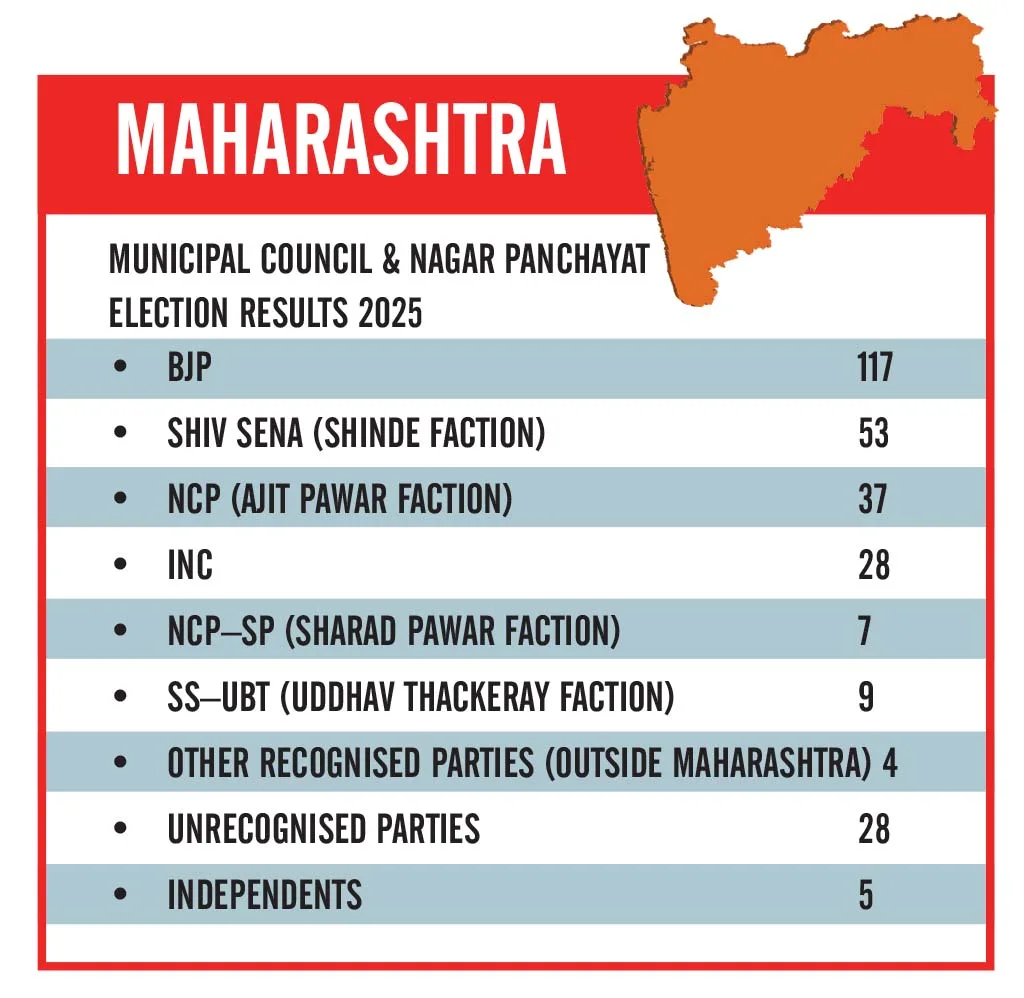
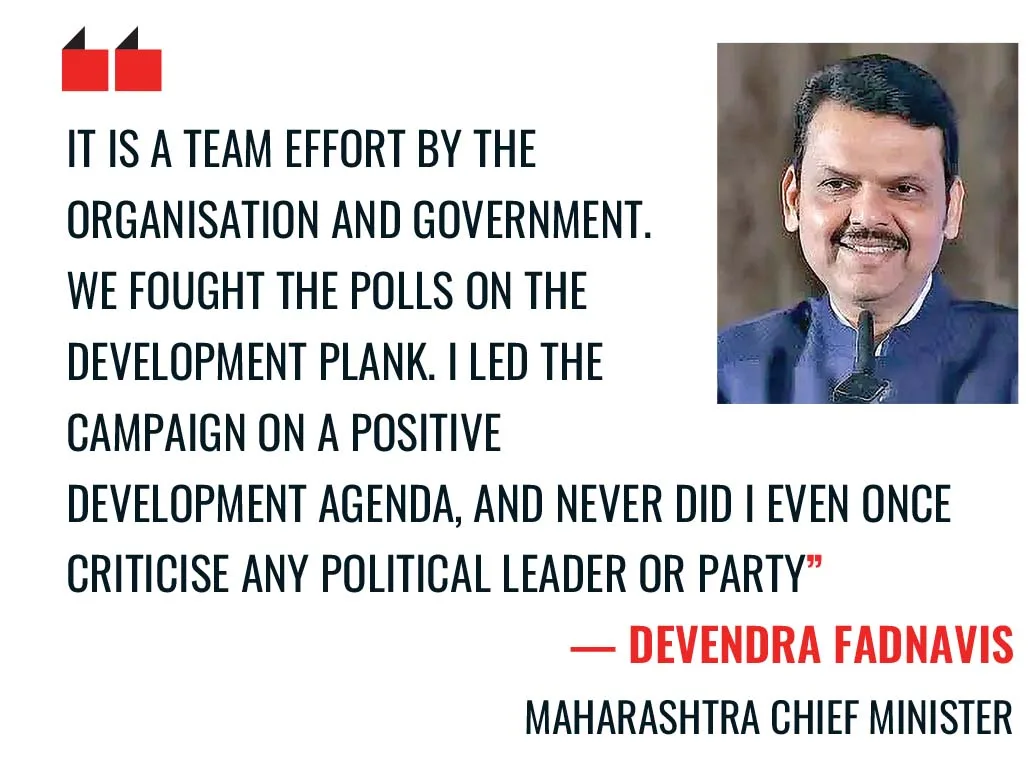
Maharashtra exemplifies a more advanced and consolidated form of support for the BJP and the Mahayuti alliance, as seen in the recent Assembly elections, where voters across castes and communities rejected the narratives of the Congress and Shiv Sena (UBT). Grassroots mobilisation through local bodies, cooperative institutions, and cadre-based networks has enabled the BJP to embed itself deeply within Maharashtra’s political structure. The use of historical symbolism, particularly the legacy of Chhatrapati Shivaji, combined with appeals to the urban middle class and OBC communities, has further strengthened ideological consolidation. Maharashtra thus represents a case where saffronisation operates simultaneously at electoral, organisational, and ideological levels. Out of a total of 288 municipal councils and nagar panchayats, the BJP won 117 posts of municipal presidents, Shiv Sena won 53, and the NCP won 37. The Congress bagged 28, the NCP (SP) seven, and Shiv Sena (UBT) nine. Overall, the Mahayuti alliance of the BJP, Shiv Sena, and the NCP swept the elections by winning 207 posts of presidents of local bodies.
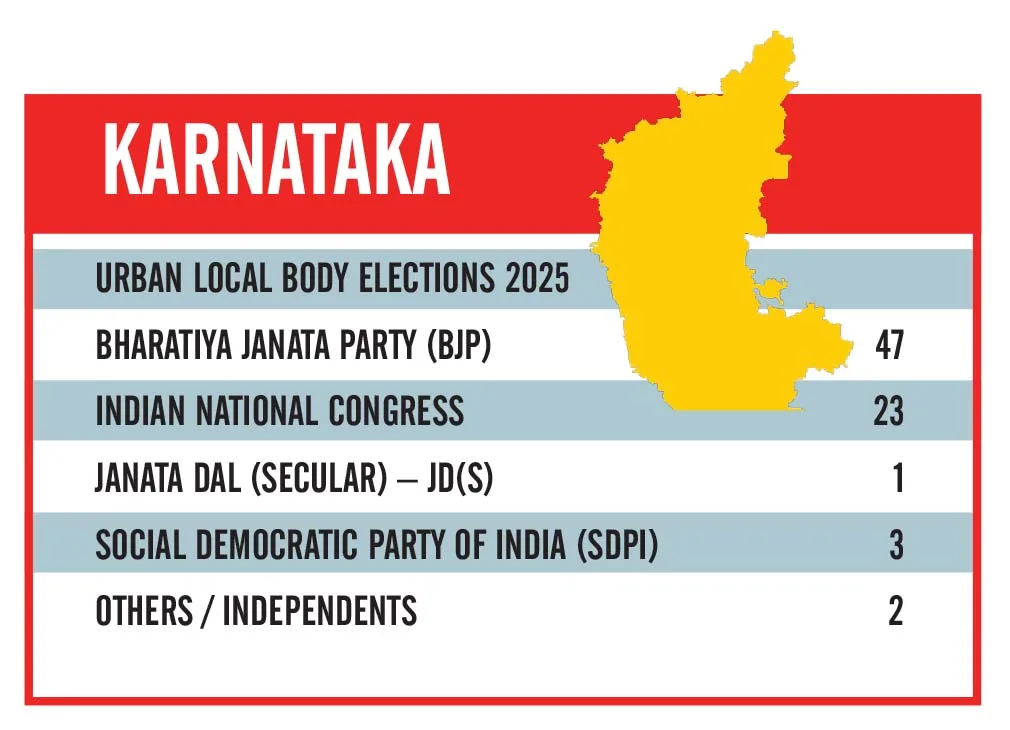
In Karnataka, in the elections held on December 21, 2025, the BJP bagged the Kinnigoli and Bajpe town panchayats. In a setback to the ruling Congress, the BJP won two urban local body (ULB) elections held in Dakshina Kannada. The results of the elections to the Bajpe and Kinnigoli town panchayats were declared on Wednesday, December 24. Of the 19 seats in the Bajpe Town Panchayat, the BJP won 11, the Congress four, and the Social Democratic Party of India (SDPI) three seats. The remaining seat was bagged by an independent candidate. The Kinnigoli Town Panchayat has 18 seats, of which the BJP won 10, leaving eight seats for the Congress.
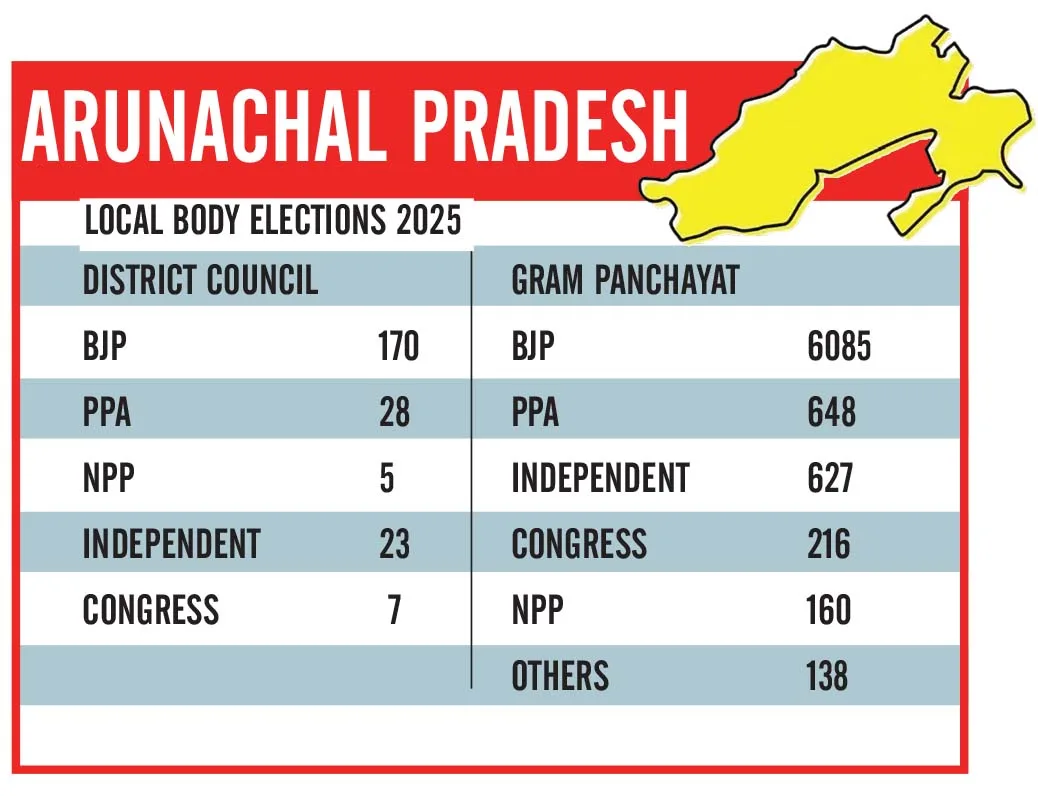
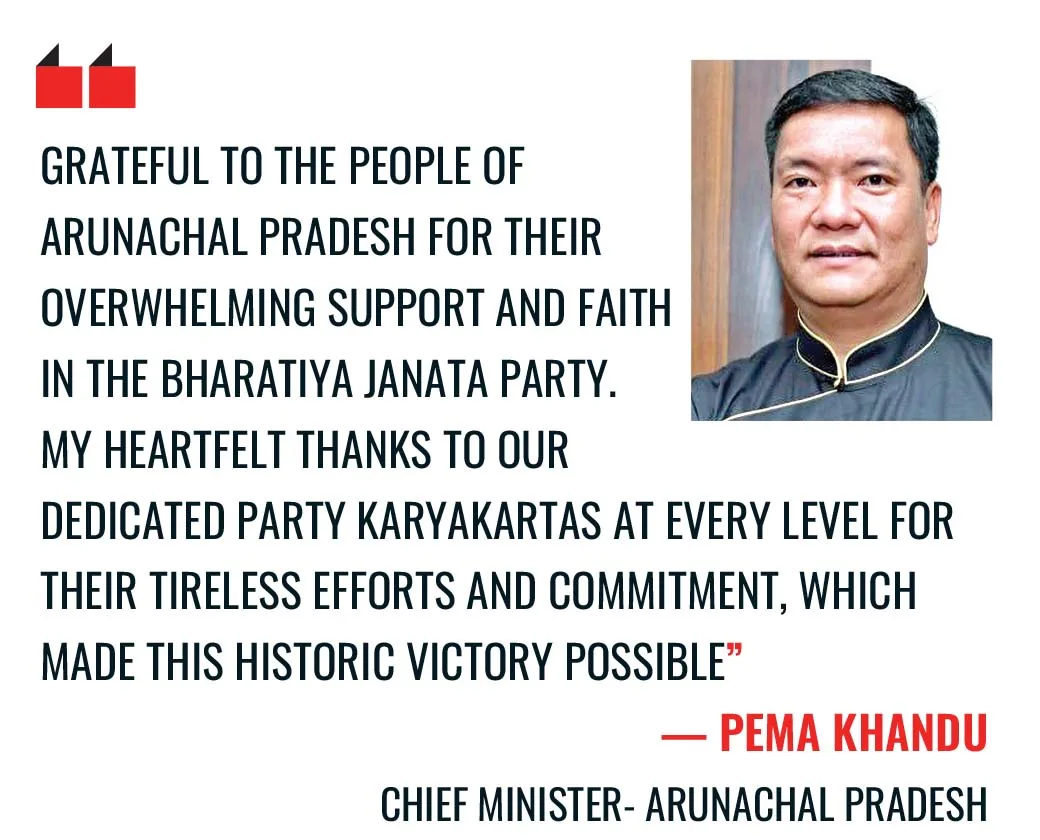
Arunachal Pradesh offers a markedly different narrative, underscoring the contextual adaptability of political ideology. Earlier, it was observed that the BJP’s rise in the state had largely occurred through defections, alliances, and institutional consolidation rather than mass ideological mobilisation. Now, however, it appears to be a phase of consolidation, with the people of Arunachal supporting the BJP based on its development agenda and the better treatment and respect shown by the Central government. The BJP has emphasised development, infrastructure, national security, and Centre–State cooperation. This pragmatic approach has yielded results. In the Zila Parishad segment, the BJP won 170 out of 245 Zila Parishad Member (ZPM) seats, including 59 uncontested, establishing clear dominance at the district level. The party also scored a decisive win in the Itanagar Municipal Corporation (IMC) elections by winning 14 of the 20 wards. However, the regional People’s Party of Arunachal (PPA) emerged victorious in the Pasighat Municipal Council (PMC), bagging five of the eight wards, while the BJP won two and an Independent secured one seat. The opposition Congress failed to win a single seat in both the IMC and PMC elections.
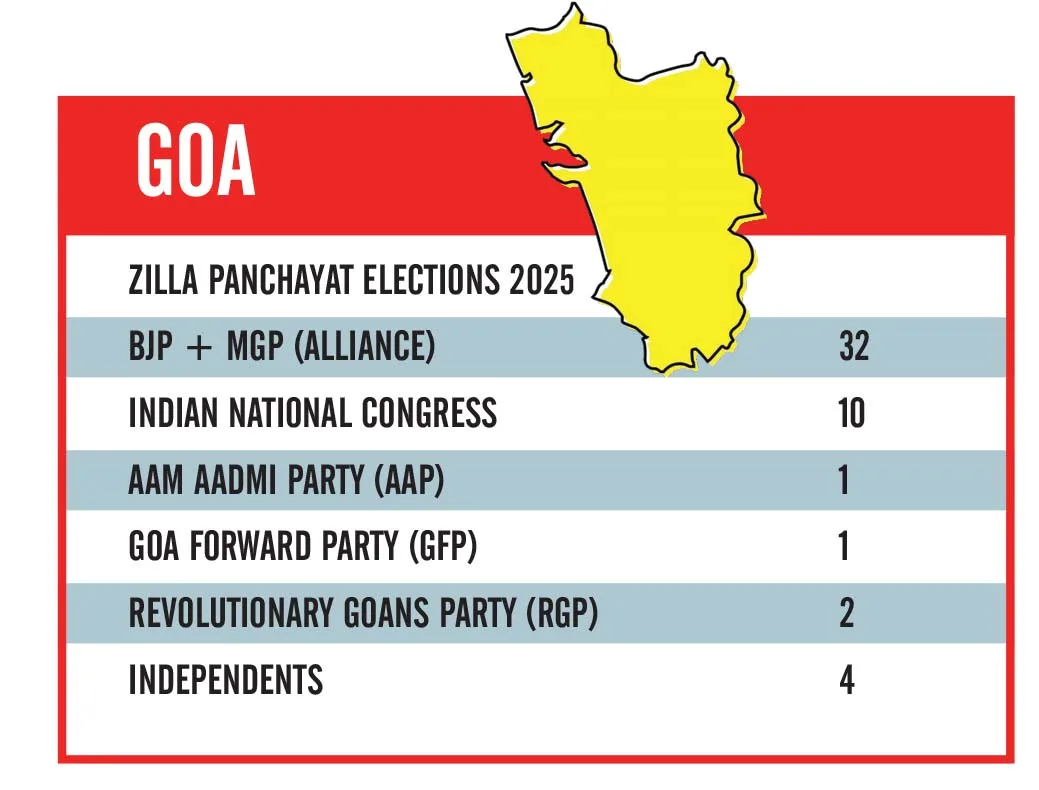
Goa represents yet another variation, characterised by soft saffronisation through governance and electoral management. The BJP has successfully consolidated power through strategic alliances and effective leadership. Cultural familiarity with Hindu traditions, particularly among urban and upper-caste groups, has facilitated acceptance without overt communal mobilisation. In the recent elections held on December 21, the BJP won 29 of the 50 seats across the North Goa and South Goa Zilla Panchayats (district councils). While this marked a slight decline from the 33 seats it won in 2020, there was little cause for concern. Meanwhile, the Congress’ tally remained at just 10 seats. In other words, for a third consecutive term, the BJP in Goa has managed to retain power in both the North Goa and South Goa Zilla Panchayats. This reflects the continued consolidation of support for the party in the state.
BJP breaches Tharoor’s bastion
The BJP executed the most dramatic political breakthrough in Kerala’s modern history in Thiruvananthapuram. By capturing the Thiruvananthapuram Corporation and ending four decades of unbroken Left control, the party delivered a structural shock to the state’s political establishment. This urban victory was bolstered by the BJP’s rise across the district’s rural belt, where it emerged as a decisive force in 22 Gram Panchayats and 3 Block Panchayats, consistently acting as either the ruling bloc or the principal opposition.
Many of these panchayat battles were decided by razor-thin margins, some by as little as 20-50 votes, demonstrating how deeply the saffron undercurrent had infiltrated the capital’s political landscape. A similar shift unfolded in Kollam; a district long seen as a Left stronghold, with the BJP winning 12 seats in the Kollam Corporation. At the same time, the BJP expanded its influence into rural Kollam, where it became a central player in 22 Gram Panchayats and 2 Block Panchayats, often finishing as the main opposition or a tie-break power. The pattern across these wards reflected not isolated pockets of support but a district-wide reconfiguration, with saffron votes rising sharply in coastal communities, semi-urban belts, and hinterland panchayats.
Maharashtra, Kerala, Karnataka, Goa, and Arunachal together highlight the evolving nature of Bharatiya politics, where ideology increasingly adapts to local contexts while reshaping the broader national political landscape.