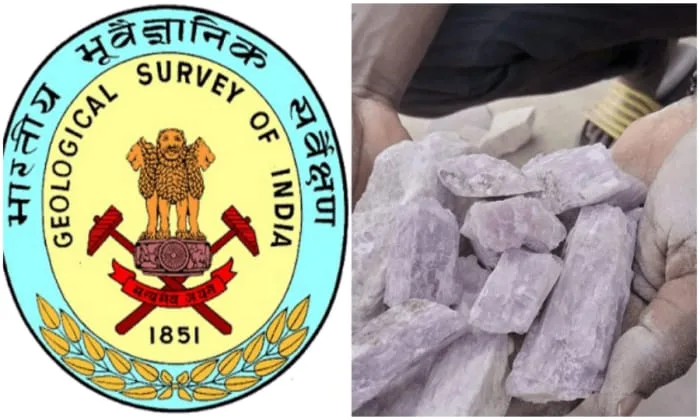
A major lithium reserve discovered in the Degana region of Nagaur district, Rajasthan, could significantly reduce India’s reliance on China for this critical mineral. Acting swiftly after the discovery, the Ministry of Mines has launched the auction process for what is expected to be the largest lithium deposit found in the country so far.
According to estimates by the Geological Survey of India (GSI), the Degana deposit contains around 14 million tonnes of lithium. This is believed to be sufficient to meet nearly 80 per cent of India’s total lithium demand. The discovery is particularly significant as India currently depends on China for about 70–80 per cent of its lithium imports. If developed successfully, the Degana reserves could sharply reduce this dependency.
Lithium is a key raw material used in battery manufacturing, playing a crucial role in the electric vehicle (EV) sector and in energy storage systems, including those supporting nuclear power plants.
Reports suggest that extensive drilling operations, covering nearly 26,000 metres, were conducted in the region. These surveys not only focused on lithium but also explored the presence of other valuable minerals such as tungsten, bismuth, tin, and cobalt, highlighting Rajasthan’s broader mineral potential.
Revant Hill in Degana has a long history of mineral exploration. Tungsten was first discovered there in 1914 during British rule and was used to supply the British army during World War I. Mining activities continued for several decades before being discontinued. The recent lithium discovery has once again brought national attention to the region.
Apart from Rajasthan, India has identified several other lithium reserves. A deposit of about 5.9 million tonnes has been reported in the Salal-Hamana area of Reasi district in J&K. Chhattisgarh’s Korba district has already seen the country’s first lithium auction, with mining operations expected to begin soon. Karnataka’s Mandya district holds a smaller reserve of around 14,100 tonnes. Additionally, states such as Bihar, Odisha, Jharkhand, Tamil Nadu, Andhra Pradesh, and Gujarat are believed to have lithium potential, though commercial mining has not yet started in these areas.
As India’s EV market continues to grow rapidly, domestic demand for lithium is rising. Lithium mining in Degana is expected to generate substantial revenue for Rajasthan and create new employment opportunities. Once production begins, the project could prove transformative, not just for the state but for the entire country, by reducing imports, strengthening energy security, and enhancing India’s position in the global lithium market.