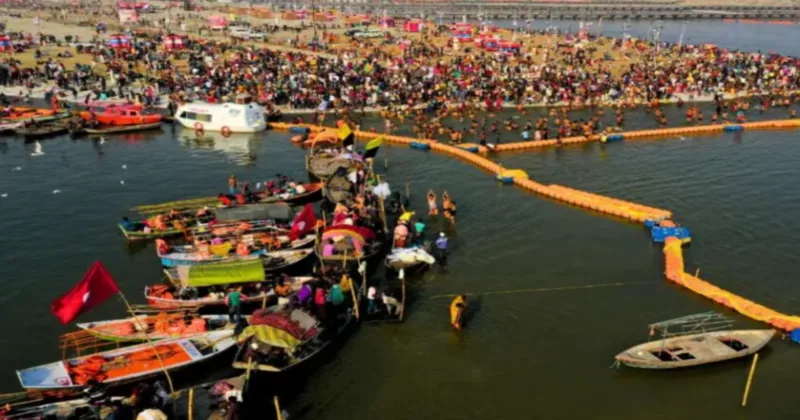
The Magh Mela 2026 will begin on January 3, 2026 (Paush Purnima) and conclude on February 15, 2026 (Mahashivratri) in Prayagraj. Devotees from across the nation will gather at the Triveni Sangam for the sacred bath and month-long Kalpavas, believed to grant spiritual purification and liberation from worldly sins
LUCKNOW: Prayagraj is preparing for the grand Magh Mela 2026, one of India’s oldest and most revered religious congregations. Each year, millions of devotees, saints, and sadhus gather at the confluence of the Ganga, Yamuna, and the mythical Saraswati rivers to take a holy dip, seeking spiritual cleansing and divine blessings.
According to Hindu beliefs, taking a dip in the sacred Sangam during the Magh Mela washes away sins and leads the soul toward salvation. The event symbolises faith, self-discipline, and renunciation, values deeply rooted in India’s spiritual traditions.
Important Dates of Magh Mela 2026
The origin of Magh Mela is linked to the legend of Samudra Manthan i.e. the churning of the ocean by gods and demons in search of amrit (nectar of immortality). It is said that four drops of the nectar fell on Haridwar, Ujjain, Nashik, and Prayagraj. These places later became the four sacred sites where the Kumbh Mela is held once every 12 years. Between these twelve-year cycles, Prayagraj hosts the annual Magh Mela, serving as a smaller yet spiritually potent version of the Kumbh.
- January 3, 2026 (Paush Purnima) – Beginning of Magh Mela and Kalpavas
- January 14, 2026 (Makar Sankranti) – Second main royal bath (Shahi Snan)
- January 18, 2026 (Mauni Amavasya) – Third main bathing day
- January 23, 2026 (Basant Panchami) – Fourth main bathing day
- February 1, 2026 (Maghi Purnima) – Fifth main bath, significant for Kalpavasis
- February 15, 2026 (Mahashivratri) – Concluding day and final holy bath
These auspicious bathing days attract huge crowds, with millions thronging the ghats from dawn to dusk to immerse themselves in the holy waters.
Kalpavas: A Month of Devotion and Discipline
The most sacred aspect of the Magh Mela is Kalpavas, a spiritual retreat lasting one month. Starting from Paush Purnima and continuing till Maghi Purnima, Kalpavas is observed by thousands of devotees, known as Kalpavasis. These devotees live in makeshift tents or huts near the Sangam throughout the month, dedicating themselves to meditation, scriptural study, fasting, and daily river baths. The purpose of Kalpavas is to purify the body, mind, and soul through simplicity, restraint, and devotion. Many also start their Kalpavas journey from Makar Sankranti, following ancient traditions. Kalpavasis wake up before dawn, bathe in the chilly river waters, and spend the day in prayers, chanting, listening to religious discourses, and performing rituals. Their disciplined lifestyle is believed to accumulate immense spiritual merit.
Beyond rituals and ceremonies, the Magh Mela embodies a deeper message: the triumph of faith, discipline, and community spirit. It reminds devotees to live with humility and gratitude, embracing simplicity and service to others. As Prayagraj prepares itself for Magh Mela 2026, preparations are underway to accommodate millions of pilgrims with enhanced security, sanitation, and facilities. The event continues to stand as a living symbol of India’s spiritual diversity and its timeless connection to the sacred rivers that sustain life and belief alike.
The holy bath (Snan) is the heart of Magh Mela. Devotees believe that on specific auspicious days like Paush Purnima, Mauni Amavasya, Basant Panchami, and Maghi Purnima, the sacred waters of the Sangam become spiritually charged. Bathing in them is said to cleanse the soul of all sins and break the cycle of birth and death.