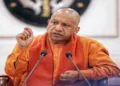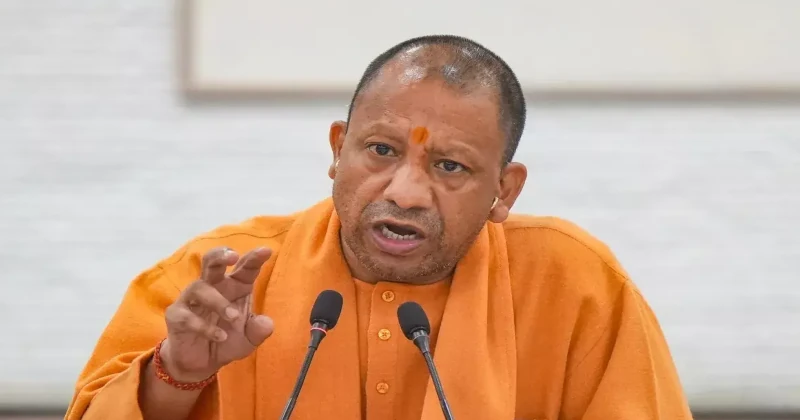
Uttar Pradesh Chief Minister Yogi Adityanath delivered one of his strongest indictments yet of the Opposition’s politics, calling out what he described as moral hypocrisy, selective outrage and decades of appeasement that, he said, have emboldened forces hostile to Hindus both within India and across its borders.
Speaking in the State Assembly, CM Yogi squarely defended India’s civilisational and moral responsibility to speak for persecuted minorities, particularly Hindus, after the brutal lynching of Dipu Chandra Das, a 27-year-old Hindu youth in Bangladesh. His charge was blunt: those who claim to be champions of human rights fall silent when the victims are Hindus.
“You cry over Gaza, you light candles for global conflicts, but you cannot utter a single word when a Hindu is beaten to death in Bangladesh,” the Chief Minister said. “This silence is not neutrality. This silence is complicity.”
CM Yogi argued that the Opposition’s response to international issues exposes a deep-rooted ideological bias. According to him, tragedies are politicised selectively condemned loudly when they fit a global narrative, ignored completely when they involve Hindus, Sikhs in Islamic-majority neighbours.
“The Opposition’s outrage depends on the religion of the victim,” he said. “If the victim is Hindu, especially a Hindu, their conscience goes into hiding.” He demanded that the Leader of the Opposition move a formal condemnation resolution in the Assembly against the killing in Bangladesh, asserting that moral clarity must begin at home.
In a politically charged intervention, CM Yogi traced the roots of present-day atrocities to appeasement politics that led to the Partition of India, stating unequivocally that the creation of Pakistan and later Bangladesh left millions of Hindus exposed to systemic violence.
“Had appeasement not divided this nation, Hindus would not be burnt alive in Bangladesh today,” he said. “History is repeating itself because lessons were never learned.”
His remarks resonated with long-standing concerns over the shrinking Hindu population in Bangladesh and Pakistan, and recurring reports of mob violence, forced conversions and desecration of temples.
Backing his words with policy, CM Yogi reiterated his government’s zero-tolerance approach to illegal immigration, particularly involving Bangladeshi nationals and Rohingyas. He accused Opposition parties of protecting infiltrators for vote-bank politics, alleging that illegal migrants were provided voter IDs and Aadhaar cards under previous regimes.
“Those who live illegally in our country, commit crimes and then expect protection will be shown the way out,” he said. “Uttar Pradesh will not become a shelter for infiltrators.” The Chief Minister made it clear that law, security and demographic stability would not be compromised for political convenience.
Yogi’s remarks come amid heightened diplomatic engagement, with India summoning the Bangladesh High Commissioner twice in one week following the killing of Dipu Chandra Das and student leader Sharif Osman Hadi. Dipu Das was reportedly lynched by a mob over alleged blasphemy, and his body set on fire an incident that sent shockwaves across the region.
While Bangladesh’s Interim Government, led by Muhammad Yunus, expressed regret and announced assistance to the victim’s family, CM Yogi made it clear that expressions of sorrow are not enough. “Condolences do not bring justice. Accountability does,” he said.
Supporters see Yogi Adityanath’s intervention as a rare moment of unambiguous moral positioning one that refuses to dilute human rights based on religious identity. By naming the victim, demanding accountability, and linking security with governance, Yogi framed the issue not as foreign policy optics but as a civilisational and ethical responsibility.
“This government will speak for the voiceless, protect the innocent, and act against those who threaten our security,” he said. “That is our guarantee.”