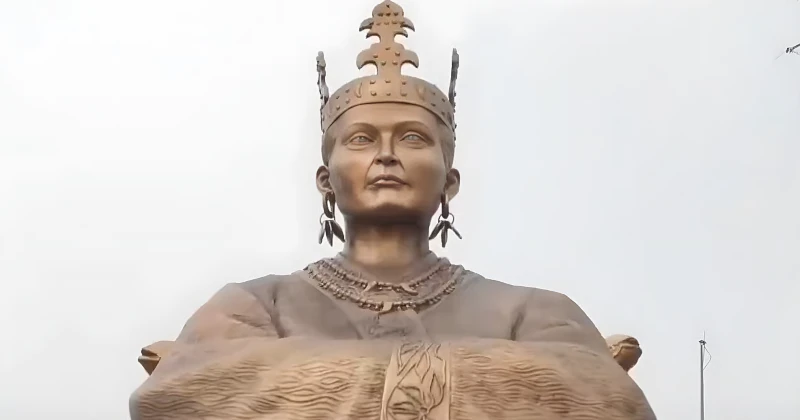
Ayodhya, a city synonymous with ancient epics and deep spiritual heritage, has added a new international chapter to its historical narrative with the unveiling of a bronze statue of Queen Heo Hwang-ok, a legendary Korean queen believed to have been born in the temple town over two millennia ago.
The statue honours Princess Suriratna, who, according to Korean historical folklore, sailed across the seas around 48 AD to marry King Kim Suro, the founder of Korea’s ancient Gaya kingdom. Revered in Korea as Queen Heo Hwang-ok, she is credited with carrying elements of Indian culture and Buddhism to the Korean Peninsula, forging one of Asia’s earliest cultural bridges.
A bronze statue of Korean queen Heo Hwang-ok has been unveiled in city of her birth Ayodhya.
Princess Suriratna travelled by boat around 48 AD to marry King Suro, founder of Korea's Gaya kingdom.
She is credited with bringing Indian culture and Buddhism, and today millions of… pic.twitter.com/lB8cgqxUqe
— News Arena India (@NewsArenaIndia) December 25, 2025
For millions in South Korea, Ayodhya is more than a city of Indian belief. It is believed to be the birthplace of Suriratna, whose extraordinary journey is chronicled in the Samguk Yusa (Memorabilia of the Three Kingdoms), a revered 13th-century compilation of Korean legends and historical accounts. The text refers to her homeland as “Ayuta”, a name many scholars and cultural historians associate with Ayodhya.
According to accounts cited by the BBC and other historians, Chinese-language records also narrate that the king of Ayodhya dreamt that his daughter was destined to marry King Suro. Acting on the divine vision, the princess was sent on a perilous ocean voyage that would permanently link the two ancient civilisations.
Legend holds that Queen Heo Hwang-ok and King Suro ruled wisely and lived long lives, becoming the ancestors of the Karak clan (also spelled Gaya Kim clan), one of Korea’s most prominent lineages. Even today, millions of Koreans trace their ancestry to her, making Ayodhya a place of ancestral reverence rather than distant history.
Anthropologist Kim Byung-mo has argued that “Ayuta” indeed refers to Ayodhya, strengthening cultural claims of the link. However, historians also caution that conclusive archaeological proof of the princess’s existence remains elusive, placing her story at the intersection of legend, faith and historical memory.
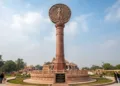
The newly unveiled statue builds on a long-standing cultural relationship between India and South Korea. In 2001, a memorial dedicated to Queen Heo Hwang-ok was established in Ayodhya through collaboration between Uttar Pradesh and Gimhae city in South Korea, believed to be the capital of the ancient Gaya kingdom. The site was later redeveloped in 2015 to deepen cultural engagement.
Every year, members of the Karak clan and Korean visitors travel to Ayodhya, treating the memorial as a symbolic ancestral home and a testament to early transnational migration, shared faith traditions and cultural exchange.