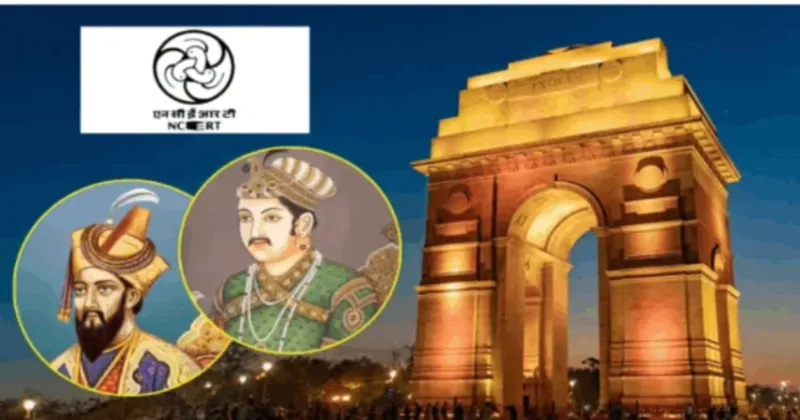
The revision introduced by NCERT in the new Class VII Social Science textbook, “Exploring Societies: India and Beyond – Part 2,” should be viewed as a significant, bold, and far-reaching shift in the field of history education. For a long time, the realities of medieval invasions in Bhartiya history textbooks were either presented in vague, ambiguous terms or reduced to economic and political campaigns. As a result, a significant and decisive dimension of history remained largely beyond students’ comprehension.
The importance of the new textbook lies in its refusal to confine history to selectively chosen events or to filter or fragment facts to suit any particular ideological preference. Instead, it brings to the forefront—in a fact-based and contextual manner—historical episodes that were long marginalised in pedagogy. One of the book’s most significant features is that it accords due space to lesser-known or frequently neglected Bhartiya dynasties. For the first time in the school Social Science curriculum, there is a visible attempt to move away from a North India–centric narrative and present the histories of different regions of the country within a comprehensive national framework.
This approach is in consonance with the National Education Policy (NEP) 2020 and NCF-SE 2023, which emphasise regional histories, literature, philosophy, temple architecture, and Bharatiya knowledge systems. The Kakatiya dynasty is recognised for its patronage of Telugu literature, advanced irrigation projects, village self-governance, and a robust revenue system. The Thousand Pillar Temple at Hanamkonda, near Warangal in Telangana, is widely regarded as a representative example of the architectural excellence of this period. Special attention has been given to ‘Manasollasa’, the celebrated work of Someshwar III, the Chalukya ruler of Kalyani, owing to its extensive treatment of diverse subjects such as astronomy, music, medicine, food, and sports.
The Pallava tradition of rock-cut cave temples and the Shore Temple at Mahabalipuram have been underscored, the latter of which is recognised as a UNESCO World Heritage Site. Alongside this, the roots of the Bhakti movement, articulated through the Alvar and Nayanar saints, have been clearly explained, reflecting the spiritual consciousness of the age. In western Bharat, the intricately carved temples built by the Hoysalas at Belur and Halebidu have been presented as outstanding examples of regional art. In eastern Bharat, the Eastern Ganga dynasty has been accorded special significance for monumental architecture, including the Jagannath Temple at Puri and the Sun Temple at Konark.
The relatively lesser-mentioned Brahmapala dynasty has been prominently included for its role in the history of Kamarupa (present-day Assam). In addition, the contributions of several other dynasties—Bhanja, Chapa, Guhila, Kalachuri, Maitraka, Maukhari, Shilahara, Somavanshi, Tomara, and Chahamanas (Chauhans)—have also been appropriately integrated. References to spiritual and social reformers such as Adi Shankaracharya, Ramanujacharya, and Basaveshwara underline the intellectual and philosophical vitality of this era. The new textbook places particular emphasis on temple architecture.
The Kailasanatha Temple at Ellora, the Basaveshwara Temple of the Chola period, and the Lakshmana Temple built by the Chandelas are presented as exemplary manifestations of architectural aesthetics and engineering skill. While earlier textbooks focused predominantly on North Bharat and the monuments of the Delhi Sultanate, this book foregrounds regional artistic traditions and religious heritage. Students of Class VII will now also be introduced to the concept of “Vasudhaiva Kutumbakam” — “the world is one family.” This idea will no longer remain confined to ceremonial speeches and public platforms; it will become an integral part of the school curriculum. Through this, students will not only understand Bharat’s cultural ethos and global outlook but will also develop a consciousness to carry it forward.
According to NCERT Director Dinesh Prasad Saklani, the title of this lesson is “India, A Home to Many.” He notes that communities who migrated to Bharat for various reasons experienced safety, dignity, and a sense of belonging here. The chapter refers to the Jewish and Parsi communities, who arrived in Bharat after fleeing persecution, oppression, and discrimination in their homelands, and who not only found refuge but also prospered. The chapter emphasises that “Vasudhaiva Kutumbakam” is not merely a slogan or moral exhortation for Bharat, but an intrinsic element of its social and cultural fabric—a lived tradition that the country has upheld and practised for centuries.
According to a report published by The Indian Express, an important chapter titled “India and Her Neighbours” has been added to the new Class VII textbook “Exploring Societies: India and Beyond – Part 2.” This chapter presents Bharat’s relations with its neighbouring countries in historical, civilizational, and contemporary perspectives, enabling students to develop an understanding not only of geography and politics but also of shared heritage. With reference to Pakistan, the textbook clearly states that prior to Partition, this region was an integral part of Bharat and that the very basis of Pakistan’s existence was religious. Bharat–Pakistan relations are widely regarded as among the most complex bilateral relationships in the region, shaped by the Partition and four major wars. The book also notes that repeated terrorist attacks against Bharat, supported by the Pakistani military, have severely disrupted the prospects of normal and cordial relations between the two countries. At the same time, the Bharat–Pakistan border is portrayed not merely as a geographical line, but as a symbol of shared heritage and the tragic history of Partition. The chapter also refers to the Kartarpur Corridor, opened in 2019 on the occasion of the 550th birth anniversary of Guru Nanak Dev Ji, which has facilitated the pilgrimage of thousands of devotees to the Kartarpur Sahib Gurdwara.
In the context of China, the textbook offers a balanced account of the ancient civilizational links between the two countries as well as the tensions that have emerged in recent years. It highlights that Bharat and China are two of Asia’s most influential nations, connected historically through Buddhism as an important cultural bridge. While border disputes have led to heightened tensions, efforts to resolve differences through trade, dialogue, and border management mechanisms continue. In the “Don’t Miss Out” section, the book notes temples built by Hindu traders in the Chinese port city of Quanzhou, particularly the Kaiyuan Temple, whose pillars bear depictions of Vishnu and Shiva and narratives from the Ramayana and Puranas. This reference underscores the ancient and historical cultural ties between Bharat and China.
Bharat’s relations with Bangladesh are presented as deep and robust, rooted in shared history, culture, and natural linkages such as rivers, and are counted among Bharat’s most important regional relationships. Relations with Nepal are a notable example of an open-border relationship and profound cultural interconnectedness, in which citizens of both countries can travel without passports or visas and benefit from opportunities in education, healthcare, employment, and family ties. In Bhutan, the focus is on hydropower cooperation and a shared Buddhist cultural heritage, portraying the relationship as one based on mutual respect, strategic cooperation, and cultural affinity. In the case of Sri Lanka and the Maldives, the chapter highlights ancient cultural connections alongside modern strategic cooperation. Bharat’s emergency assistance during the 2004 tsunami and the 2014 water crisis is also specifically mentioned.
The chapter further explains Bharat’s historical influence in Southeast Asian countries—Thailand, Malaysia, Singapore, and Indonesia—through maritime trade, the spread of Buddhism, the Sanskrit language, and cultural traditions. It ultimately concludes that Bharat’s relations with its neighbours are not confined to contemporary politics alone, but have been shaped by centuries-old civilizational and cultural currents. Regarding Afghanistan, the textbook notes that Bharat and Afghanistan once shared a direct land border, which was disrupted after the creation of Pakistan in 1947. Despite this, relations between the two countries have continued to rest on shared history, culture, and strategic interests. The book also states that before the spread of Islam in the seventh century, Afghanistan was a flourishing centre of Buddhist and Hindu culture, with regions such as Kapisha and Zabul reflecting the Bharatiya systems of governance. In addition, Bharat’s support in recent decades for Afghanistan’s education, healthcare, and infrastructure development is highlighted as a factor that has helped sustain strong people-to-people ties between the two nations.
It is important to understand that the curricular changes being undertaken by NCERT are not confined merely to Social Science or language textbooks. In reality, syllabi across other subjects are also being reviewed against the test of time—on the one hand being updated, and on the other, consciously seeking to acquaint students with Bharat’s rich knowledge systems associated with those disciplines. From this perspective, the Class VII Mathematics textbook now incorporates the contributions of ancient Bhartiya mathematicians and scientists, whose works implicitly contain several foundational elements of scientific thinking.
In chapters on algebra, geometry, and integers, the contributions of great scholars such as Bhaskara, Brahmagupta, and Aryabhata have been accorded due prominence. Brahmagupta’s Brahmasphutasiddhanta, with its rules governing zero and positive and negative numbers; the Śulba Sūtras, which contain concepts akin to the Pythagorean theorem; and Aryabhata’s exposition of the place-value system and the decimal numeral system—all these examples underscore how ancient and original Bharat’s role in the fields of mathematics and science truly was. Kanada’s atomic theory and Aryabhata’s heliocentric model further reflect the depth of ancient Bhartiya scientific thought.
Such changes represent an important step towards cultivating a sense of pride in Bharat’s scientific heritage among students and encouraging inquiry-based learning. Unfortunately, these meaningful and forward-looking reforms have received little wider discussion. Public discourse has largely remained confined to those changes that threaten to unsettle certain long-standing, ideologically sustained narratives. At the centre of such debates is the detailed and evidence-based account of Mahmud of Ghazni’s seventeen consecutive invasions included in the new Class VII Social Science textbook. The book presents with clarity and authenticity the evidence related to plunder, temple destruction, mass killings, and the slave trade associated with his campaigns.
The destruction of the famous Somnath Temple in Gujarat and the removal of the Shiva linga are mentioned without hesitation. At the same time, while providing information about the reconstruction of the Somnath Temple, the textbook clearly explains when and by whom the reconstruction was undertaken, and why and how the required funds were raised through public donations. Significantly, questions related to these episodes have been included in the practice section, ensuring that students do not view history merely as a subject to be memorised, but are encouraged to reflect upon its social, cultural, and ethical dimensions. It is particularly noteworthy that in the previous textbook, Mahmud of Ghazni was covered in only a brief paragraph, whereas the new book presents a detailed description and analysis—spanning nearly six pages—of the nature, impact, and long-term consequences of his invasions.
In the same sequence, the chapter titled “Turning Tides: Eleventh and Twelfth Centuri Bakhtiyar Khiljies” incorporates the campaigns associated with Muhammad Ghori, Qutbuddin Aibak, and with new, detailed, and well-substantiated evidence. The book presents a realistic and unambiguous account of the destruction of world-renowned universities such as Nalanda and Vikramshila. It records that during these invasions, large numbers of Buddhist monks were massacred and that the vast collections of manuscripts preserved in the university complexes continued to burn for months.
According to many historians, these events were among the principal reasons for the gradual decline of Buddhism in Bharat. In addition, the textbook accords due space to Arab invasions and the history of Sindh. Chapters focusing on the period from the sixth to the tenth centuries mention the incursions of the Hunas and the Arabs, while the invasion of Sindh by Muhammad bin Qasim is presented with authenticity, based on available Persian sources. The inclusion of all these facts and contexts represents a necessary and welcome effort to present history in its fullness and integrity. History becomes meaningful and educative only when it acknowledges both glory and suffering with equal honesty and sensitivity. This new NCERT textbook appears to be a serious and well-considered attempt to establish precisely such a balance.
It is important to note that Mahmud of Ghazni’s repeated attacks on Bharat were not merely military expeditions, but religiously motivated aggression driven by a well-defined ideological framework. His campaigns extended from Kabul and Peshawar to Punjab, Rajasthan, Gujarat, Kannauj, Kalinjar, Ujjain, and most notably, Somnath. The magnificent temples of Mathura, the shrines of Thanesar, the prosperous religious and social institutions of Kannauj, and the ancient Shaiva temple at Somnath were systematically destroyed by him. Contemporary chroniclers such as Al-Utbi, Al-Biruni, and Firdausi, as well as later historians Nizamuddin Ahmad and Abul Fazl Bayhaqi, acknowledged that he regarded the destruction of what he termed the “centres of idol worship” as his religious duty.
Even the honorifics conferred upon him—such as “Butshikan” and “Ghazi”—bear testimony to this mindset. Had his sole objective been wealth, his primary targets would have been political centres, royal palaces, and commercial cities. Instead, he consistently chose locations that housed religious institutions, temples, and cultural establishments. This pattern of selection itself reveals his intent. For him, temples were not merely repositories of wealth; they were symbols of what he perceived as kufr, whose annihilation he considered an essential part of jihad. As a consequence of his invasions, millions were killed, thousands of women and children were enslaved and taken to Ghazni, and the social, economic, and cultural fabric of numerous cities remained shattered for decades.
Even after Ghazni, the same ideology continued to manifest itself in different forms. Whether it was the campaigns of Muhammad Ghori, the horrific massacre carried out by Timur in 1398, or the devastation of Delhi by Nadir Shah in 1739, all these events were driven by a similar mindset. While the immediate causes may have differed, at their core operated the same “kufr–kafir” worldview and jihadist mentality. Ghori sought not only territorial expansion but also religious domination and authority, systematically destroying temples and institutions by branding them as “centres of the infidels.” Timur, in his own autobiography Tuzuk-e-Timuri, explicitly wrote that his campaign was inspired by a religious urge to “eradicate kufr,” and records show that in Delhi he ordered the massacre of thousands of non-Muslim civilians in a single day. Nadir Shah’s brutality, too, cannot be explained merely as a quest for wealth. Had his sole objective been the Kohinoor, the Peacock Throne, or immense riches, there would have been no rationale for indiscriminate bloodshed. Yet he carried out mass killings based on religious identity, desecrated temples, and trampled cultural centres. To categorise all these invasions merely as economic or political expeditions is to do grave injustice to history. They constituted a sustained assault on Sanatana Bharatiya civilisation—its diversity, its pluralism, and its cultural soul—an assault that drew legitimacy from Islamic extremism and a kufr–kafir–centred ideological framework.
This ideological structure was not confined only to the invasions by Islamic aggressors. It is also clearly visible in the policies of several fanatical and intolerant rulers of the Sultanate and Mughal dynasties who governed while residing in Bharat. Its expression is evident in their religious intolerance, inhumane treatment of non-Muslims, large-scale massacres, and discriminatory practices such as jizya. This was not merely a matter of statecraft or political strategy; at its root operated a rigid ideological vision. The foundations of this vision lay in an exclusivist conception of “one prophet, one symbol, one book, one colour, and one flag.” Such a conception left no space for diversity, plurality, dissent, spiritual autonomy, or freedom of worship. This mindset believed—and in many cases continues to believe—that moulding the entire world into religious uniformity is a mandatory religious obligation. Consequently, removing every obstacle that stood in the path of this so-called religious duty—even if it required large-scale slaughter and genocide—was neither regarded as a crime nor as a matter demanding moral hesitation or ethical reflection. In stark contrast, the civilisational character of Bharat has, from its very inception, been multi-coloured, pluralistic, liberal, tolerant, and integrative.
Diverse ideologies, faiths, philosophies, and modes of worship have coexisted and flourished here. Therefore, when Bharat faced invasions driven by Islamic extremism, the conflict was not confined to the political or military domains. It was also a profound cultural, spiritual, social, and philosophical confrontation. The destruction of temples was not simply the demolition of brick-and-stone structures; it was a direct assault on a society’s collective consciousness, its historical memory, its traditions, and its reservoirs of knowledge. In Bharatiya society, temples were not merely places of worship; they functioned as centres of education, culture, art, and social life. Their destruction, therefore, became a means not merely of demonstrating power, but of establishing cultural dominance. This is why the impact of these invasions did not remain confined to immediate changes in political authority. They inflicted deep wounds on Bharat’s cultural continuity, civilisational self-awareness, and social structure at multiple levels. Without understanding these dimensions, any serious and comprehensive evaluation of medieval Bharat’s history remains incomplete.
For decades, certain Left-leaning and so-called secular historians either deliberately suppressed these historical facts or rendered them so inconsequential that their original meaning stood fundamentally distorted. The religious fanaticism underlying temple destruction and large-scale massacres of Hindus was persistently concealed behind convenient and generic explanations such as military strategy, economic plunder, political ambition, or imperial expansion—as if these acts bore no relation whatsoever to religious motivation or intent.
The argument was constructed that damage to temples occurred merely by coincidence, or that temples were targeted only as repositories of wealth. However, contemporary Persian–Turkish sources, accounts of court historians, and the proclamations of the invaders themselves leave no room for ambiguity: the destruction of temples, libraries, and religious centres was not the outcome of accidental wartime excesses, but a declared policy and an integral component of what was considered a religious duty—namely, jihad. The irony is that the same historians routinely dismissed the glorious chapters of Bharatiya culture as “myth,” despite abundant evidence, while simultaneously exaggerating divisive narratives or episodes portraying Bharatiya civilisation as inferior—even when based on weak or unsubstantiated sources.
Even more troubling is the manner in which the brutality, barbarism, and mass killings recorded by the Islamic invaders’ own court chroniclers were dismissed under the guise of so-called “Ganga–Jamuni tehzeeb” or an imagined narrative of brotherhood. Does it really need to be reiterated that in history, facts and credible evidence carry far greater weight than ideologically driven arguments? Serious questions must also be raised about a mindset that, in seeking to justify concepts such as jihad, becomes ungrateful to its own society, nation, and civilisational milieu—and does not hesitate to display ideological sympathy for foreign aggressors.
Those intellectuals who repeatedly invoke the rhetoric of “Ganga–Jamuni tehzeeb” must be asked why—and by whom—declared villains of history were persistently presented as heroes. Is this an attempt to heal the wounds of the past, or to conceal them through ideological deception and thereby deepen them further in the present? Teaching villains as heroes neither serves the genuine interests of any community nor helps build trust and unity on the solid ground of reality. A so-called unity built upon falsehood collapses at the utterance of a single religious slogan or incendiary sermon. The partition of the country on the basis of religion and separate identity stands as the most painful, yet the most direct and authentic, example of this truth. The reality is that the persistent neglect of authentic historical facts has unnecessarily confused and weakened Bharatiya society’s historical consciousness, allowing the clarity of truth to remain obscured for an extended period.
It is precisely for this reason that NCERT’s revision is of immense significance. It neither writes history out of bitterness nor indulges in blame directed at any community. Instead, it acknowledges events that are genuinely part of our historical experience. Only when the younger generation is provided with an honest and truthful account of history will it be able to understand the challenges Bharat faced, how it safeguarded its cultural identity, and how—despite centuries of struggle—its core civilisation remained alive and radiant. The purpose of history is not to create divisions within society, but to acquaint it with the reality of its true and authentic journey—and this is precisely what the new textbook seeks to do. This change is not merely a revision of content; it is a restoration of historical consciousness. A nation can move towards the future with confidence only when it accepts its history without hesitation, without distortion, and without an ideological veil.