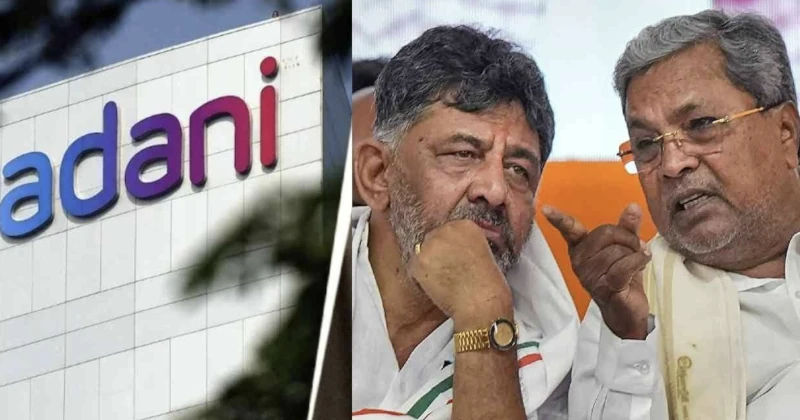
Bengaluru: The ambitious Bengaluru Tunnel Road project has triggered a fresh political storm in Karnataka, with the Adani Group emerging as the lowest bidder for the mega infrastructure project. While the development places the Congress-led Siddaramaiah government in a tight spot politically, it has also raised serious questions about cost escalation, transparency and consistency in the party’s stance against corporate giants it routinely criticises at the national level.
According to official tender details, the Adani Group has quoted Rs 22,267 crore for the Bengaluru Tunnel Road project. This is significantly higher than the estimated project cost of Rs 17,698 crore fixed by the Greater Bengaluru Authority (GBA). Despite being around 24 per cent above the estimated value, Adani’s bid is the lowest among the companies that reached the final stage of the tender process.
Initially, four major firms were in the race. However, some bidders were eliminated on technical grounds. Eventually, the competition narrowed down to two contenders the Adani Group and Hyderabad-based Vishwasamudra Group. Vishwasamudra reportedly quoted Rs 25,474 crore, nearly Rs 7,776 crore higher than the government’s estimated cost, effectively making Adani the only viable option under existing tender norms.
Legally, the lowest bidder stands first in line for the contract. Politically, however, the situation is far more complicated for the Congress government. For years, Congress leaders, including Rahul Gandhi, have accused the BJP-led Union government of favouring the Adani Group through large infrastructure contracts, alleging crony capitalism and preferential treatment. Against this backdrop, awarding a multi-thousand-crore tunnel road project to Adani places the Karnataka government in a clear moral and political contradiction.
Deputy Chief Minister and Bengaluru Development Minister D K Shivakumar sought to downplay the controversy, asserting that the government would stick strictly to the terms it had announced. “Whoever bids Adani, me or you the government will pay only what it has declared. Even if someone bids Rs 20,000 crore or more, the government will not pay beyond the approved amount. The remaining cost will have to be borne by the bidder,” Shivakumar said.
While this statement attempts to reassure the public on financial discipline, it does not fully address the political optics or the fundamental concern: whether a project with bids significantly higher than the estimated cost should proceed at all without a review. Critics argue that accepting a bid 24 per cent higher than the GBA’s own estimate defeats the purpose of competitive bidding and raises doubts about project planning and cost assessment.