The Union government has proposed a major overhaul of India’s rural employment architecture with the introduction of the Viksit Bharat-Guarantee for Rozgar and Ajeevika Mission (Gramin) Bill, 2025. The proposed legislation seeks to repeal and replace the Mahatma Gandhi National Rural Employment Guarantee Act (MGNREGA), enacted in 2005, marking one of the most consequential changes in rural policy since the rights-based employment law came into force nearly two decades ago.
The government has positioned the Bill as a transition from a welfare-centric employment guarantee towards a development-oriented framework that integrates assured wage employment with durable asset creation, climate adaptation and predictable public expenditure. According to official briefings, the new law is designed to support the long-term objective of transforming rural India into a productive, resilient and infrastructure-enabled economy by the centenary of Independence in 2047.
Why the government wants to move beyond MGNREGA
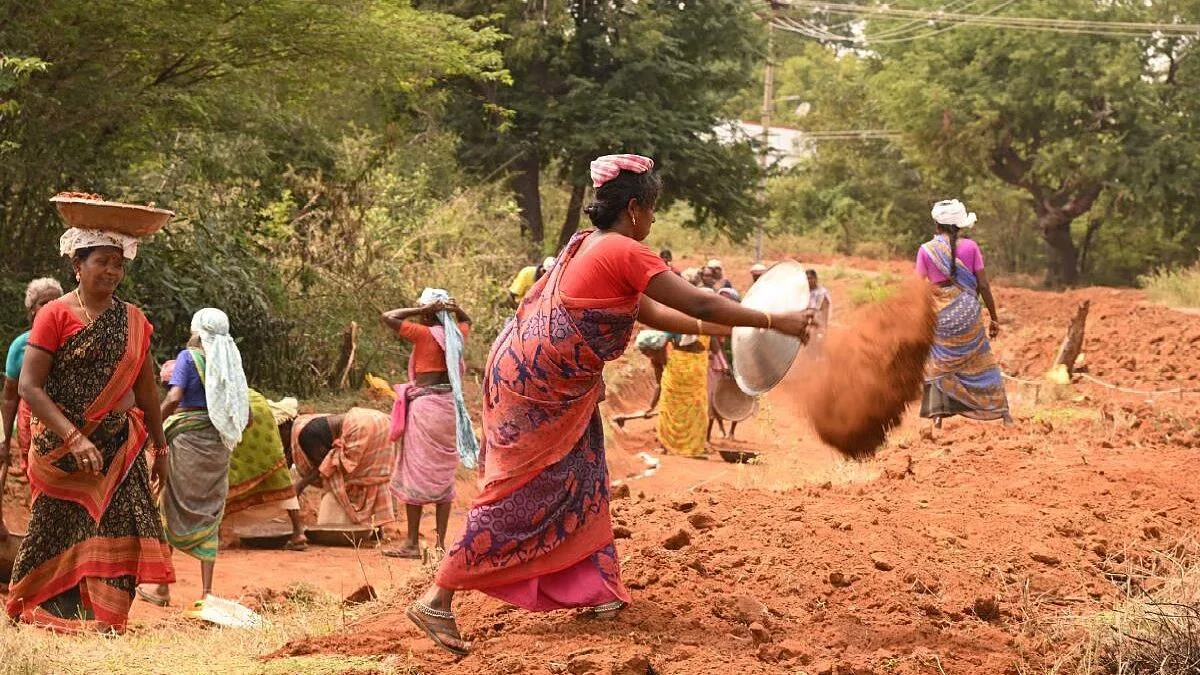
MGNREGA was introduced as a scheme, guaranteeing 100 days of wage employment per year to rural households willing to undertake unskilled manual labour. Over the years, it played a critical role in stabilising rural incomes, especially during periods of economic distress such as droughts, agrarian slowdowns and the COVID-19 pandemic. The programme also saw important systemic reforms, including the introduction of Aadhaar-based payments, direct benefit transfers, geo-tagging of assets and increasing participation of women in the workforce.
Equally crucial was the role of field-level functionaries, mates, panchayat officials, technical assistants and block-level staff, who ensured the scheme continued to function at scale despite persistent shortages of manpower and administrative resources. Their efforts helped MGNREGA remain one of the world’s largest public works programmes.
However, the government argues that the experience of nearly two decades also revealed deep structural limitations. Multiple evaluations and monitoring exercises across states flagged recurring issues: works shown on records but not found on the ground, mismatches between expenditure and physical progress, use of machinery in labour-intensive works, and frequent bypassing of digital attendance systems. Over time, cases of misappropriation accumulated, and compliance mechanisms struggled to keep pace with the programme’s scale.
Another critical concern highlighted by the government is that, in the post-pandemic period, only a relatively small proportion of households were able to complete the full 100 days of employment. Despite improvements in technology and payment systems, the overall architecture of MGNREGA, has now reached a saturation point where incremental reforms were no longer sufficient.
What the new Bill proposes
At the core of the new framework is an enhanced employment guarantee. The Bill provides for 125 days of wage employment per rural household in each financial year, applicable to households whose adult members volunteer to undertake unskilled manual work. This represents a significant expansion over the existing 100-day entitlement and is projected as a measure to strengthen income security in rural areas.
At the same time, the Bill introduces an aggregated 60-day no-work period to ensure the availability of agricultural labour during peak sowing and harvesting seasons. This provision seeks to address long-standing concerns from farmers about labour shortages caused by competing public works during critical agricultural cycles. Workers remain entitled to their 125 guaranteed days within the remaining 305 days of the year, aiming to balance the interests of both cultivators and labourers.
The legislation mandates that wages be disbursed on a weekly basis or, at the latest, within a fortnight of the work being done, reinforcing accountability for timely payments. As with the earlier regime, failure to provide employment within 15 days of demand would attract an unemployment allowance payable by the state government.
Infrastructure-led employment creation
A defining feature of the proposed law is the explicit integration of employment generation with infrastructure development. The Bill identifies four priority verticals for permissible works:
1. Water security and water-related works, including conservation, harvesting and irrigation-related assets
2. Core rural infrastructure, such as roads, storage facilities and connectivity
3. Livelihood-related infrastructure, supporting agriculture, allied activities and rural enterprises
4. Special works to mitigate extreme weather events, reflecting the growing impact of climate change on rural livelihoods
5. All assets created under the programme will be aggregated into a Viksit Bharat National Rural Infrastructure 6.Stack, envisioned as a unified digital repository to ensure coordination, avoid duplication and align local assets with national development priorities.
Planning under the new framework remains decentralised but technologically integrated. Viksit Gram Panchayat Plans will be prepared at the local level, with spatial integration into national platforms such as PM Gati Shakti, allowing village-level works to plug into broader infrastructure and logistics planning.
One of the most consequential departures from MGNREGA lies in the funding model. Unlike the earlier demand-driven, central-sector scheme with open-ended financial liability, the new programme will operate as a centrally sponsored scheme based on normative funding.
Under this model, allocations will be determined using objective parameters rather than uncapped demand, allowing for improved budget predictability and fiscal discipline. The total annual outlay is estimated at around Rs 1.51 lakh crore, including state contributions. The Centre’s share is projected at approximately Rs 95,700 crore.
Cost-sharing will follow a 60:40 ratio between the Centre and states, with higher central assistance for northeastern and Himalayan states, and 100 per cent funding for Union Territories without legislatures. The government maintains that this structure preserves the legal guarantee of employment while reducing fiscal uncertainty and reinforcing Centre-State accountability.
Stronger administration and tighter oversight
To address implementation challenges that plagued MGNREGA, the Bill proposes a significant strengthening of administrative capacity. The ceiling on administrative expenditure has been raised from 6 per cent to 9 per cent, enabling greater investment in staffing, training, monitoring systems and technical expertise.
The legislation establishes Gramin Rozgar Guarantee Councils and Steering Committees at both central and state levels, while reiterating the central role of Panchayati Raj institutions and Gram Sabhas in planning and oversight. Importantly, it expands the enforcement powers of the Union government, allowing it to investigate complaints, suspend fund releases in cases of serious irregularities and mandate corrective actions.
Social audits are to be conducted at least twice a year, supported by real-time dashboards, GPS-based monitoring, digital attendance systems and enhanced transparency mechanisms.
For rural workers, the expanded employment ceiling offers higher earning potential, more predictable work availability and improved wage security through time-bound digital payments. The continuation of unemployment allowances is intended to preserve the rights-based character of the guarantee.
Farmers, on the other hand, are expected to benefit from improved irrigation infrastructure, water conservation assets, storage facilities and rural connectivity, alongside explicit safeguards against labour shortages during peak agricultural seasons.
The government has called the Bill as part of a wider transformation of rural India, citing declines in poverty levels, rising rural incomes and increasingly diversified livelihoods. By linking employment guarantees with durable asset creation and climate resilience, the proposed framework seeks to reposition rural employment not merely as a safety net, but as a strategic instrument of long-term development.
If enacted, the Viksit Bharat-Guarantee for Rozgar and Ajeevika Mission (Gramin) Bill, 2025, would mark a decisive reimagining of India’s rural employment policy, one that reflects both the lessons of MGNREGA and the aspirations of a rapidly changing rural economy.