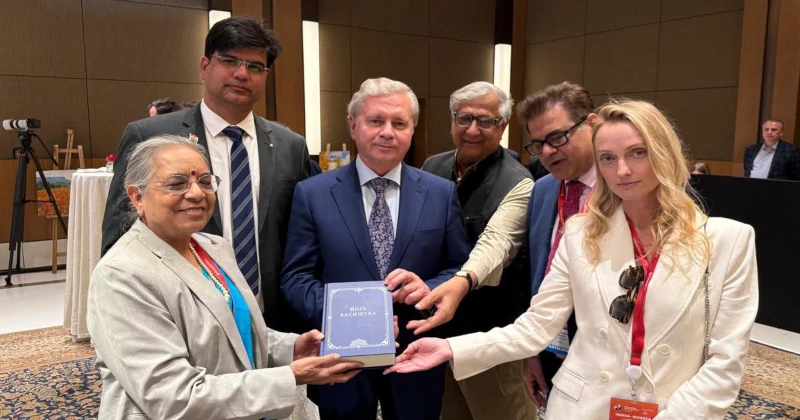
NEW DELHI: A significant milestone in Indo-Russian cultural cooperation was marked this week with the presentation of a newly published Russian translation of the ancient Indian Sanskrit classic Yoga-Vasishtha to Cheremin Sergey, Russia’s Minister for External Economic and International Relations.
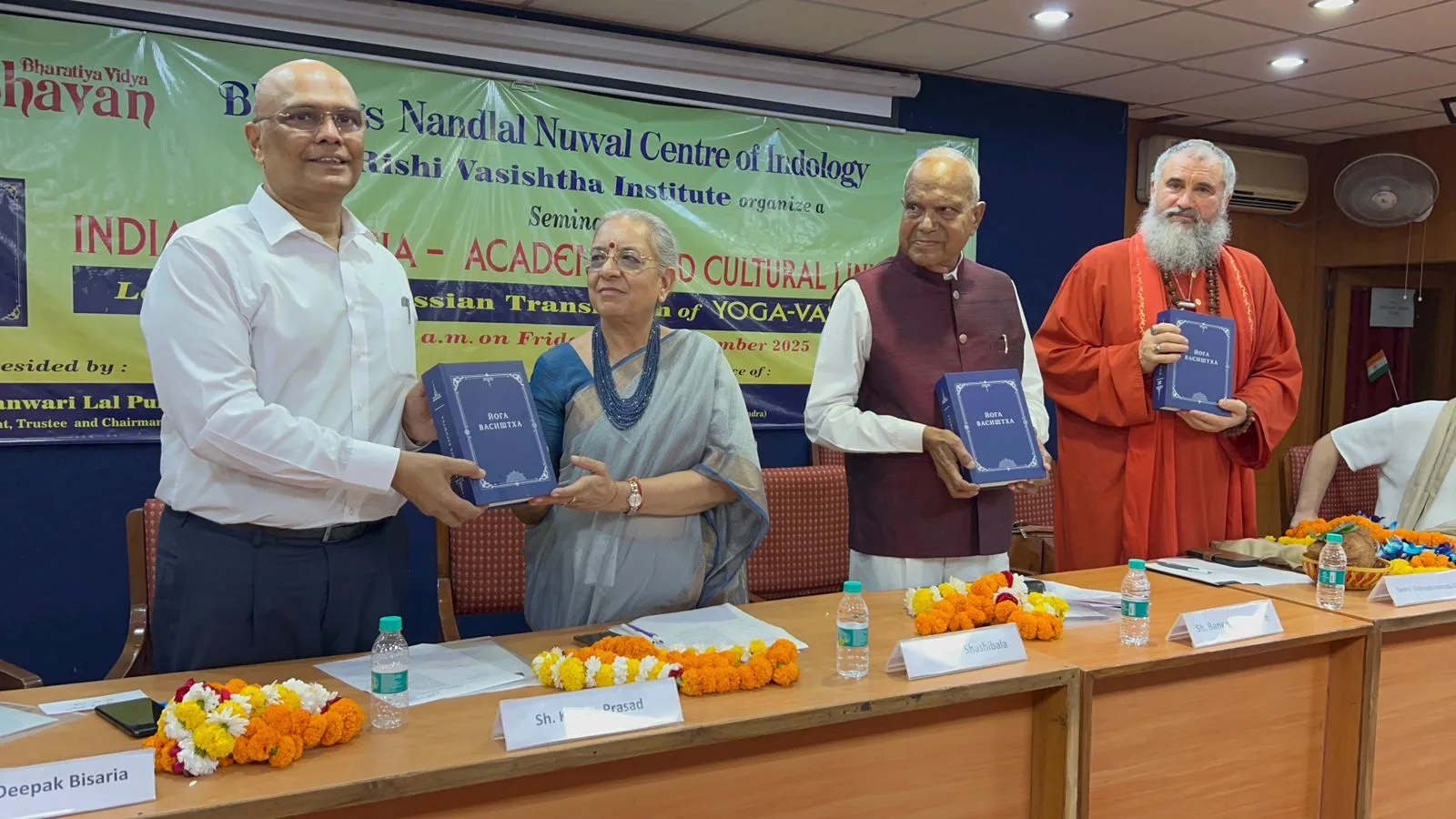
The translation has been brought out jointly by the Rishi Vasishtha Institute, Moscow, and Bharatiya Vidya Bhavan, New Delhi. The project was led by Dr. Shashi Bala, Dean of the Centre of Indology at Bharatiya Vidya Bhavan, and Olga Vlasenko, Dean of the Rishi Vasishtha Institute. Recently, the fourth volume of Yoga Vasishtha was launched at Bharatiya Vidya Bhavan New Delhi, marking a major scholarly achievement in the ongoing multi-volume project.
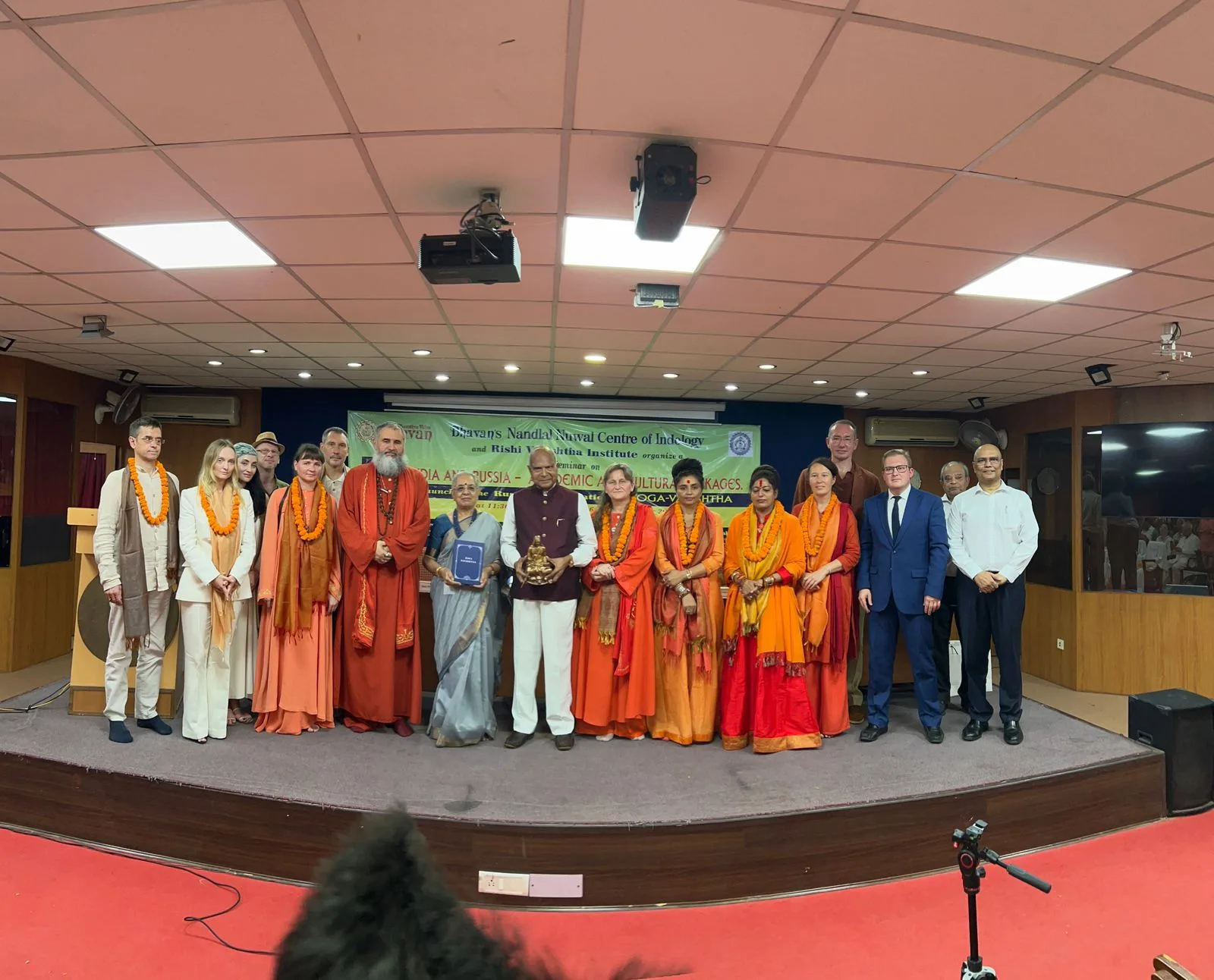
Yoga-Vasishtha, traditionally attributed to Sage Vasishtha and composed as spiritual counsel to Prince Rama, is one of India’s most profound philosophical works. The text explores universal questions of human existence and offers guidance on overcoming sorrow, ego, fear, and dissatisfaction through self-knowledge and inner clarity.
The presentation comes in the backdrop of longstanding cultural and literary exchanges between India and Russia. Earlier, Prime Minister Narendra Modi had gifted a Russian translation of the Bhagavad Gita—a dialogue between Bhagwan Krishna and Arjuna to President Vladimir Putin. Both Krishna and Rama are revered in India as incarnations of Bhagavan Vishnu, symbolising protection and the preservation of universal order. Their teachings, scholars say, continue to serve as a bridge of goodwill between the two nations.
A Legacy of Russian Indology
Russia has a rich history of engagement with Indian philosophical literature. As early as 1787, Nikolay Novikov translated the Bhagavad Gita into Russian. Subsequent scholars such as Prof. Dr Kalyanov, who translated the Mahabharata, and Aleksey Baranikov, known for his poetic rendition of Ramacharitmanas, helped deepen the understanding of Sanskrit texts. Russian expeditions across Central Asia uncovered invaluable Buddhist and Sanskrit manuscripts, and cultural icons like Leo Tolstoy, Nicholas Roerich and Madame Blavatsky drew inspiration from India’s spiritual traditions.
By the late 19th century, Sanskrit was a compulsory subject for students of classical languages in Russian universities. From 1852 to 1875, Russian scholars even compiled one of the world’s largest Sanskrit–German dictionaries, reflecting Russia’s longstanding linguistic and scholarly fascination with Sanskrit.
The Timeless Relevance of Yoga-Vasishtha
The newly translated text begins with Rama’s inner turmoil and existential questioning struggles that mirror modern concerns such as anxiety, depression, and the pursuit of meaning beyond material life. Through a dialogue between Rama, his father King Dasharatha, Sage Vishvamitra, and Sage Vasishtha, the scripture leads the young prince toward clarity, conviction, and spiritual awakening.
The work offers practical insights for balanced mental, ethical, and spiritual development, making it especially relevant for young readers navigating contemporary pressures.
A New Milestone in Indo-Russian Collaboration
The release of this translation is viewed as a major step in strengthening academic and cultural bridges between India and Russia. Scholars believe it will inspire future generations of Russian readers, encouraging deeper reflection on universal consciousness and shared human values.
Institutions such as Bharatiya Vidya Bhavan and the Rishi Vasishtha Institute hope that this collaboration will further promote Sanskrit studies, facilitate cultural exchange, and preserve the timeless wisdom contained in India’s classical literature.