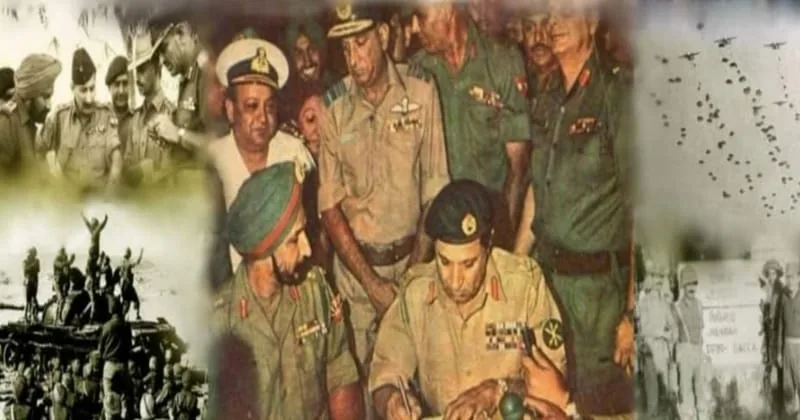
I was fortunate to have the opportunity to participate in the Indo-Pak War, 1971, as part of the Special Frontier Force (SSF), on both the Eastern and Western Fronts. The outcome of that war was the liberation/independence of Bangladesh. I was a 22-year-old young officer then, a second Lieutenant. Much water has flowed in the Ganga/Kaveri in India, the Meghna/Karnaphuli in Bangladesh, and the Manawar Tawi/Sutlej in Pakistan. More than half a century later, on the occasion of its 54th anniversary on December 16, when I reminisce about that war, it surprises me as to how Bangladesh, India and Pakistan each have created a very distinct but different memory of what happened 54 years ago. Bangladesh remembers this war as the people’s struggle against political Injustice, resulting in the cruel and oppressive actions of the Pakistan Army. Both India and Pakistan remember it as the third Indo-Pak war. Differences of opinion as to who played the central role in that war, as well as tales of valour by each one of them, form part of folklore with unique meanings across the subcontinent.
Bangladesh: The Liberation War
Immediately after the Partition, East Pakistan, comprising East Bengal (Today’s Bangladesh), started a fight/struggle for Bengali Rights with West Pakistan (Today’s Pakistan). Refusal by West Pakistan to accept Bengali as the state language of Pakistan, along with Urdu, economic disparity between them, superiority/ hegemony of the West Pakistani ruling elite over Pakistan, martial laws and scornful attitude towards Bengali culture and population were bones of contention between East and West Pakistan. December 1970 saw the Awami League Party (ALP) from East Pakistan, led by Sheikh Mujib ur Rahman, handsomely winning the national elections. It was not surprising that the Pakistan Peoples Party, led by Zulfikar Ali Bhutto, which was in second place, cajoled President General Yahya Khan not to hand over power to obscure and loathsome Bengalis. Local Bengali residents and pro-West, Urdu-speaking Biharis who belonged to the Bihari community started clashing violently.
Taking the umbrage of ethnic violence, on March 25, 1971, the Pak Army ruthlessly cracked down in East Pakistan under “Operation Searchlight” to curb growing nationalist sentiments in East Pakistan with extreme cruelty. It recruited local pro Pakistan Bengalis/Biharis/ non Bengalis, members of Jamaat e Islami and formed a Razakar organisation for its operations against Bengali faction. This Army Razakar combine killed Bengali student/political leaders, Defence personnel, intellectuals, artisans, actors, social workers, scientists, medicos and men who matter in 48 hours. Approximately three to thirty lac people have been killed/died, and more than 85,000 women were utterly humiliated/ raped.
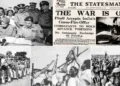
The summer of 71 saw an escalation of ethnic and state violence against locals. A large number of Bengali Intelligentsia, men who matter, military/paramilitary personnel and refugees streamed into the Indian State of Assam and its offshoots. The Indian Research and Analysis Wing formed Mukti Vahini from amongst these refugees. India wisely used this as an excuse for strong military intervention in December 1971. War broke out on December 3, 71 and finished on December 16, 71. Nine-month conflict came to an end with the ignominious surrender of the Pakistani Army in the eastern sector on December 16,71.
After the war ended, the Awami League Party rode to power under Mujib. Soon after assuming office, pro Indian ALP on one hand and pro-Pakistan Bangladesh Defence Forces and Bangladesh National Party (BNP) on the other hand, took control of the war narratives in their own way. This jeopardised the process of transitional justice, frustrating many victims/ families for over five decades. Since he was the architect of freedom of Bangladesh, Sheikh Mujib ur Rehman assumed Power. Once the defeated Pakistani Army was taken as prisoners of war to India. As soon as he came to Power, Mujib explicitly banned Jamaat e Islami and enacted special laws which facilitated the arrest and prosecution of all those who had collaborated with the Pakistan Defence Forces.
Sheikh Mujib was assassinated by BNP supporters in an Army coup in 1975. Alleged perpetrator of the coup, Army Chief General Ziaur Rahman, assumed power and started to change the public narrative on the liberation war. Roles played by various Military Officers/actors in war were exaggerated/ highlighted, pushing civilians’ roles to the background. Suspected war criminals were released honourably, and a ban on Jamaat e Islami was lifted. Bangladesh started turning fundamentalist and leaning towards Pakistan. In the coming years, BNP managed to put many of its members involved in/accused of war crimes in influential positions in the government hierarchy. This move created visible unrest/ trouble in the victims of Pakistani atrocities/ suppression. In the early 1990s, a group of civil society actors, supported by ALP, created a committee to eradicate the killers and collaborators of 1971. This held public mock trials against suspected war criminals. This move increased public awareness immensely, putting public/ political pressure on the BNP government, which filed sedition charges against organisers of these trials.
Sheikh Hasina, the daughter of slain ALP leader Mujib ur Rehman, became the party supremo in the 1980s after her return from England. In her struggle for power against the BNP, she very cleverly used this momentum/ unrest in public, recasting what happened in 1971 to emphasise the role played by ALP in the Liberation War. Sheikh Hasina also tried/sought to appropriate the transitional justice process and thereby promised to bring the war criminals to justice by setting up a tribunal. Unfortunately, the war crime trials she launched were, however, marred by controversy. She was blamed for using these to punish her opponents to keep them out of power. Thus, it became increasingly clear that these politicised trials frustrated Survivors of Pak Army oppression to a great extent.
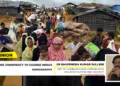
As of date, Sheikh Hasina has formulated and projected her version of the narrative of the 1971 war so firmly and convincingly that ALP has become the epitome of the liberation of Bangladesh. Criticism of ALP is construed as criticism of the Liberation of Bangladesh and perceived as anti-state. The Bihari community had become stateless after the war. The Supreme Court of Bangladesh had pronounced a judgment extending Citizenship Rights to Biharis under the BNP Rule. But, ALP, after resuming power, did not operationalise that judgement. Reason being, they were apprehensive that, under the garb of this judgement, Biharis accused of attacking, killing and raping members of the Bengali Community will never be brought to justice. ALP treated Biharis disdainfully and subjected them to various indignities without any chance of recourse. It was understood that in Bangladesh, under them, only crimes against Bengalis are remembered. Today, thousands of Biharis continue to reside in camps. They live in marginalised conditions, labelled as “Stranded Pakistanis” and “pro-Pakistan collaborators” for their alleged role in the liberation war.
India: The Finest Victory
In India and Pakistan, the 1971 war is central to “How both view themselves and each other”. India considers this War as a finest win, a testament to her military acumen and superiority, as well as poetic revenge on Pakistan, which broke India in 1947. India had lost the Sino Indian War in 1962 and twice managed to effect a ceasefire in 1949 and 65 in the first two wars with Pakistan. Therefore, victory in 1971 became a “Valued Symbol” for India. Her magnificent victory in 1971 was a signal to “those who matter” that she was on her way to become a regional superpower.
Today, politicians, administration and armed forces in India use the victory in 1971 to emphasise Indian might vis-à-vis Pakistan. This war has become part of everyday life in India. We motivate our soldiers as well as demean Pakistan by its mention. After this War, we started taking pride in being an Indian. Prior to this war, we did not believe in our military. But after this war, our posture in the international arena started improving, and now, we are considered as Mighty Mediators as is seen in the recent Russia-Ukraine Conflict as well as Israel-Hamas Skirmishes. Victory in the 1971 War is akin to folklore in India.
Indian narrative of this war is a shining saga of gallantry and bravado as the saviours of the oppressed Bengalis. Pakistan is reminded of the outcome of this war during any escalation of tensions between us.
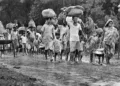
On the flip side, at the start and even after this war, approximately ten million Bengali Hindu/Muslim and Bihari Muslim refugees flooded then Indian State of Assam. This then had become a major internal issue as tension between refugees and host populations ensued. Assamese were afraid that refugees from “Opar Bangla: other side of Bengal” may/would permanently settle in their State. This would have burdened already stretched resources and changed her demographics. Their apprehension soon became a reality. Many Bengalis from East Bengal, by hook or crook, did then managed to settle in Assam. This influx continued over the years. Their presence has affected the state. The final list of the National Register for Citizens was issued in 2020, with 24 March 1971 as the cut-off Date for inclusion in the Register.
More than two million people could not prove that ”They or their family members resided in Assam prior to March 1971”. They have been excluded from registration, rendering them stateless. There is severe criticism of the Government that NPR is being used to target Muslims in the Hindu nation.
Thus, the 1971 war has two major connotations in India. First, for the Liberation of Bangladesh and second, to determine as to who truly belongs.
Pakistan: A Forgotten Conflict
Pakistan has resorted to selective forgetting of what happened in the 1971 War. Right from Habib ur Rehman Report accepted by the government of Pakistan to utterances by ex-Prime Minister Miyan Imran Khan, most perceived it as “a humiliating defeat”. At the same time, this war is brushed over in textbooks and military oppression and committed atrocities by the Army in East Pakistan are purposely ignored. Not only that, but even the Liberation of Bangladesh is purposely referred to as “Fall of Dhaka” or “Dismemberment of Pakistan” on every occasion, specifically on each and every 16 December. Contrarily, whenever the 1971 War issue comes up, Pak always stresses, “killings of Biharis and non-Bengalis before war”, as a justification for military action.
Though Pakistan, every time, purposely puts the issue of the 1971 War on the back burner, it definitely has Lasting Imprints on Pakistan’s psyche. It certainly remains one of the most defining events in her short history, which has significantly affected her self-esteem and Identity, as well as her regional policies. Loss of East Pakistan has given rise to a stubborn “never again” resolve of never letting a similar situation arise again. Pakistan vehemently increased its Defence budget and launched a nuclear programme for producing a nuclear weapon in January 1972. Prime Minister Zulfikar Ali Bhutto announced that “Pakistan is ready to eat grass for thousand years to be enabled to make a nuclear weapon”. Pak Jaunta learned a bitter lesson that the military has to be stronger to prevent another defeat. Yearning rose to the extent of revising school/college textbooks with an overt anti-India and anti-Hindu slant. Loss of East Pakistan was blamed on her “Arch Nemesis”, conveniently omitting Her Own Policies which compelled East Pakistan’s population to undertake a mass movement for Independence. Even today, the Pakistani narrative blames Indian influenced Hindu teachers for manipulating students and breeding secessionist sentiments in East Pakistan.
Pakistan was always eager to take revenge for Bangladesh’s ignominy. She continued to take steps that would destabilise India. To that effect, she orchestrated the eruption of new Independence struggles in the Indian state in the form of the Khalistan movement for a separate Sikh state and the Separatist movement in Kashmir. That was a tit for tat for strategies akin to those India had adopted in East Pakistan. She carried out a deep study of local grievances in these areas and fully supported militant groups fighting against the state of India. This was in retaliation for the support India had provided to the Bengalis fighting the state of Pakistan. It is a paradox that India squarely blames Pakistan for fuelling terrorism against it; Pakistan has put up a plaque in the Army museum in Lahore, which labels the Bengali movement for Independence as Indian sponsored terrorism. In both cases, narratives are carefully crafted to turn popular sentiment against their adversary.
As of Today
Even 52 years after the 1971 war, that war remains poignant both at the people’s and state levels in Bangladesh, India and Pakistan. It has and continues to shape the lives of those like me who fought that war, hundreds of thousands who had to face the rigours of war, as well as those who witnessed it from the wings and are Mainstays in each country. Participants of the third Indo-Pak/Bangladesh liberation war have formed their own firm narratives: Liberation in Bangladesh, victory in India, and loss in Pakistan. They all explicitly believe their version of War Stories and export their own/others ‘ images through the lens of that fateful year to the whole World. The 1971 war has left an Indelible legacy for these children of partition.