India delivered unusually blunt and coordinated messaging on Pakistan this week, calling out the deepening democratic collapse, military dominance, and institutionalised extremism in the neighbouring country, the remarks that visibly rattled Islamabad and triggered sharp reactions from its civilian and military establishments. The strong statements came from both the Ministry of External Affairs (MEA) and External Affairs Minister Dr S Jaishankar, signalling a calibrated but firm Indian position on Pakistan’s internal turmoil, regional behaviour, and long-standing role in exporting terrorism.
Democracy and Pakistan don’t go together
MEA spokesperson Randhir Jaiswal set the tone during the weekly press briefing when asked about the worsening democratic situation in Pakistan, particularly in the context of jailed former prime minister Imran Khan and continuing political protests. Without mincing words, Jaiswal remarked that “democracy and Pakistan don’t go together,” a statement that quickly resonated across diplomatic and strategic circles.
“We keep a close eye on every development in Pakistan. But regarding democracy, you’re saying that democracy in Pakistan is becoming weak and its strengths are being weakened. Democracy and Pakistan don’t go together. The less we talk the better,” Jaiswal said. The comment reflected India’s long-standing assessment that Pakistan’s political system remains structurally subordinated to its military, with civilian institutions periodically dismantled or bypassed whenever they threaten entrenched power centres. Jaiswal made it clear that while India is monitoring developments, New Delhi would not be drawn into detailed commentary on Pakistan’s internal politics, an approach that underscored both confidence and strategic restraint.
Responding to another question on recent clashes along the Pakistan–Afghanistan border, the MEA spokesperson expressed concern over reports of Afghan civilian deaths.“We have seen reports of border clashes in which several Afghan civilians have been killed. We condemn such attacks on innocent Afghan people. India strongly supports the territorial integrity, sovereignty and independence of Afghanistan,” Jaiswal said. The statement reinforced India’s consistent position on regional stability and civilian protection while indirectly highlighting Pakistan’s troubled relations even with its immediate neighbours.
Pakistan’s political crisis deepens
India’s remarks come at a time when Pakistan’s domestic situation continues to deteriorate. Political unrest has intensified amid ongoing demonstrations, institutional paralysis, and escalating friction between Pakistan’s civilian leadership and its powerful military establishment. Cross-border firing late last week reportedly resulted in fatalities on both sides of the Pakistan–Afghanistan border, adding to tensions after dialogue efforts between Islamabad and Kabul collapsed. At the heart of Pakistan’s political turmoil is the continued incarceration of former prime minister Imran Khan. The 73-year-old has been jailed since 2023 following a corruption conviction and now faces a series of legal cases, widely viewed by critics as politically driven.
Khan’s party, Pakistan Tehreek-e-Insaf (PTI), has repeatedly alleged restrictions on access to the jailed leader, fuelling rumours and unverified claims regarding his health and treatment. Although authorities recently allowed Khan’s sister, Uzma Khanum, to meet him at Rawalpindi’s Adiala Jail, the visit triggered renewed protests by supporters demanding fewer restrictions and greater transparency. Demonstrations outside the Islamabad High Court and the prison underline the volatile political climate, one in which elected power increasingly appears secondary to military control.
Jaishankar directly targets Pakistan’s military
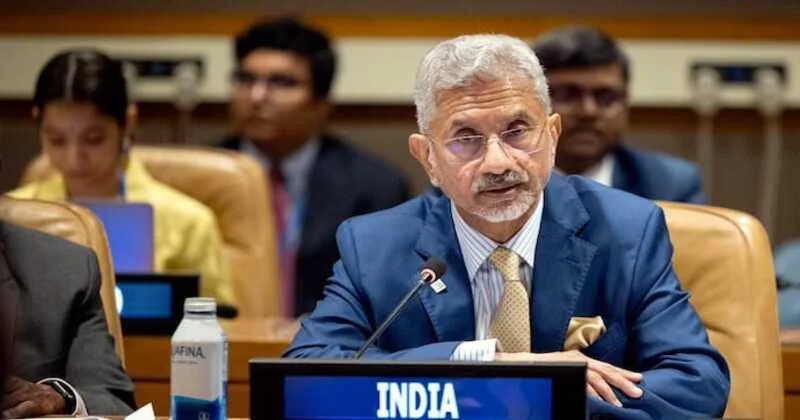
India’s strongest message, however, came from External Affairs Minister Dr S Jaishankar during remarks at the HT Leadership Summit, where he squarely blamed Pakistan’s military establishment for terrorism against India. “When you look at the terrorism, when you look at the training camps, when you look at the sort of policy of a kind of, I would say, almost ideological hostility towards India, where does that come from? It comes from the army,” Jaishankar said.
The comments marked one of the clearest articulations by a senior Indian minister linking Pakistan’s terror infrastructure directly to its military leadership rather than to vague “non-state actors.” Jaishankar also rejected the notion that India and Pakistan should be viewed as equals or permanently linked in strategic discourse. “We should not get over-obsessed and hyphenate ourselves with them,” he said, urging India to recognise the vast divergence in governance, capability, and international reputation between the two countries.
In a remark widely interpreted as a pointed reference to Pakistan’s Army chief, Asif Munir, Jaishankar employed a striking analogy. “Like there are good terrorists and bad terrorists, there are good military leaders and not-so-good ones,” he said. Munir, recently elevated to the rank of Field Marshal and appointed Chief of Defence Forces, has been a central figure in Pakistan’s current power structure, and the analogy was seen as a direct challenge to the military’s legitimacy and accountability. Jaishankar made it clear that India would continue to “deal with” the Pakistan challenge but would do so on its own terms, shaped by national interest rather than outdated equivalence.
The minister also addressed questions on India’s military response during Operation Sindoor, launched in May following the April Pahalgam terror attack that killed 26 civilians, including women and children. Jaishankar emphasised the fundamental difference between India and Pakistan: institutional accountability. “In India, there are things we do, and there are things we don’t. We have rules, we have norms. If we take any step, we are accountable, to the people, to the media, to civil society,” he said, adding that comparisons with Pakistan would “do ourselves an injustice”.
During Operation Sindoor, Indian forces struck terror camps and infrastructure inside Pakistan and Pakistan-occupied Kashmir. Indian strikes also damaged key Pakistani military facilities, including airbases at Nur Khan Chaklala, Rafiqui and Rahim Yar Khan—damage later acknowledged by Pakistan Prime Minister Shehbaz Sharif. Air Chief Marshal A P Singh stated that at least a dozen Pakistani military aircraft, including several F-16 jets, were destroyed or damaged during the operation. The confrontation ended only after Pakistan’s Director General of Military Operations reached out to his Indian counterpart seeking a ceasefire. India has categorically rejected claims by the Trump administration that the ceasefire was mediated by Washington.
Islamabad reacts; A clear message from New Delhi
Unsurprisingly, Pakistan reacted angrily to Jaishankar’s remarks, underlining how deeply they unsettled Islamabad. Foreign Office spokesperson Tahir Andrabi dismissed the statements as “highly inflammatory, baseless and irresponsible,” while asserting that Pakistan’s institutions, including the military, were a “pillar of national security”. Andrabi claimed that the May clashes demonstrated Pakistan’s determination to defend itself in a “befitting, effective, yet responsible manner”, the language that contrasted starkly with India’s emphasis on accountability, civilian oversight, and rule-based conduct.
Taken together, the statements from the MEA and Dr Jaishankar reflect a confident and unambiguous Indian posture: Pakistan’s democratic deficit, military overreach, and reliance on extremist proxies are no longer matters India will euphemise or dilute for diplomatic comfort. The sharp reaction from Islamabad suggests that New Delhi’s messaging struck a nerve, exposing vulnerabilities that Pakistan’s leadership would rather keep obscured. As Pakistan grapples with internal legitimacy crises and regional isolation, India’s stance underscores a widening divergence between a rule-based democracy asserting strategic clarity and a neighbour struggling under the weight of military dominance and political instability.