US President Donald Trump has once again resorted to aggressive trade rhetoric, signalling that his administration is prepared to impose fresh tariffs on agricultural imports, including Indian rice and Canadian fertiliser, as he faced complaints from American farmers about competition from foreign produce. The remarks, made in a highly charged political setting, were widely seen as coercive pressure tactics aimed at reshaping ongoing trade negotiations rather than a reasoned policy response to market challenges.
Speaking at a White House roundtable convened to unveil a USD 12 billion bailout package for American farmers, Trump announced that his administration would investigate allegations that foreign countries were allegedly “dumping” low-priced rice into the US market. The initiative, framed as support for struggling domestic producers, came alongside thinly veiled threats of heavy tariffs designed to intimidate trading partners, India in particular, at a sensitive moment in bilateral trade discussions. American farmers attending the roundtable urged the president to adopt an even more confrontational stance, claiming that subsidised rice imports were driving down domestic prices and destabilising US markets. Trump echoed these grievances, alleging unfair practices without offering substantiated evidence, and suggested that punitive tariffs could be imposed swiftly. The president extended his warning to fertiliser imports from Canada as well, indicating that extremely high duties were being considered to artificially boost domestic production.
US agri-business interest single out India
Meryl Kennedy, CEO of Louisiana-based Kennedy Rice Mill, told the administration that India, Thailand and China were among the principal competitors affecting US rice producers. He claimed that while Chinese shipments were entering Puerto Rico rather than the US mainland, the overall situation was devastating for growers in the southern United States. He emphasised that American producers had not shipped rice to Puerto Rico in years and argued that southern farmers were facing acute distress. Kennedy further argued that existing tariffs were insufficient and urged the administration to intensify pressure. Trump responded sharply, questioning whether farmers were demanding even harsher measures. He then instructed Treasury Secretary Scott Bessent to note down the countries cited by agribusiness representatives as sources of competition.
As Kennedy began to describe alleged subsidy mechanisms supporting India’s rice sector, Trump interrupted, demanding a straightforward list of countries. The Treasury Secretary subsequently identified India, Thailand and China as the primary targets, while indicating that additional nations could be included following a broader review. Trump, in turn, assured those present that the administration would act decisively. The episode underscored the extent to which US trade policy under Trump has been shaped by domestic political calculations rather than multilateral norms or established trade frameworks.
While the White House framed the measures as necessary to defend American farmers, experts argued that the administration was weaponising tariffs as negotiating leverage ahead of critical trade talks with India. The strategy mirrors Trump’s earlier approach of imposing abrupt trade penalties to extract concessions, often at the cost of diplomatic goodwill and long-term economic stability. According to a report by Bloomberg, both India and Canada have been actively pursuing trade agreements with the United States to stabilise economic relations. However, negotiations have repeatedly stalled due to Washington’s erratic demands and its preference for headline-grabbing pressure tactics over constructive compromise. In August, Trump imposed sweeping 50 per cent tariffs on Indian goods, claiming the move was intended to punish New Delhi for its continued purchases of Russian oil. The decision drew sharp criticism internationally as an attempt to interfere in India’s sovereign economic choices while ignoring similar or larger imports of Russian energy by US allies.
US delegation to visit India to discuss trade deal
Against this backdrop of escalating rhetoric, a senior delegation from the Office of the United States Trade Representative, led by Deputy USTR Rick Switzer, is scheduled to visit India this week to resume stalled trade discussions. Meetings are set for December 10 and 11 and will cover a wide range of outstanding issues as both sides attempt to advance a long-pending Bilateral Trade Agreement (BTA). The Indian delegation will be led by Commerce Secretary Rajesh Agarwal, who is also New Delhi’s chief negotiator. India remains focused on concluding the first tranche of the BTA before the end of the year, viewing the agreement as a vital tool to deepen economic engagement while safeguarding domestic interests.
Speaking at the FICCI Annual General Meeting on November 28, Agarwal reiterated optimism about reaching an agreement within the calendar year. His remarks reflected India’s commitment to a rules-based and mutually beneficial trade framework, in contrast to the destabilising approach adopted by Washington. Observers noted that Trump’s public threats coinciding with the renewal of talks appeared calculated to extract last-minute concessions, reinforcing perceptions of the US administration’s reliance on intimidation rather than negotiation.
China welcomes India–Russia engagement
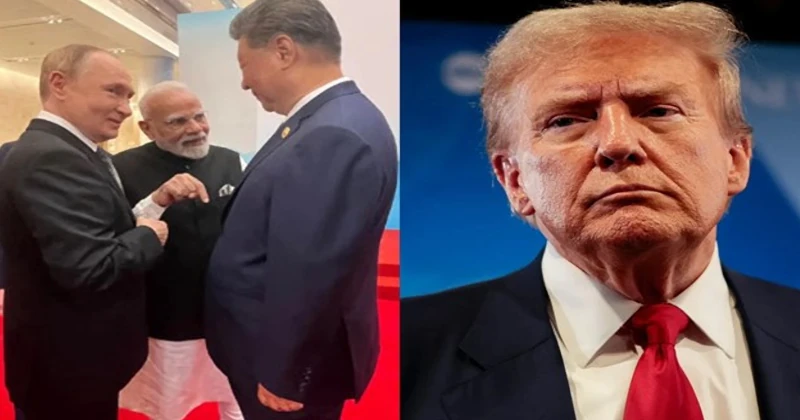
In a separate development that highlighted shifting global alignments, China responded positively to Russian President Vladimir Putin’s recent visit to India, describing India, China and Russia as key pillars of the Global South and emphasising the importance of stable trilateral relations. Chinese Foreign Ministry spokesperson Guo Jiakun said that the three countries, as major emerging economies, play a vital role in shaping regional and global stability. He noted that healthy relations among India, China and Russia align with their national interests while contributing meaningfully to global peace, security and prosperity. Putin’s visit to New Delhi was closely observed in Beijing, given China’s strong strategic partnership with Russia. Responding to questions about Putin’s comments ahead of his visit, Guo said that China was ready to continue working with both Russia and India to advance bilateral relationships and promote cooperation across multiple domains.
On India-China relations, which have gradually improved following years of tension after the Eastern Ladakh standoff, Guo said Beijing was committed to approaching the relationship from a long-term and strategic perspective. He emphasised the importance of sustained engagement to ensure steady development and mutual benefit for both countries and their peoples, as well as for broader Asian and global stability.
Putin reaffirms strategic balance
Before his visit, Putin had publicly described India and China as Russia’s closest friends and stressed the importance Moscow places on its relationships with both countries. He also expressed confidence that New Delhi and Beijing possess the political maturity to resolve bilateral issues independently, stating that Russia had no role or right to interfere in matters between them. Chinese state media prominently highlighted Putin’s remarks, including his rejection of US accusations regarding India’s imports of Russian oil. China’s official media outlets also underscored the hypocrisy of Western pressure campaigns, noting that China itself remains the world’s largest purchaser of Russian oil and gas and has openly rejected US demands to halt imports.
Putin visited India from December 4 to 5, marking his first trip to the country since 2021. The visit resulted in the signing of multiple agreements aimed at strengthening trade, energy cooperation and economic ties. Both countries finalised an Economic Cooperation Programme designed to increase bilateral trade to USD 100 billion by 2030. The initiative reflects a broader commitment by India and Russia to deepen strategic partnerships based on mutual respect, economic pragmatism and shared global responsibilities.
As Washington threatens tariffs and resorts to economic brinkmanship, India’s expanding engagement with other major powers underscores its determination to pursue an independent and multipolar foreign policy rooted in long-term national interests rather than momentary political pressure.