India’s march towards a naxal-free future
June 5, 2026
  • Read Ecopy
  • Circulation
  • Advertise
  • Careers
  • About Us
  • Contact Us
Android AppiPhone AppArattai
Organiser
  • ‌
  • Bharat
    • Assam
    • Bihar
    • Chhattisgarh
    • Jharkhand
    • Maharashtra
    • View All States
  • World
    • Asia
    • Europe
    • North America
    • South America
    • Africa
    • Australia
  • Editorial
  • International
  • Opinion
  • RSS @ 100
  • More
    • Op Sindoor
    • Analysis
    • Sports
    • Defence
    • Politics
    • Business
    • Economy
    • Culture
    • Special Report
    • Sci & Tech
    • Entertainment
    • G20
    • Azadi Ka Amrit Mahotsav
    • Vocal4Local
    • Web Stories
    • Education
    • Employment
    • Books
    • Interviews
    • Travel
    • Law
    • Health
    • Obituary
  • Subscribe
    • Subscribe Print Edition
    • Subscribe Ecopy
    • Read Ecopy
  • ‌
  • Bharat
    • Assam
    • Bihar
    • Chhattisgarh
    • Jharkhand
    • Maharashtra
    • View All States
  • World
    • Asia
    • Europe
    • North America
    • South America
    • Africa
    • Australia
  • Editorial
  • International
  • Opinion
  • RSS @ 100
  • More
    • Op Sindoor
    • Analysis
    • Sports
    • Defence
    • Politics
    • Business
    • Economy
    • Culture
    • Special Report
    • Sci & Tech
    • Entertainment
    • G20
    • Azadi Ka Amrit Mahotsav
    • Vocal4Local
    • Web Stories
    • Education
    • Employment
    • Books
    • Interviews
    • Travel
    • Law
    • Health
    • Obituary
  • Subscribe
    • Subscribe Print Edition
    • Subscribe Ecopy
    • Read Ecopy
Organiser
  • Home
  • Bharat
  • World
  • Operation Sindoor
  • Editorial
  • Analysis
  • Opinion
  • Culture
  • Defence
  • International Edition
  • RSS @ 100
  • Magazine
  • Read Ecopy
Home Bharat

India’s march towards a naxal-free future

The government’s decade-long strategy has pushed Naxalism to the brink. The combination of targeted operations, robust infrastructure, connectivity, development and rehabilitation has created conditions for lasting peace

Rahul GokhaleRahul Gokhale
Dec 6, 2025, 07:30 pm IST
in Bharat, Analysis, Defence, Fact Sheet, Law
Follow on Google News
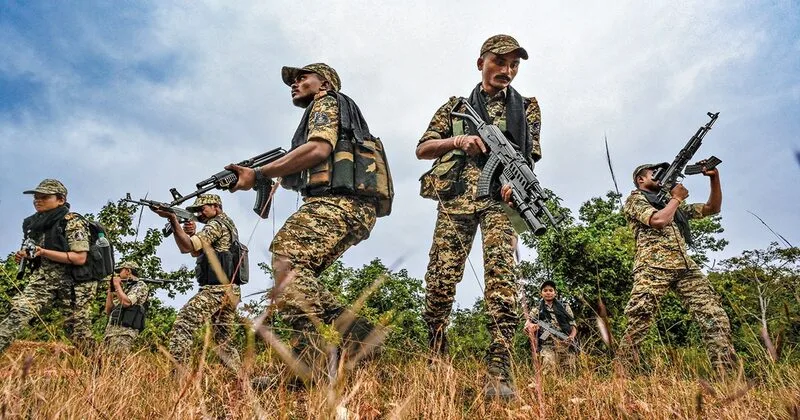
Consistent government efforts and strategy has brought India to the verge of being a naxal-free nation

Consistent government efforts and strategy has brought India to the verge of being a naxal-free nation

FacebookTwitterWhatsAppTelegramEmail

India is on the cusp of a historic achievement: A Naxalism-free nation by 2026. After decades of violence, fear and missed opportunities, a combination of firm security action, targeted development and rehabilitation programs has finally begun to turn the tide.

The roots of naxalism

The Naxalite movement began in the 1970s in Naxalbari, West Bengal, under leaders like Charu Mazumdar and Kanu Sanyal. What started as a small rebellion against local oppression soon morphed into a nationwide challenge to India’s democratic system. Over decades, weak political will, ideological sympathies and inconsistent action allowed the menace to grow.

The human cost has been staggering. In 2010, Naxalites killed 76 CRPF personnel in Dantewada. Barely a month later, a landmine blast killed 31 civilians in the same area. Yet, the then UPA government’s response was limited to tentative negotiations, showing a chronic inability to act decisively. Even after Charu Mazumdar’s death in custody in 1972, splinter groups carried forward the movement. The lesson was clear: without sustained resolve, Naxalism would never die.

The UPA era: Funds, but little impact

The 2000s saw large amounts of development money promised for Naxal-affected areas. But the results were lackluster. By 2009, Naxalism had spread across 20 states and 223 districts, with Bastar alone witnessing hundreds of attacks on schools, hospitals, panchayat offices and security forces. The 2013 Darbha massacre, which killed senior Congress leaders, underscored the danger. “Operation Green Hunt”, launched in 2009 to crush the movement, failed quickly under political pressure and ideological opposition. States like Jharkhand rejected armed action entirely, relying only on dialogue. Even the PESA Act (1996), which could have empowered tribal communities and weakened Naxal influence, was never implemented. The decade highlighted a key lesson: money without political will is useless against an
ideology that thrives on fear and poverty.

A decade of determined action

Since 2014, a combination of coordinated security operations and focused development programs has yielded tangible results: Between 2004–2014 and 2014–2024, violent incidents dropped from 16,463 to 7,744; the number of security personnel killed fell sharply from 1,851 to 509, while civilian deaths declined from 4,766 to 1,495. In 2025 alone: 270 Naxalites were eliminated, 680 arrested and 1,225 surrendered. Operations like ‘Black Forest’ in Chhattisgarh and Telangana eliminated 31 Maoists, including top commanders. High-profile surrenders, including Mallojula Rao alias Bhupati, carrying a ₹6-crore bounty, signaled the credibility of rehabilitation efforts. The surrendered cadres were welcomed into the mainstream—a message that defiance has consequences, but reintegration is possible.

Security and technology: Modern tools against an age-old threat

Security infrastructure has been dramatically strengthened: 576 police stations built; 336 new camps set up; 68 night-landing helipads for rapid deployment; drones, AI-assisted monitoring, mobile-data tracking, social media scrutiny for surveillance: Forensic and technical support for precise intelligence gathering.
Financial support networks for Maoists are being dismantled. The NIA and ED have seized 403 properties linked to terrorism and Maoist funding, including 206 in Jharkhand, dramatically reducing resources available to insurgents.

Development: Attacking the roots of extremism

Security alone is not enough. The government has focused on holistic development in affected districts: SRE funds: ₹3,331 crores—155% higher than the previous decade; SIS funds: ₹991 crores for fortified police stations; SCA funds: ₹3,769 crores for local development projects. The infrastructure projects have been transformative:

  • 12,000+ km of roads completed (target 17,589 km)
  • Thousands of 2G/4G towers installed
  • 1007 bank branches, 937 ATMs, 37,850 banking correspondents, and 5,899 post offices
    now serve remote areas

Skill development has targeted youth vulnerable to recruitment: 48 ITIs and 61 skill centres are operational, providing alternatives to violence.

Rehabilitation support is robust: surrendered Naxalites receive financial aid and ₹10,000/month stipends for vocational training over three years. Once reintegrated, they are treated with dignity—a stark contrast to the era of punitive-only policies.

The final stretch

Today, only six districts remain heavily Naxal-affected. Yet complacency is dangerous. After Bhupati’s surrender, the banned CPI (Maoist) labeled him and other surrendering cadres “traitors”, highlighting the continuing ideological battle. Past attacks, like the 2017 Sukma ambush that killed 25 CRPF jawans, remind us that threats persist.

The elimination of notorious commander Madavi Hidma, who orchestrated two decades of attacks, demonstrates progress—but the ideological network still lingers. Both armed cadres and clandestine supporters keep the threat alive.

Also Read: Putin in India: Civilizational camaraderie and future of Indo–Russia relations

Nearing the goal, But not over

The government’s decade-long strategy has pushed Naxalism to the brink. The combination of targeted operations, robust infrastructure, connectivity, development and rehabilitation has created conditions for lasting peace.

Yet, the fight isn’t over. The goal of a Naxal-free India is close, but vigilance must remain until ideology is eradicated, not just cadres. The past ten years have shown that resolve, consistency and integrated strategy work where wishful thinking and money alone fail.

The final phase is upon us—and with continued determination, India can finally realize the vision of being truly free from the shadow of Naxalism.

Topics: securityNaxal-Free India"PeaceDevelopmentBastarNaxalisminfrastructure
ShareTweetSendShareSend
✮ Subscribe Organiser YouTube Channel. ✮
✮ Join Organiser's WhatsApp channel for Nationalist views beyond the news. ✮
Previous News

Uttar Pradesh: CM Yogi Adityanath led govt promotes Tamil, Telugu, Kannada & Malayalam in vocational education

Next News

Trishakti Corps of the Indian Army operationalises on-site 3D concrete printing technology in forward areas

Related News

India rejects ‘bloc confrontation’ claim by China on QUAD; The group aims for Indo-Pacifc prosperity & development

Uttar Pradesh: Yogi govt bets big on temple economy & sanctions Rs 9.97 crore for Bulandshahr, Chandauli and Chitrakoot

Uttar Pradesh Chief Minister Yogi Adityanath

Uttar Pradesh Infra Face-Off: Akhilesh Yadav’s ‘One Expressway’ pitch vs Yogi Adityanath’s holistic growth push

Vande Bharat between Jammu & Srinagar

Vande Bharat between Jammu and Srinagar: Minister Ashwini Vaishnaw assures swift connectivity, public safety & welfare

Representative Image

Radiant Dawn of Atmanirbhar Bharat: From the shores of Keralam to the reactors of Tamil Nadu’s Kalpakkam

PM Modi government transforming broken roads into nation-building arteries

Load More

Latest News

RSS Sarsanghchalak Dr Mohan Bhagwat

The time of Bharat has arrived; we need to expedite our preparation: Dr Bhagwat at RSS Karyakarta Vikas Varg 2

Padma Bhushan awardee and noted industrialist Kumar Mangalam Birla Kumar Mangalam Birla addressing the Samapana Samaroh (Valedictory Function) of the Rashtriya Swayamsevak Sangh Karyakarta Vikas Varg – Dwitiya at Nagpur, on June 4, 2026

“RSS always stood by the society and nation”, Kumar Mangalam Birla at RSS Karyakarta Vikas Varg 2 in Nagpur

Arunachal Pradesh seals all 15 illegal Mosques; Bandh called off by APIYO

MK Stalin with Sonai Gandhi; MK Stalin with Rahul Gandhi (File Photos) (Left to Right)

Tamil Nadu: DMK says no to INDIA Alliance meet in Delhi, blames Congress for political backstabbing

Union Finance Minister Nirmala Sitharaman

Karnataka: All-Women team powers Yadgir’s groundnut revolution; Nirmala Sitharaman inaugurates NABARD Unit

Keralam: Jamaat-e-Islami event features Hamas and Muslim Brotherhood ideologues, raises concerns over Political Islam

Representative Image (This is an AI Generated image)

Uttar Pradesh CM Abhyudaya Scheme: Apply for free civil services, JEE and NEET coaching from June 5

House worth Rs 2 crore of drug peddler bulldozed in J&K

Anti-narcotics campaign in J&K: Police demolish Rs 2 crore residential property linked to drug peddler Sheikh Tasaduq

As fuel shortages rippled across Asia, New Delhi expanded supplies to its neighbours while Beijing sought to turn energy security into strategic influence.

The Hormuz Test: How India’s energy assistance outshines China’s conditional approach

Demographic changes in Bharat’s border districts have raised concerns about migration, security, and social cohesion

Demographic Shift in Border Areas of Bharat: The dangerous design

Load More
  • Privacy
  • Terms
  • Cookie Policy
  • Refund and Cancellation
  • Delivery and Shipping

© Bharat Prakashan (Delhi) Limited.
Tech-enabled by Ananthapuri Technologies

  • Home
  • Search Organiser
  • Bharat
    • Assam
    • Bihar
    • Chhattisgarh
    • Jharkhand
    • Maharashtra
    • View All States
  • World
    • Asia
    • Africa
    • North America
    • South America
    • Europe
    • Australia
  • Editorial
  • Operation Sindoor
  • Opinion
  • Analysis
  • Defence
  • Culture
  • Sports
  • Business
  • RSS @ 100
  • Entertainment
  • More ..
    • Sci & Tech
    • Vocal4Local
    • Special Report
    • Education
    • Employment
    • Books
    • Interviews
    • Travel
    • Health
    • Politics
    • Law
    • Economy
    • Obituary
  • Subscribe Magazine
  • Read Ecopy
  • Advertise
  • Circulation
  • Careers
  • About Us
  • Contact Us
  • Policies & Terms
    • Privacy Policy
    • Cookie Policy
    • Refund and Cancellation
    • Terms of Use

© Bharat Prakashan (Delhi) Limited.
Tech-enabled by Ananthapuri Technologies