UGC urges colleges and universities to implement “Learn One More Bharatiya Bhasha” initiative under NEP 2020
September 20, 2026
  • Read Ecopy
  • Circulation
  • Advertise
  • Careers
  • About Us
  • Contact Us
Android AppiPhone AppArattai
Organiser
  • ‌
  • Bharat
    • Assam
    • Bihar
    • Chhattisgarh
    • Jharkhand
    • Maharashtra
    • View All States
  • World
    • Asia
    • Europe
    • North America
    • South America
    • Africa
    • Australia
  • Editorial
  • International
  • Opinion
  • RSS @ 100
  • More
    • World Hindu Congress 2026
    • Op Sindoor
    • Analysis
    • Sports
    • Defence
    • Politics
    • Business
    • Economy
    • Culture
    • Special Report
    • Sci & Tech
    • Entertainment
    • G20
    • Azadi Ka Amrit Mahotsav
    • Vocal4Local
    • Web Stories
    • Education
    • Employment
    • Books
    • Interviews
    • Travel
    • Law
    • Health
    • Obituary
  • Subscribe
    • Subscribe Print Edition
    • Subscribe Ecopy
    • Read Ecopy
  • ‌
  • Bharat
    • Assam
    • Bihar
    • Chhattisgarh
    • Jharkhand
    • Maharashtra
    • View All States
  • World
    • Asia
    • Europe
    • North America
    • South America
    • Africa
    • Australia
  • Editorial
  • International
  • Opinion
  • RSS @ 100
  • More
    • World Hindu Congress 2026
    • Op Sindoor
    • Analysis
    • Sports
    • Defence
    • Politics
    • Business
    • Economy
    • Culture
    • Special Report
    • Sci & Tech
    • Entertainment
    • G20
    • Azadi Ka Amrit Mahotsav
    • Vocal4Local
    • Web Stories
    • Education
    • Employment
    • Books
    • Interviews
    • Travel
    • Law
    • Health
    • Obituary
  • Subscribe
    • Subscribe Print Edition
    • Subscribe Ecopy
    • Read Ecopy
Organiser
  • Home
  • Bharat
  • World
  • Operation Sindoor
  • Editorial
  • Analysis
  • Opinion
  • Culture
  • Defence
  • International Edition
  • RSS @ 100
  • Magazine
  • Read Ecopy
Home Bharat

UGC urges colleges and universities to implement “Learn One More Bharatiya Bhasha” initiative under NEP 2020

The University Grants Commission (UGC) has directed all higher education institutions to roll out the “Learn One More Bharatiya Bhasha” initiative, encouraging students and faculty to learn an additional Indian language from another state or region. Developed by the Bharatiya Bhasha Samiti (BBS) under the National Education Policy (NEP) 2020, the move seeks to promote multilingualism, cultural harmony, and inclusivity while strengthening India’s linguistic diversity

WEBDESKWEBDESK
Dec 5, 2025, 07:00 am IST
inBharat, Education
Follow on Google News
Facebook
Twitter
WhatsAppTelegramEmail

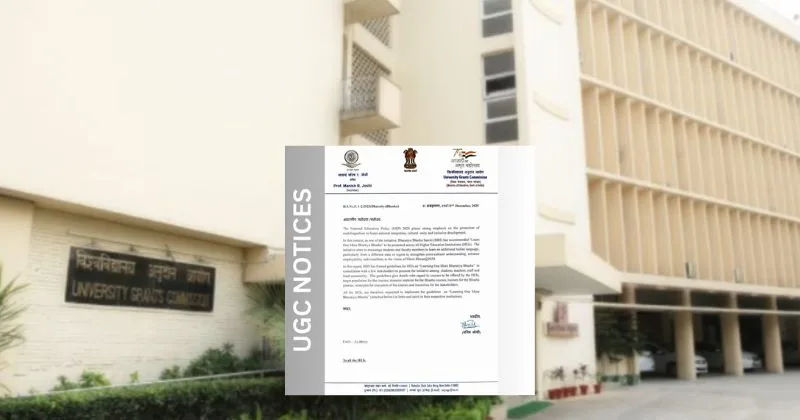
NEW DELHI: The University Grants Commission (UGC) has directed all higher education institutions (HEIs) to implement the “Learn One More Bharatiya Bhasha” initiative, recommended by the Bharatiya Bhasha Samiti (BBS) under the National Education Policy (NEP) 2020. The circular, issued by UGC Secretary Prof. Manish R. Joshi, calls on universities and colleges to adopt the guidelines in “letter and spirit” to promote multilingualism and national integration.

The official notice, issued on December 2, 2025 by Prof. Manish R. Joshi, Secretary of the UGC, calls upon universities and colleges to adopt the initiative “in letter and spirit.” The circular highlights that multilingual learning is not just an academic exercise, but a social and cultural investment that strengthens India’s unity in diversity.

The “Learn One More Bharatiya Bhasha” initiative is designed to encourage both students and faculty members in higher education institutions to learn an additional Indian language, particularly one spoken in a different state or region. This approach aims to create deeper cross-cultural understanding, break regional barriers, and promote mutual respect among India’s diverse linguistic communities.

https://twitter.com/ugc_india/status/1996107235114844585?t=V-5XXO4x_EsiYR1dO5cWOQ&s=08

According to the UGC, learning another Bharatiya language will help participants appreciate India’s vast cultural richness while improving communication, collaboration, and employability in a multilingual nation. The initiative also supports the government’s larger vision of Viksit Bharat@2047, which envisions a developed and culturally cohesive India by the 100th year of independence.

Also Read: Ram Mandir Dhwajarohan: Revival of Ram Rajya

The Bharatiya Bhasha Samiti (BBS), functioning under the Ministry of Education, has played a key role in designing and preparing the guidelines for this initiative. The committee consulted with various stakeholders including students, teachers, and members of local communities to make the framework both practical and inclusive.

These guidelines provide details on the courses to be introduced, target population, training modules, teaching materials, and incentives for institutions that successfully implement the programme. They also recommend strategies for engaging trainers who are proficient in various regional languages to ensure effective learning outcomes.

The BBS has further suggested that HEIs integrate the language-learning initiative into existing academic structures, such as elective courses or cultural clubs, so that students can pursue it alongside their regular curriculum without additional academic pressure.

Through this initiative, the UGC aims to make higher education more holistic by bridging linguistic divides. When students learn an additional Indian language, for example lets say, a Tamil-speaking student learns Bengali, or a Hindi-speaking student learns Malayalam, they develop a greater sense of empathy and understanding toward different cultures. This multilingual exposure is expected to enhance students’ employability, especially in government, corporate, and tourism sectors, where knowledge of multiple Indian languages is increasingly valuable. It also nurtures communication skills, adaptability, and social awareness, qualities essential for global citizens in a culturally diverse democracy. The initiative extends to faculty members as well. Teachers who learn an additional language can better engage with students from other linguistic backgrounds, encourage exchange programmes, and participate in inter-state collaborations.

The “Learn One More Bharatiya Bhasha” initiative fits seamlessly within this framework, linking linguistic inclusivity with India’s long-term developmental vision of Viksit Bharat@2047. By 2047, the government aims to position India as a knowledge-driven society that respects its linguistic diversity while ensuring access to education in multiple languages.

The UGC has made it clear that all higher education institutions must actively promote and execute the guidelines provided by the Bharatiya Bhasha Samiti. Universities and colleges are expected to design short-term and long-term courses, organize workshops, and collaborate with local language experts to make the initiative widely accessible.

Institutions may also offer incentives such as credit points, certificates, or recognition to encourage participation among students and staff. The UGC has urged colleges to maintain proper documentation and share progress reports on the implementation process, ensuring that the spirit of the NEP 2020 is reflected in real outcomes.


Topics: Bharatiya Bhasha SamitiUniversity Grants CommissionNational Education PolicyNEP 2020Learn One More Bharatiya BhashaUGC Secretary Prof. Manish R. Joshi
Share
Tweet
SendShareSend
✮ Subscribe Organiser YouTube Channel. ✮
✮ Join Organiser's WhatsApp channel for Nationalist views beyond the news. ✮
Previous News

Thiruparankundram turmoil: Tamil Nadu police stop devotees, arrest BJP leaders, HC hits out at Police Commissioner

Next News

Bilasipara Gang Rape: 15-years-old minor Hindu girl raped by Islamist Moynal Haque and three others in Assam

Related News

A representative image

How PM SHRI schools are changing the way Bharat thinks about education

Kerala Governor Rajendra Vishwanath Arlekar inaugurates the silver jubilee celebrations of Mar Baselios College of Engineering and Technology

Jantar Mantar protests highlight erosion of civility; character formation vital for students: Keralam Governor Arlekar

Skill India 2.0: From Training Millions to Linking Skills With Jobs and Wages (This image is generated from AI)

Skill India Decade: 7.67 crore trained, Rs 34,000 crore push for the next phase

Yuva Sangam 2026: Phase VII registration deadline extended to August 31; Youth aged 18–30 can apply

The UDISE+ 2025–26 report highlights India’s steady progress in school education, with gains in enrolment, teacher availability and retention

UDISE+ 2025–26 report highlights stronger school education system with better enrolment & improved infrastructure

Bharat’s decolonization is reshaping laws, education and culture while reclaiming its civilisational identity (This image is generated by AI)

Decolonising Bharat: How legal, educational and cultural reforms are reclaiming India’s indigenous identity

Load More

Latest News

BMS launches National Organisation for Digital Employees (NODE) for IT workforce; aims to strengthen employee welfare

GalaxEye’s US patent for OptoSAR marks a major boost for India’s private space sector, advancing its global Earth-observation ambitions

GalaxEye secures US patent for OptoSAR technology, boosting India’s private space and deep-tech ambitions

The arrested Bangladeshi national

Keralam: Series of Bangladeshi arrests raises questions over alleged support ecosystem of fake IDs, jobs and shelter

The Indian Army has launched AASHVAST to detect hidden software and electronic vulnerabilities in military drones

Indian Army strengthens drone security with AASHVAST lab to detect software vulnerabilities & Chinese components

Nileema Mishra’s grassroots work empowered women and helped transform more than 200 villages across Maharashtra

Nileema Mishra: The woman who transformed more than 200 villages across rural Maharashtra

Shree Stambheshwar Mahadev Mandir in Gujarat

Shiva Mandir that disappears into the sea and returns with the tide: The fascinating story of Stambheshwar Mahadev

Vishwa Hindu Parishad (VHP) spokesperson Surendra Jain (file photo0

VHP condemns Hamid Ansari over remarks citing Nehru on Hindu right-wing communalism

Ganesh murti visarjan incidents raise concerns over radical Islamic intolerance and law and order in Tamil Nadu

ABVP registers 3-0 win in Delhi University Students’ Union elections; wins president, secretary, joint secretary posts

Ganapati murti visarjan procession at T. Narasipura on September 18

Karnataka: Ganapati procession follows approved mosque route in T Narasipura amid allegations of police high-handedness

Load More
  • Privacy
  • Terms
  • Cookie Policy
  • Refund and Cancellation
  • Delivery and Shipping

© Bharat Prakashan (Delhi) Limited.
Tech-enabled by Ananthapuri Technologies

  • Home
  • Search Organiser
  • Bharat
    • Assam
    • Bihar
    • Chhattisgarh
    • Jharkhand
    • Maharashtra
    • View All States
  • World
    • Asia
    • Africa
    • North America
    • South America
    • Europe
    • Australia
  • Editorial
  • Operation Sindoor
  • Opinion
  • Analysis
  • Defence
  • Culture
  • Sports
  • Business
  • RSS @ 100
  • Entertainment
  • More ..
    • Sci & Tech
    • Vocal4Local
    • Special Report
    • Education
    • Employment
    • Books
    • Interviews
    • Travel
    • Health
    • Politics
    • Law
    • Economy
    • Obituary
  • Subscribe Magazine
  • Read Ecopy
  • Advertise
  • Circulation
  • Careers
  • About Us
  • Contact Us
  • Policies & Terms
    • Privacy Policy
    • Cookie Policy
    • Refund and Cancellation
    • Terms of Use

© Bharat Prakashan (Delhi) Limited.
Tech-enabled by Ananthapuri Technologies