Gulf naval cooperation shifts toward India, sidelining Pakistan
June 4, 2026
  • Read Ecopy
  • Circulation
  • Advertise
  • Careers
  • About Us
  • Contact Us
Android AppiPhone AppArattai
Organiser
  • ‌
  • Bharat
    • Assam
    • Bihar
    • Chhattisgarh
    • Jharkhand
    • Maharashtra
    • View All States
  • World
    • Asia
    • Europe
    • North America
    • South America
    • Africa
    • Australia
  • Editorial
  • International
  • Opinion
  • RSS @ 100
  • More
    • Op Sindoor
    • Analysis
    • Sports
    • Defence
    • Politics
    • Business
    • Economy
    • Culture
    • Special Report
    • Sci & Tech
    • Entertainment
    • G20
    • Azadi Ka Amrit Mahotsav
    • Vocal4Local
    • Web Stories
    • Education
    • Employment
    • Books
    • Interviews
    • Travel
    • Law
    • Health
    • Obituary
  • Subscribe
    • Subscribe Print Edition
    • Subscribe Ecopy
    • Read Ecopy
  • ‌
  • Bharat
    • Assam
    • Bihar
    • Chhattisgarh
    • Jharkhand
    • Maharashtra
    • View All States
  • World
    • Asia
    • Europe
    • North America
    • South America
    • Africa
    • Australia
  • Editorial
  • International
  • Opinion
  • RSS @ 100
  • More
    • Op Sindoor
    • Analysis
    • Sports
    • Defence
    • Politics
    • Business
    • Economy
    • Culture
    • Special Report
    • Sci & Tech
    • Entertainment
    • G20
    • Azadi Ka Amrit Mahotsav
    • Vocal4Local
    • Web Stories
    • Education
    • Employment
    • Books
    • Interviews
    • Travel
    • Law
    • Health
    • Obituary
  • Subscribe
    • Subscribe Print Edition
    • Subscribe Ecopy
    • Read Ecopy
Organiser
  • Home
  • Bharat
  • World
  • Operation Sindoor
  • Editorial
  • Analysis
  • Opinion
  • Culture
  • Defence
  • International Edition
  • RSS @ 100
  • Magazine
  • Read Ecopy
Home Bharat

Gulf Navies deepen partnership with India while Pakistan experiences a reduced maritime role in the region

Gulf navies are quietly reshaping their security partnerships, drawing closer to India while scaling back once-routine engagement with Pakistan. This shift reflects hard calculations about capability, reliability and the maritime support Gulf states now demand

Dr Vishnu AravindDr Vishnu Aravind
Nov 28, 2025, 02:30 pm IST
in Bharat, World, Asia, International Edition
Follow on Google News
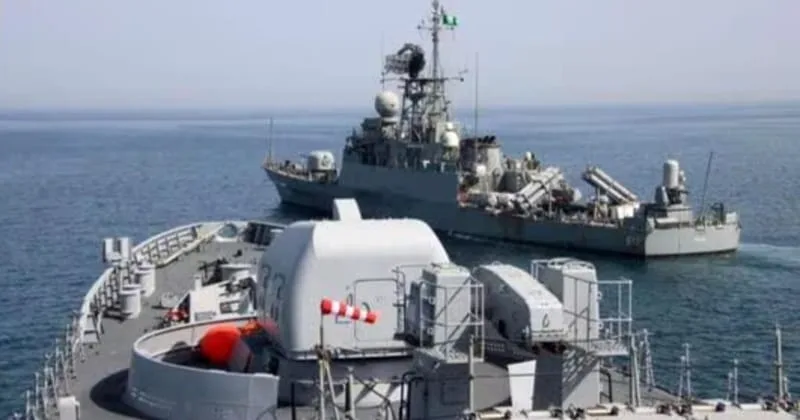
Vessels of the Indian Navy and the Royal Saudi Naval Force during the second edition of bilateral Al-Mohed Al-Hindi exercise in 2023

Vessels of the Indian Navy and the Royal Saudi Naval Force during the second edition of bilateral Al-Mohed Al-Hindi exercise in 2023

FacebookTwitterWhatsAppTelegramEmail

A quiet but decisive shift is underway across the Arabian Gulf’s maritime landscape. Naval forces in Oman, the UAE, Bahrain and Saudi Arabia are steadily deepening operational linkages with India, through specialised training, hydrographic cooperation, recurring port visits and increasingly candid exchanges of maritime information. Over the same period, these militaries have reduced the depth and frequency of their once-familiar engagement with Pakistan. This change is neither symbolic nor diplomatic posturing; it reflects a clear-eyed reassessment of capability, dependability, and the type of naval partnerships Gulf states now prioritise.

In recent years, Gulf navies have moved from occasional interaction to predictable, routine cooperation with the Indian Navy. A pointed example came in October 2024, when India’s First Training Squadron conducted parallel port calls in Manama and Dubai. These visits mirrored a pattern that has gradually taken shape: cross-deck professional exchanges, hands-on seamanship modules, familiarisation drills, and sustained interface between Indian instructors and Gulf naval trainees. For young officers in the region, these deployments offer direct exposure to life at sea and access to advanced training environments, while simultaneously reinforcing diplomatic and maritime ties.

Pakistan’s trajectory stands in stark contrast. While joint exercises such as Naseem-Al-Bahr with Oman are still held and Islamabad continues to participate in multinational frameworks like the Combined Maritime Forces, the once-frequent bilateral training programmes with Oman, the UAE and Kuwait have dramatically diminished. What remains is sporadic and far thinner than India’s active, year-round calendar of engagements. The contrast is becoming increasingly visible to Gulf defence officials who now rely on sustained interactions rather than one-off exercises.

Capacity building and expanding footprint

India has made naval training and capacity building a central pillar of its defence outreach in the Gulf. A clear illustration was seen in 2024, when seventy-six cadets from Saudi Arabia’s King Fahad Naval Academy undertook a month-long training programme at Kochi under the Southern Naval Command. Over four weeks, they underwent simulated warfare modules, basic seamanship routines and extensive sea time. Saudi officials publicly acknowledged the benefits of exposing their officer trainees to Indian naval platforms and procedures. At any given moment, India trains roughly 300 foreign naval personnel across its shore establishments and onboard operational vessels. This steady pipeline has earned New Delhi significant goodwill and institutional familiarity within Gulf navies.

Also Read: Shri Hanuman Chalisa crosses 5 billion views on YouTube, becomes first Indian video to achieve historic milestone

Cooperation has expanded well beyond training. India and Saudi Arabia held their inaugural Navy-to-Navy Staff Talks in 2025, demonstrating the maturity of their maritime dialogue. Their bilateral exercise, Al-Mohed Al-Hindi, has already seen two successful iterations in 2021 and 2023. In August 2025, Indian Navy ships INS Tamal and INS Surat docked in Jeddah for joint manoeuvres, passage exercises and detailed crew interactions. India’s partnership with the UAE has grown equally rapidly. During the 13th Joint Defence Cooperation Committee meeting in July 2025, both sides finalised customised naval training modules for Emirati personnel. The ninth round of Navy-to-Navy Staff Talks broadened the ambit of maritime information-sharing and coordination, marking a deeper level of institutional cooperation.

Pakistan still hosts the multilateral AMAN exercise every two years, attracting participants from over fifty nations. However, that event, broad as it is, does not compensate for the sustained, technical, routine training exchanges that India now offers to Gulf states. Defence exports mirror the same divergence: Pakistan’s sales remain limited, while India has begun exporting indigenous naval components and systems in modest but steady quantities.

Strategic calculations

The choices made by Gulf capitals are grounded in practical assessments rather than diplomatic preferences. They have observed a widening capability gap between India and Pakistan. The Indian Navy operates two aircraft carriers, INS Vikramaditya and INS Vikrant, and fields state-of-the-art destroyers, frigates and submarines able to maintain long-duration missions. Through its mission-based deployment model, India ensures a continuous presence across the Gulf of Aden, the Persian Gulf and the Gulf of Oman. During Operation Sankalp in January 2024, more than ten Indian warships were positioned across these waters to safeguard merchant vessels.

This posture is backed by a coherent doctrine. India’s SAGAR (Security and Growth for All in the Region) vision, articulated in 2015, prioritises cooperative security and regional maritime stability. It has moved beyond rhetoric: in April 2025, the Indian Ocean Ship Sagar joined coordinated missions with island nations across the Indian Ocean, signalling that New Delhi’s approach is now firmly operational. Pakistan’s naval standing, however, remains limited. Without aircraft carriers or large destroyers, the Pakistan Navy’s reach rarely extends far beyond coastal defence around Karachi and Gwadar. Its ability to contribute to wider Gulf security, whether anti-piracy patrols, maritime escort missions or broad-area surveillance, remains modest. Economic strain has further constrained Islamabad’s options, while Gulf capitals, once willing to extend financial support, have become far more cautious. The political fallout from Pakistan’s parliamentary stance on the Yemen conflict still shapes perceptions in several Gulf states.

The emerging India–Gulf maritime alignment is driven by operational needs rather than diplomatic theatrics. With its continuous deployments, reliable training ecosystem, hydrographic expertise and robust information-sharing frameworks, India has positioned itself as a consistent and capable partner for Gulf navies. Pakistan’s episodic engagement, constrained blue-water capabilities, and economic pressures have reduced its centrality to Gulf maritime planning. What is unfolding, therefore, is a shift that is gradual and understated, yet unmistakably directional. India’s naval influence in the Gulf is expanding, anchored not in rhetoric but in credible capability, steady presence and cooperation that meets the region’s evolving security requirements.



Topics: indian NavyMaritime securityPakistan NavySAGAR doctrineIndia-Gulf relationsGulf naval cooperationArabian Gulf defence
ShareTweetSendShareSend
✮ Subscribe Organiser YouTube Channel. ✮
✮ Join Organiser's WhatsApp channel for Nationalist views beyond the news. ✮
Previous News

ABVP membership almost reached 77 lakh; World’s largest student organisation breaks its own record

Next News

“Udupi has been karmabhoomi of Jana Sangh, BJP”: PM Modi at Laksha Kantha Gita Parayana event

Related News

Australian Deputy Prime Minister and Defence Minister Richard Marles and Defence Minister Rajnath Singh

India-Australia Defence Ministers’ Dialogue: Bilateral synergy on defence research, co-production and maritime security

Outgoing Chief of the Naval Staff Dinesh K. Tripathi

Naval Chief underscores inseperable link between maritime & energy security; Assures safe passage of tankers via Hormuz

QUAD stronlgy condemns the Pahalgam terror attack

Quad Foreign Ministers Meet: Members condemn Pahalgam terror attack; Raise concerns over coercion in South China Sea

QUAD Foreign Ministers Meet 2026

QUAD Foreign Ministers Meet: Members pledge for Indo-Pacific security; Unveil initiatives for maritime surveillance

INS SUNAYNA at Kochi

INS Sunayna returns to Kochi after landmark IOS SAGAR deployment with 16 nations across the Indian Ocean Region

INS Sagardhwani concludes Malaysia visit, strengthens India–Malaysia maritime cooperation

Load More

Latest News

Padma Bhushan awardee and noted industrialist Kumar Mangalam Birla Kumar Mangalam Birla addressing the Samapana Samaroh (Valedictory Function) of the Rashtriya Swayamsevak Sangh Karyakarta Vikas Varg – Dwitiya at Nagpur, on June 4, 2026

“RSS always stood by the society and nation”, Kumar Mangalam Birla at RSS Karyakarta Vikas Varg 2 in Nagpur

Arunachal Pradesh seals all 15 illegal Mosques; Bandh called off by APIYO

MK Stalin with Sonai Gandhi; MK Stalin with Rahul Gandhi (File Photos) (Left to Right)

Tamil Nadu: DMK says no to INDIA Alliance meet in Delhi, blames Congress for political backstabbing

Union Finance Minister Nirmala Sitharaman

Karnataka: All-Women team powers Yadgir’s groundnut revolution; Nirmala Sitharaman inaugurates NABARD Unit

Keralam: Jamaat-e-Islami event features Hamas and Muslim Brotherhood ideologues, raises concerns over Political Islam

Representative Image (This is an AI Generated image)

Uttar Pradesh CM Abhyudaya Scheme: Apply for free civil services, JEE and NEET coaching from June 5

House worth Rs 2 crore of drug peddler bulldozed in J&K

Anti-narcotics campaign in J&K: Police demolish Rs 2 crore residential property linked to drug peddler Sheikh Tasaduq

As fuel shortages rippled across Asia, New Delhi expanded supplies to its neighbours while Beijing sought to turn energy security into strategic influence.

The Hormuz Test: How India’s energy assistance outshines China’s conditional approach

Demographic changes in Bharat’s border districts have raised concerns about migration, security, and social cohesion

Demographic Shift in Border Areas of Bharat: The dangerous design

FIR filed against the Islamists in the Love Jihad case in Bhopal

Love Jihad again in Bhopal: Minor Hindu girl forced to drink beer, trapped and pressured to convert by Islamists

Load More
  • Privacy
  • Terms
  • Cookie Policy
  • Refund and Cancellation
  • Delivery and Shipping

© Bharat Prakashan (Delhi) Limited.
Tech-enabled by Ananthapuri Technologies

  • Home
  • Search Organiser
  • Bharat
    • Assam
    • Bihar
    • Chhattisgarh
    • Jharkhand
    • Maharashtra
    • View All States
  • World
    • Asia
    • Africa
    • North America
    • South America
    • Europe
    • Australia
  • Editorial
  • Operation Sindoor
  • Opinion
  • Analysis
  • Defence
  • Culture
  • Sports
  • Business
  • RSS @ 100
  • Entertainment
  • More ..
    • Sci & Tech
    • Vocal4Local
    • Special Report
    • Education
    • Employment
    • Books
    • Interviews
    • Travel
    • Health
    • Politics
    • Law
    • Economy
    • Obituary
  • Subscribe Magazine
  • Read Ecopy
  • Advertise
  • Circulation
  • Careers
  • About Us
  • Contact Us
  • Policies & Terms
    • Privacy Policy
    • Cookie Policy
    • Refund and Cancellation
    • Terms of Use

© Bharat Prakashan (Delhi) Limited.
Tech-enabled by Ananthapuri Technologies