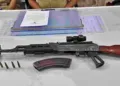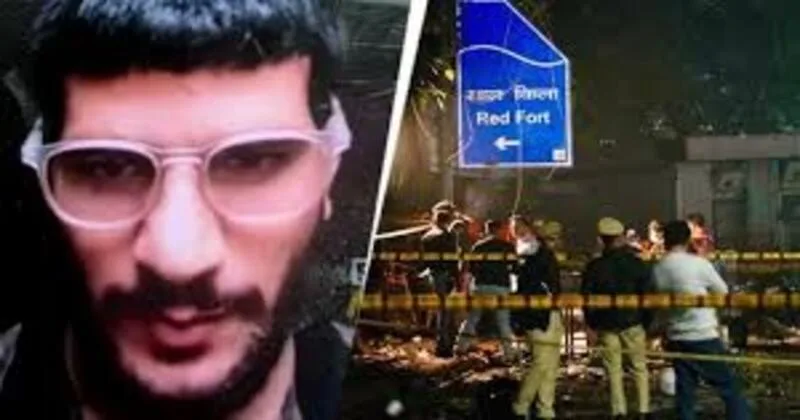
Investigators probing the ‘white-collar terrorist module’ linked to the Red Fort blast case have uncovered a sophisticated network that procured Russian-made weapons and even a deep freezer to store explosive materials in preparation for planned attacks across the country. According to officials, the module, comprising highly educated individuals, was working to build a large stockpile of arms and explosives with the intent of triggering coordinated blasts in multiple locations.The investigation has revealed a detailed procurement chain involving the arrested individuals: Dr. Muzammil, Dr. Shaheen, Dr. Adeel and Ameer. According to officials, Muzammil purchased a Russian assault rifle for ₹5 lakh through a contact associated with Dr. Shaheen. The weapon was later recovered from a locker belonging to Dr. Adeel, marking a major breakthrough for the agency. Earlier, authorities had seized another Russian-made AK Krinkov rifle, a Chinese Star pistol, a Beretta pistol and about 2,900 kg of raw explosive materials from Faridabad.
Officials said the foreign-made assault rifles and the deep freezer used to store explosives were arranged by Dr. Shaheen, who was operating from Lucknow, based on requests from Umar, a key figure in the conspiracy. These arrangements were made after discreet communications with weapon suppliers to avoid raising suspicion. Investigating agencies are now also monitoring these suppliers closely. The accused reportedly collected a total of Rs 26 lakh, most of which was funneled through Shaheen. Investigators have confirmed that those arrested in connection with the white-collar module had been sourcing weapons from abroad and had amassed a significant volume of explosives with the objective of carrying out major blasts. Officials said the accused were linked to Pakistan-based Jaish-e-Mohammed (JeM). The doctors arrested, identified as Muzammil Ganai, Shaheen Saeed and Adeel Rather, were central to the procurement network.
According to the National Investigation Agency (NIA), Muzammil purchased a Russian-made AK-56 rifle for Rs 5 lakh, a transaction facilitated through detained co-accused Shaheen Saeed. The subsequent recovery of another AK Krinkov rifle, additional pistols and nearly three tonnes of explosive materials underscored the magnitude of the terror plot. The discovery of the AK-56 rifle inside Adeel’s locker was a major turning point, prompting investigators to reassess the scale and sophistication of the module’s intentions. Officials involved in the investigation said Shaheen was responsible for arranging both the Russian weapons and the deep freezer. The freezer, they stated, was purchased specifically to store volatile chemicals required to prepare improvised explosive devices (IEDs), especially during hot weather when the risk of accidental detonation increases. Transactions for these items were carried out by Muzammil on the instructions of Umar Nabi, who later executed a suicide attack in Delhi.
Forensic teams are currently examining samples from the freezer to identify the chemical components used in the explosive mixes. Intelligence reports suggest that Shaheen not only played a key role in procuring the rifle and the freezer but also utilized his personal network to raise funds for the purchase of weapons and ammunition. Sources indicated that these connections may have extended to Afira Bibi, wife of Jaish commander and Pulwama attack mastermind Umar Farooq. Farooq, who was also the son-in-law of JeM chief Masood Azhar, was killed in an encounter following the 2019 Pulwama attack in which 40 CRPF personnel were killed.
Investigators established that Umar Nabi, who was responsible for a suicide attack in Delhi, had received online IED-making training from a handler based in Turkey. According to the probe, Umar extensively studied bomb-making tutorials, technical manuals and other open-source material and received step-by-step instructions from Turkish handlers. He is alleged to have procured chemical components from Noida, electronic circuits from Bhagirath Palace in Delhi, and other materials from NIT Market in Faridabad. The deep freezer was then used to process and stabilize the explosive mixtures. As preparations for the planned attacks advanced, a parallel investigation by the Jammu and Kashmir Police led to the arrest of several members of the module. It was also discovered that most of the arrested were associated with Al Falah University. Police sources stated that interpersonal disputes had begun emerging among the group members as pressure mounted. Eyewitnesses reported verbal altercations between the arrested regarding the distribution of money within the university premises. Investigators said several students had witnessed the quarrels.
Following these internal disagreements, and amid mounting surveillance pressure, the chain of arrests began. According to the investigation report, Umar eventually handed over his red Ford EcoSport, loaded with explosives, to Muzammil before attempting to escape further scrutiny. The abandoned vehicle later became an important piece of evidence in understanding the scale of the planned attack. Officials say the investigation has now mapped out a complex terror-financing and weapons-procurement network driven by individuals who maintained professional identities while facilitating extremist operations. The probe continues to examine links with external handlers in Pakistan and Turkey, as well as financial channels used to raise and transfer funds.