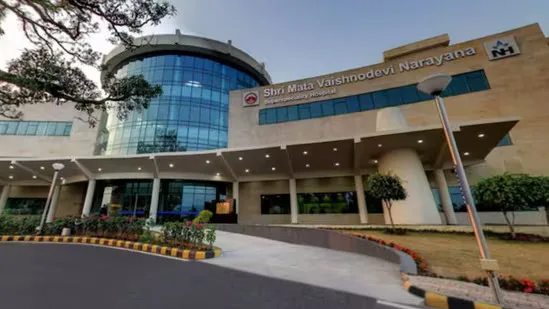
The Jammu and Kashmir unit of the Bharatiya Janata Party (BJP) has formally objected to the high number of Muslim students admitted to the Shri Mata Vaishno Devi Institute of Medical Excellence (SMVDIME). The controversy, which had been simmering for days, escalated after protesters held demonstrations in the Reasi district, arguing that an institution funded by donations from Hindu devotees should reflect the cultural ethos of the Vaishno Devi shrine.
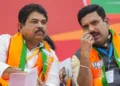
Leading the political intervention, a BJP delegation headed by Sunil Sharma, Leader of the Opposition in the J&K Assembly, met Lieutenant Governor Manoj Sinha on Saturday. The delegation submitted a memorandum seeking a comprehensive review of the institution’s admission norms and demanded “corrective measures” in the interest of community representation.
The flashpoint came after the release of the first MBBS seat-allocation list for the 2025-26 academic session, which showed that 42 of the 50 selected candidates were Muslim. Several Hindu organisations, including, the Yuva Rajput Sabha and the Rashtriya Bajrang Dal, called the intake “disproportionate” and argued that Hindu students were being sidelined in a temple-governed institution.
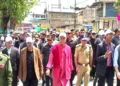
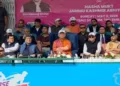
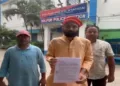
The protests intensified midweek as demonstrators marched toward the SMVDIME campus in Katra, attempting to breach the gates before security forces intervened. Protest leaders said that only seven Hindus and one Sikh had been allotted seats, calling the distribution “unacceptable” and demanding that the institute be granted minority status to allow community-based reservation.
They also pressed for amendments to the Shri Mata Vaishno Devi Shrine Board Act and the University Act to ensure that the admissions process reflects the “devotion and offerings” that sustain the shrine complex.
BJP MLA R.S. Pathania echoed these sentiments, arguing that institutions built through the contributions of temple pilgrims must prioritise Hindu representation. “Shrine-funded institutions must reflect the cultural and spiritual ethos of the temple,” he said, urging the administration to address what he described as a growing concern among devotees.
Amid the political and social uproar, the Shri Mata Vaishno Devi Institute of Medical Excellence issued a clear statement: all admissions have been conducted strictly through the national-level NEET examination. Officials noted that the institute does not have minority status and is therefore required to follow national guidelines without religious-based reservations.
With 50 sanctioned MBBS seats this year, the institute emphasised that its procedures adhere fully to the principles of merit and transparency. However, this clarification did little to placate protesters, who argued that a shrine-board-funded institution must ensure “equitable representation for the Hindu community.” They warned that the agitation would intensify unless Lt Governor Sinha, who also chairs the Shrine Board, intervened directly in the matter.
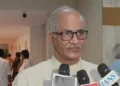
While the BJP pushed for changes, the controversy triggered sharp counter-reactions from opposition leaders. Jammu and Kashmir People’s Conference chief Sajad Lone criticised what he called an attempt to inject communalism into medical education. Calling the uproar “a stretch”, he asserted that NEET is designed to select the finest minds in the country, regardless of religious identity.
“Medical science needs researchers, not religious zealots,” Lone remarked, warning that the politicisation of education threatens India’s scientific ambitions. He stressed the importance of protecting the integrity of merit-based systems to ensure that India progresses in innovation, global partnerships and medical research.