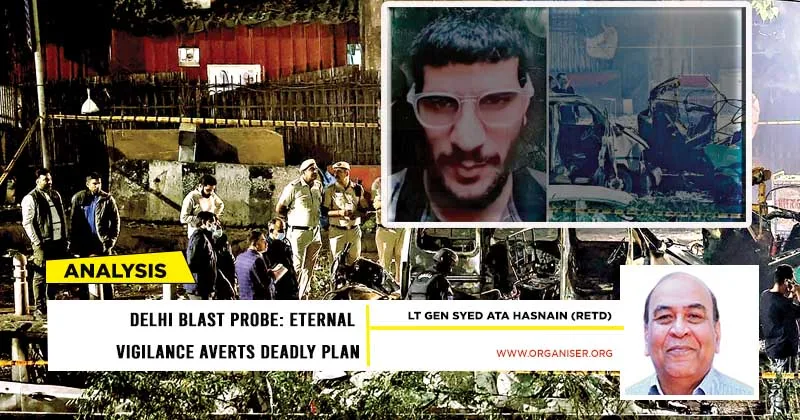
We have just had a narrow escape on November 10. Perhaps a glimpse into what could have been one of the most devastating terror plots since Mumbai 26/11. The module uncovered in Delhi and Faridabad was not an overnight development; it appears to have been under preparation for months, if not years. The intention, judging from the materials seized and the linkages traced, was nothing short of catastrophic — to plant multiple Improvised Explosive Devices (IEDs) across the National Capital Region, triggering chaos and casualties far beyond anything witnessed in recent memory.
Intelligence & Police Prevent the Disaster
That this design was averted owes itself to the diligence of our Intelligence and police agencies, and to one small but crucial investigative thread — the discovery of Jaish-e-Mohammad (JeM) posters in Srinagar’s Jama Masjid. What might have seemed at first a localised provocation turned out to be a critical clue. The follow-up, jointly by the Jammu and Kashmir Police, the Delhi Police and the Haryana Police, exposed a sophisticated urban terror module with roots stretching from Anantnag to Faridabad.
Accidental Detonation
The subsequent explosion outside Delhi’s Red Fort Metro Station on November 10, though tragic in its loss of life, may in hindsight prove to be the accident that prevented something far worse. The blast, which killed Dr Umar and others, was almost certainly an accidental detonation, not an intended attack. Early forensic assessments indicate the absence of military-grade explosive residues and suggest mishandling of ammonium nitrate — the same industrial material recovered in bulk during the Faridabad raids.
It appears that the group was still in the preparatory phase, experimenting with materials and devices. Had a trained bomb-maker or “IED Doctor” — as such specialists are called in terror circles — been present, the outcome could have been catastrophic. What we witnessed was perhaps the premature ignition of a far larger conspiracy.
Dangerous Docts: New Terror Module
This episode also highlights a disturbing evolution; the emergence of white-collar over ground workers (OGWs) turning operational. In Kashmir, over the decades, the OGW ecosystem has always included educated individuals — teachers, journalists, minor officials, or members of academia. Many held separatist sympathies, some were outright anti-India, but very few ever became terrorists themselves. The foot soldiers of militancy were largely drawn from the impoverished, less educated strata — those with little to lose and easy to recruit.
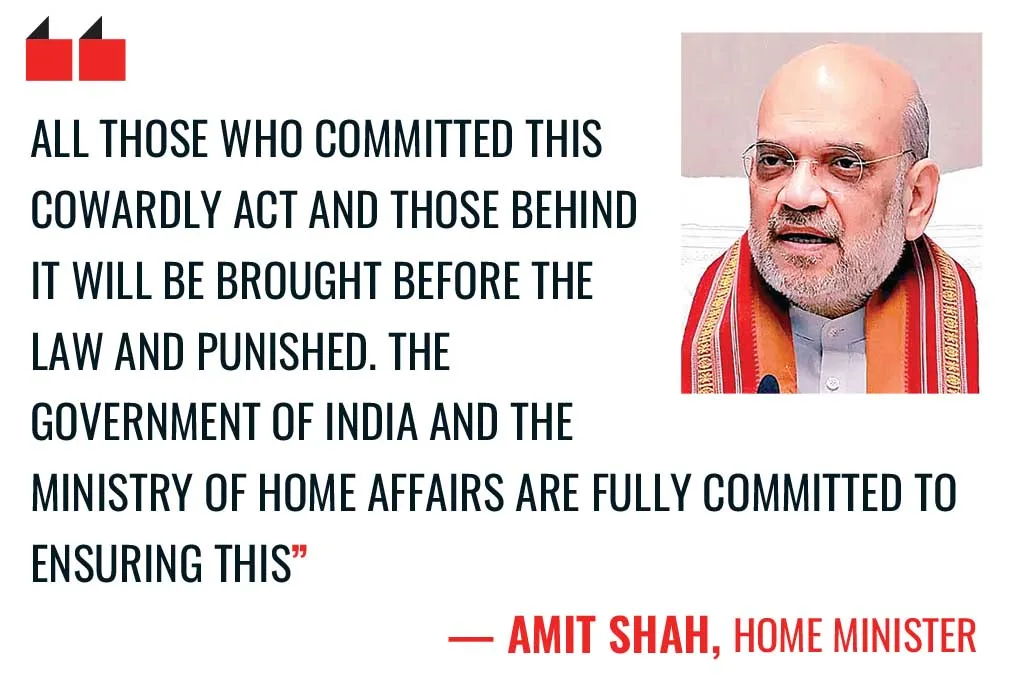
However, the recent module represents a new category. It involved qualified medical professionals who had crossed the line from ideological sympathy to operational complicity. They were educated, internationally travelled, and familiar with digital networks — precisely the kind of profile least likely to attract suspicion. Intelligence agencies traditionally look for behavioural anomalies or financial irregularities; Doctors or academics, by virtue of their social standing, rarely fit that pattern. This is also somewhat in keeping with international terrorist profiles where well educated professionals were witnessed to be drawn to the ranks of ISIS.
Chronology of Faridabad Module: Big catch by Security agencies
- October 19: An First Information Report (FIR) was registered after posters supporting a Pakistani terror group were found in Srinagar, leading J&K police to begin their investigation
- October 20-27: Several individuals were arrested in connection with the case, including a cleric and an accomplice
- October 20-27: During the course of the investigation, Maulvi Irfan Ahmad Waghe was arrested from Shopian, and Zameer Ahmad from Wakura, Ganderbal
- November 5: Dr Adeel was apprehended from Saharanpur
- November 7: An AK-56 rifle and other ammunition were seized from Anantnag Hospital
- November 8: Further recoveries of guns, pistols, and explosives were made from Al-Falah Medical College
- During interrogation, information surfaced about other individuals involved in this module, leading to the arrest of Dr Muzzammil from Al-Falah Medical College, Faridabad. Based on these leads, several more arrests were made and a large cache of arms and explosives was recovered
- November 9: A person known as Madarasi, a resident of Dhauj, Faridabad, was arrested from his house
- November 10: A massive consignment of explosives weighing 2,563 kg was seized from the house of Hafeez Mohammad Ishtiyaq, a resident of Mewat and Imam of the Al-Falah Mosque, located in Dhera Colony, Faridabad
- During the raids, an additional 358 kg of explosive material, detonators, timers, and related components were also seized. In total, about 3,000 kg of explosives and bomb-making equipment were recovered from this module
- One of the members of the group, Dr Umar, who was working at Al-Falah Medical College, managed to escape after the agencies intensified their crackdown
- The car involved in the Red Fort explosion was being allegedly driven by Dr Umar, as indicated by CCTV footage. The material that caused the explosion was the same 8type of explosive stockpiled in Faridabad, where about 3,000 kg of such substances were recovered
- About 13 people lost their lives and several injured
Why Jaish Tapped Docts?
The motivation here seems strategic. By employing educated, socially mobile individuals, groups like Jaish-e-Mohammad seek to operate below the radar, using professionals whose mobility and credibility make them ideal for urban operations. Such individuals are unlikely to volunteer as suicide bombers; their role is to plan, fabricate, and place devices — the logistics of terror rather than its theatre. That is the rationale for the conclusion that Dr Umar was not a suicide bomber but a planner and potentially an IED fabricator.
Myth of Suicide Bombing
It is worth recalling that suicide bombing has never been a central feature of terrorism in Jammu and Kashmir. Even during the peak of militancy, “fedayeen” attacks typically involved armed assaults with the intent to fight till death, not self-detonation. Suicide bombings, common in Pakistan’s Khyber Pakhtunkhwa or Afghanistan, remain alien to the Kashmiri psyche and counterproductive for Pakistan’s handlers, who prefer controlled disruption to mass outrage. That is why the Faridabad module’s apparent strategy was to plant and detonate IEDs remotely — to inflict mayhem, not martyrdom. The professionalism and patience with which the plan seems to have evolved underscores both the persistence of Pakistan’s proxy war and its shifting tactics: from the mountain to the metropolis, from the gun to the hidden bomb.
International Dimension
The revelation that some members of the module had international travel histories adds another layer of concern. Such movement often enables the creation of escape channels or foreign safe havens. It would be naïve to rule out the involvement of overseas handlers operating from parts of West Asia — not necessarily the Gulf hubs like the UAE or Qatar, but from less-regulated zones that serve as transit or refuge points for extremist logistics.
For decades, Pakistan’s Inter-Services Intelligence (ISI) has relied on a combination of domestic radicals, expatriate sympathisers, and global financial conduits to sustain its proxy operations. That model continues, albeit in a more diffused, networked form — harder to detect, slower to move, but equally dangerous in potential.
Vital Role Played by Intelligence & Policing
To their credit, India’s intelligence agencies and police forces have demonstrated exceptional inter-State coordination in recent weeks. The seamless cooperation between the J&K Police, the Haryana Police, and the Delhi Police is a model of what a “whole-of-Government” approach should look like. The National Investigation Agency (NIA) has also provided strategic oversight, ensuring that local actions are tied into national intelligence flows. However, the challenge ahead is more diffused and persistent. As terrorism migrates into educated and urban spaces, detection cannot rely solely on surveillance or signals intelligence. Citizen-based intelligence — the collective awareness of ordinary people — becomes a critical layer of protection. But it must be guided, not panicked; alertness should not morph into suspicion of communities or professions.
The Whole-of-Nation Approach
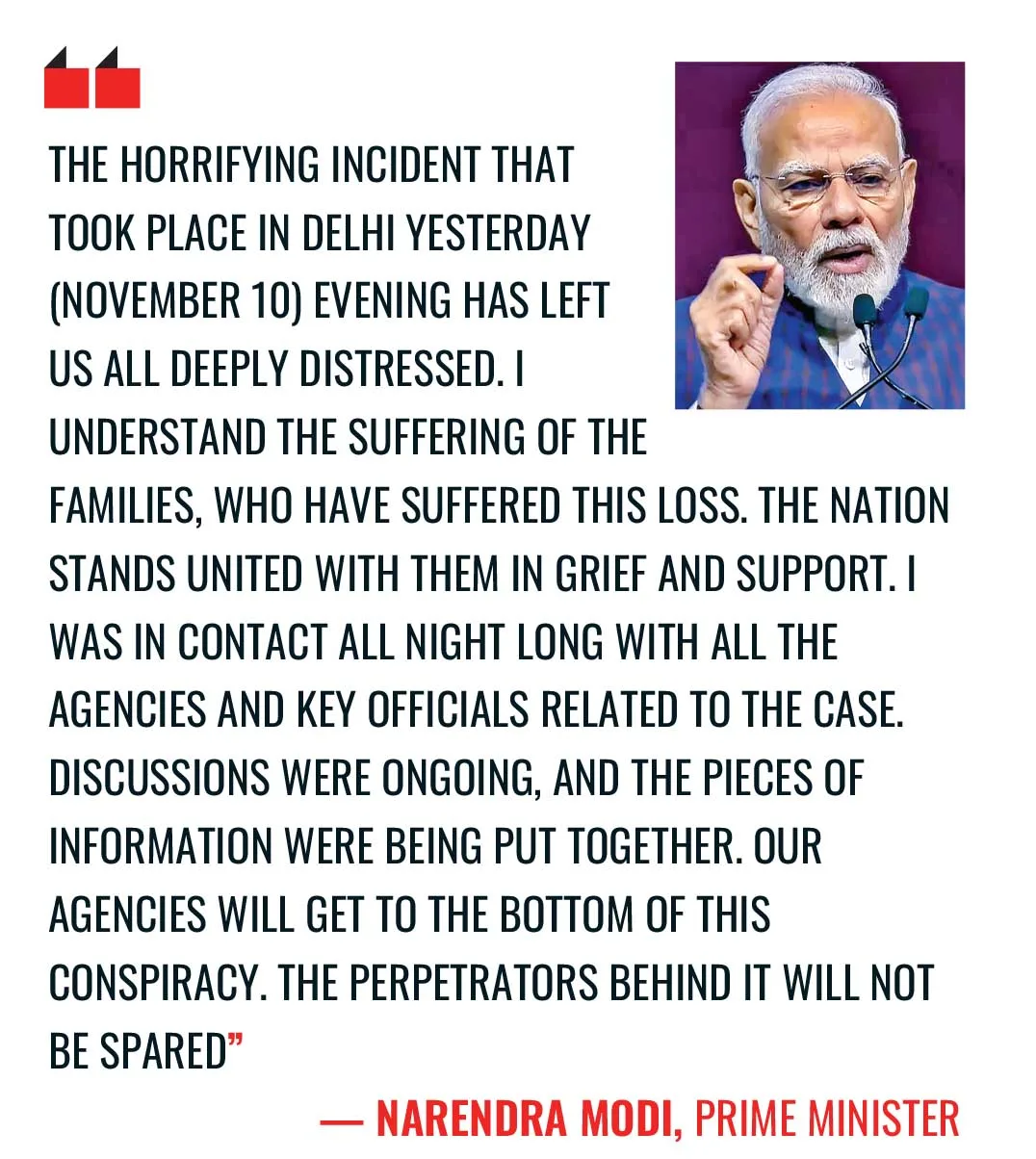
The time has come to embrace what can truly be called a Whole-of-Nation approach to counter-terrorism. Every citizen is, in essence, a sentry — responsible for observing, reporting, and strengthening the environment of safety around them. But vigilance alone will not suffice. We need a parallel investment in deradicalisation and counter-radicalisation — programs that address the ideological roots of extremism before they reach the operational stage. These initiatives must be led not by bureaucracy but by moderate clergy and credible community voices, working under the guidance of the government and the Ministry of Minority Affairs. The Singapore model offers a proven template; trusted clerics, not state officials, engage with at-risk individuals, reinterpreting faith in line with national ethos. India’s diversity and scale demand an indigenised version of that model — one rooted in inclusivity, education, and national identity. The response of the national political relationship has been measured, mature and extremely responsible. India’s aspirations remain rooted to the Prime Minister’s vision of Viksit Bharat 2047. The aim and intent of the adversaries is to divert us from that. Yet, national interest is something that the leadership understands and decisions based upon that will always follow.
Exploiting Education, Tech & Anonymity
The Faridabad module is not just another disrupted terror plot; it is a strategic warning. The adversary has adapted, learning to exploit education, technology, and urban anonymity. Yet, in this adaptation lies our cue. Just as the enemy evolves, so must the state — not merely in tools but in thought. The discovery of the JeM posters in Srinagar, the swift follow-up across three States, and the prevention of mass carnage are all victories of vigilance. But we cannot afford to view them as an end in themselves. They are reminders that India’s internal security battle is no longer about territory — it is about trust, networks, and awareness.
We have been fortunate this time. Luck and professionalism combined to avert catastrophe. But fortune is not a strategy. Eternal vigilance — from the intelligence operative to the ordinary citizen — must now be the national creed.