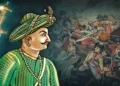
The Melukote Massacre of 1790 by Tipu Sultan
September 13, 2026
  • Read Ecopy
  • Circulation
  • Advertise
  • Careers
  • About Us
  • Contact Us
Android AppiPhone AppArattai
Organiser
  • ‌
  • Bharat
    • Assam
    • Bihar
    • Chhattisgarh
    • Jharkhand
    • Maharashtra
    • View All States
  • World
    • Asia
    • Europe
    • North America
    • South America
    • Africa
    • Australia
  • Editorial
  • International
  • Opinion
  • RSS @ 100
  • More
    • World Hindu Congress 2026
    • Op Sindoor
    • Analysis
    • Sports
    • Defence
    • Politics
    • Business
    • Economy
    • Culture
    • Special Report
    • Sci & Tech
    • Entertainment
    • G20
    • Azadi Ka Amrit Mahotsav
    • Vocal4Local
    • Web Stories
    • Education
    • Employment
    • Books
    • Interviews
    • Travel
    • Law
    • Health
    • Obituary
  • Subscribe
    • Subscribe Print Edition
    • Subscribe Ecopy
    • Read Ecopy
  • ‌
  • Bharat
    • Assam
    • Bihar
    • Chhattisgarh
    • Jharkhand
    • Maharashtra
    • View All States
  • World
    • Asia
    • Europe
    • North America
    • South America
    • Africa
    • Australia
  • Editorial
  • International
  • Opinion
  • RSS @ 100
  • More
    • World Hindu Congress 2026
    • Op Sindoor
    • Analysis
    • Sports
    • Defence
    • Politics
    • Business
    • Economy
    • Culture
    • Special Report
    • Sci & Tech
    • Entertainment
    • G20
    • Azadi Ka Amrit Mahotsav
    • Vocal4Local
    • Web Stories
    • Education
    • Employment
    • Books
    • Interviews
    • Travel
    • Law
    • Health
    • Obituary
  • Subscribe
    • Subscribe Print Edition
    • Subscribe Ecopy
    • Read Ecopy
Organiser
  • Home
  • Bharat
  • World
  • Operation Sindoor
  • Editorial
  • Analysis
  • Opinion
  • Culture
  • Defence
  • International Edition
  • RSS @ 100
  • Magazine
  • Read Ecopy
Home Politics

Darkest Night of Diwali: The Melukote Massacre of 1790 by Tipu Sultan

After returning to his capital, Tippu massacred the families on the day of Naraka Chaturdashi and confiscated their estates, decimating Melkote and rendering it a ghost town overnight. This mass butchering by Tipu's army forced Mandyam Iyengars to move to Nagamangala and later settle down in Melukute from Baburayana Koppalu, Mandya Koppal and Mandya

Dr R Krishna ChaitanyaDr R Krishna Chaitanya
Oct 29, 2025, 08:40 pm IST
inPolitics, Bharat, Opinion, Karnataka
Follow on Google News
Facebook
Twitter
WhatsAppTelegramEmail

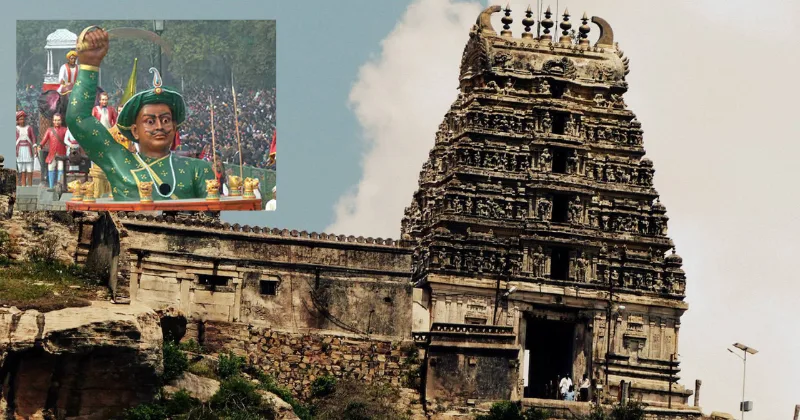
The gleam of a thousand lamps, flickering in the dusk, usually fills hearts with warmth and hope during the “festival of lights. Diwali, embodies the triumph of good over evil and the promise that light will always chase away darkness. Yet, for one community in Karnataka, Deepavali casts long shadows that reach deep into memory and grief. For the Mandyam Iyengar community-a Brahmin sub-sect—”Naraka Chaturdasi” is not a celebration but a day painted in sorrow. Over two centuries ago, the so called ‘Tiger’ of Mysore, tyrant Tipu Sultan, unleashed a wave of violence, drenching the town of Melkote in blood and anguish as nearly 800 Mandyam Iyengar men, women, and children were mercilessly massacred.

Today, Melkote, a small hill town nestled in the Mandya district of Karnataka, stands as silent testimony to this tragedy. Its ancient streets wind around two sacred temples-the Cheluvanarayana Temple and the Yoga Narasimha Temple-where prayers have mingled with tears for generations.

The Mandyam Iyengars, among the earliest followers of Sri Ramanujacharya, made Melkote their home in the 12th century after being embraced by the Hoysala King Vishnuvardhana. Though the Hoysalas faded into history by 1343 CE, with the death of their last ruler, Veera Ballala III,, the Iyengar community flourished under the benevolent gaze of the Vijayanagar Empire, whose kings lavished the Cheluvanarayana Temple and the Iyengars with generous grants, weaving faith, resilience, into the fabric of Melkote’s identity. By 1565, the glorious Vijayanagar Empire, once a beacon of southern might, teetered on the edge of oblivion.

Under the visionary Raja Wodeyar I, Mysore’s spirit, began to recover and radiate outward. Over the next 150 years, the Mandyam Iyengar community flourished under Wodeyar patronage, their destinies entwined with the pulse of the kingdom. They rose to prominence, holding keys to administrative and sacred chambers alike, while the revered Cheluvanarayana temple found its guardianship entrusted to their care. Prosperity blossomed, watered by the generosity and vision of the Wodeyars, and hope seemed eternal. By 1760, the Wodeyar family’s grasp had weakened, their authority siphoned away by the Dalwai—the commanders-in-chief—while the Wodeyar king became a mere shadow on the throne. When Krishnaraja Wodeyar II passed away in 1763, Hyder Ali, the most ruthless of the commanders, seized the kingdom’s reins. His rise was as swift as it was relentless, casting a pall of anxiety and uncertainty over Mysore. Rani Lakshammanni, the rightful heiress of the Mysore kingdom, with her unyielding courage, plotted to resurrect the Wodeyar legacy. She was not alone; the Mandyam Iyengars, with Thirumalai Iyengar and his brother Narayan at the helm, rallied to her cause. She tried three times secretly to get rid of the Mahommaden usurpers. In 1765, the queen sent an emissary to the Governor of Madras for help against Hyder Ali, but the Nawab of Karnatic’s pressure and British political maneuvering prevented assistance. In 1770, Rani Lakshammanni secretly sought aid from Peshwa Madhavarao against Hyder Ali, who suspected her emissary Pradhan Tirumal Iyengar.

Hyder arrested Tirumal but, fearing his intelligence, later released him and sent him to Kadapa, thwarting the Rani’s plan. But the Maharani did not lose her grit and tenacity. In 1776, Maharani Lakshmammanni sent emissaries to Lord Pigot for British help against Hyder, but found him imprisoned. Pigot advised them to wait in Tanjore, but his subsequent death thwarted the plan.

Despite this failure, the determined emissaries remained in Tanjore to await another opportunity to negotiate with the British. When Hyder Ali died in 1783, his son, Tipu Sultan, captured the throne. Unlike Hyder, Tipu was acutely aware of the dangers posed by the alliance between the Iyengars and the Queen, Rani Lakshmammani. Upon discovering Pradhans Tirumal Iyengar and Narayana Iyengar alliance with the British to dethrone, Tippu Sultan ordered the imprisonment of their relatives and others involved. 700 Iyengar families were chained with heavy irons and thrust into the dungeons of Srirangapatnam. After returning to his capital, Tippu massacred the families on the day of Naraka Chaturdashi and confiscated their estates, decimating Melkote and rendering it a ghost town overnight. This mass butchering by Tipu’s army forced Mandyam Iyengars to move to Nagamangala and later settle down in Melukute from Baburayana Koppalu, Mandya Koppal and Mandya.

This dark chapter in history is a stark illustration of the political and military realities of the time, where ambition and intolerance led to unspeakable tragedy. Even today Anandampillais of Bharadwaja gotra staying in Melkote and other places, do not celebrate Deepavali, as a mark of homage to their ancestors who were killed in this Massacre. This article is a tribute to all those families who were brutally killed.

The biography of Tipu Sultan is a case study which highlights the fact that teaching a complete and unfiltered version of history, including its darker moments, is crucial for fostering critical thinking, promoting empathy, and learning from past mistakes. Presenting a sanitized, one dimensional view of a historical figure creates an unrealistic unrealistic role models & creating ill-informed citizens susceptible to repeating past errors. Failure to acknowledge the “darker side” of a historical figure while glorifying their achievements has significant consequences, including the distortion of historical truth, the cultivation of uncritical hero worship, and the perpetuation of harmful ideologies. This can have negative effects on a society’s collective memory, moral judgment, and educational integrity.


Topics: Tipu SultanMelukote MassacreAnti-Hindu Tipu SultanRani LakshammanniKrishnaraja WodeyarMandyam Iyengars
Dr R Krishna Chaitanya
Associate Professor, Central University of Karnataka [Read more]
Share
Tweet
SendShareSend
✮ Subscribe Organiser YouTube Channel. ✮
✮ Join Organiser's WhatsApp channel for Nationalist views beyond the news. ✮
Previous News

Coal Scam Audit Exposed: P Sesh Kumar reveals how the Congress-led UPA blocked the Rs 1.86 lakh crore loot

Next News

Kedarnath Mandir Closes for Winter: A testament to faith and progress in Uttarakhand

Related News

Keralam: ‘Tipu’s Nemesis’, AI-powered cinematic tribute recreates Travancore’s historic resistance against Tipu Sultan

Tamil Nadu: Poster portraying Shivaji Maharaj at the feet of Tipu removed after protests by Hindus

Representative image

Tipu Sultan’s Campaigns in Malabar and Coorg: A chronicle of forced conversions, mass captivity & psychological terror

Tipu Sultan portrait in Deputy Mayor Shaan-e-Hind Nihal Ahmed’s office

Maharashtra: Tipu Sultan portrait in Deputy Mayor’s office sparks controversy, BJP alleges disrespect to national icons

Representative Image

Mamankam, Kumbh and the Grammar of Hindu Sovereignty: How Bharat’s Political Rituals Were Dismantled

Death Anniversary of Pazhassi Raja: Tribute to the Lion of Kerala who took the British head on

Load More

Latest News

Representative Image- Indian Railways

Cabinet approves three railway projects worth Rs 10,783 crore, to connect 4790 villages across five states

Vande Mataram: The eternal mantra of national consciousness

A representative image

Team Skill India set for biggest ever WorldSkills push, to compete in 11 new categories at WorldSkills Shanghai 2026

AI-generated representative image

Fragile Five to Fastest-Growing Major Economy – Incredible India’s Transformation in 12 Years

India joins 24 nations in global 6G push

India joins 24 nations in global 6G push, endorses call for secure and resilient networks

Ministry of Defence's ten-year defence diplomacy framework “RAKSHA”, at Kartavya Bhawan in New Delhi. (Source: AI generated Image)

RAKSHA: Ten years of Defence diplomacy turned a decade boosting export and global cooperation

(Left) Naga leader Dr. S. C. Jamir: (Right) RSS Sarsanghchalak Dr Mohan Bhagwat

Bridging Perspectives: Dr SC Jamir meets RSS’ Dr Bhagwat, highlights mutual respect, secularism, and Naga aspirations

Tiger Bright coffee from Koraput’s tribal farmers featured in BRICS Summit media kits in New Delhi

From Eastern Ghats to BRICS: Koraput Coffee puts Odisha’s tribal enterprise on global map

The RSS has spent a century building influence through organisation, social networks and ideological formation beyond the electoral arena

RSS at 100: How the Sangh built a century-long network of influence beyond Indian politics

India on a Platter: BRICS Dinner Menu Celebrates Regional Culinary Heritage

BRICS Dinner Menu: From Khandvi, mushroom kebabs to pulao global leaders get a taste of Bharat’s culinary heritage

Load More
  • Privacy
  • Terms
  • Cookie Policy
  • Refund and Cancellation
  • Delivery and Shipping

© Bharat Prakashan (Delhi) Limited.
Tech-enabled by Ananthapuri Technologies

  • Home
  • Search Organiser
  • Bharat
    • Assam
    • Bihar
    • Chhattisgarh
    • Jharkhand
    • Maharashtra
    • View All States
  • World
    • Asia
    • Africa
    • North America
    • South America
    • Europe
    • Australia
  • Editorial
  • Operation Sindoor
  • Opinion
  • Analysis
  • Defence
  • Culture
  • Sports
  • Business
  • RSS @ 100
  • Entertainment
  • More ..
    • Sci & Tech
    • Vocal4Local
    • Special Report
    • Education
    • Employment
    • Books
    • Interviews
    • Travel
    • Health
    • Politics
    • Law
    • Economy
    • Obituary
  • Subscribe Magazine
  • Read Ecopy
  • Advertise
  • Circulation
  • Careers
  • About Us
  • Contact Us
  • Policies & Terms
    • Privacy Policy
    • Cookie Policy
    • Refund and Cancellation
    • Terms of Use

© Bharat Prakashan (Delhi) Limited.
Tech-enabled by Ananthapuri Technologies