BBC’s War of Words: How western media wages battle
June 25, 2026
  • Read Ecopy
  • Circulation
  • Advertise
  • Careers
  • About Us
  • Contact Us
Android AppiPhone AppArattai
Organiser
  • ‌
  • Bharat
    • Assam
    • Bihar
    • Chhattisgarh
    • Jharkhand
    • Maharashtra
    • View All States
  • World
    • Asia
    • Europe
    • North America
    • South America
    • Africa
    • Australia
  • Editorial
  • International
  • Opinion
  • RSS @ 100
  • More
    • Op Sindoor
    • Analysis
    • Sports
    • Defence
    • Politics
    • Business
    • Economy
    • Culture
    • Special Report
    • Sci & Tech
    • Entertainment
    • G20
    • Azadi Ka Amrit Mahotsav
    • Vocal4Local
    • Web Stories
    • Education
    • Employment
    • Books
    • Interviews
    • Travel
    • Law
    • Health
    • Obituary
  • Subscribe
    • Subscribe Print Edition
    • Subscribe Ecopy
    • Read Ecopy
  • ‌
  • Bharat
    • Assam
    • Bihar
    • Chhattisgarh
    • Jharkhand
    • Maharashtra
    • View All States
  • World
    • Asia
    • Europe
    • North America
    • South America
    • Africa
    • Australia
  • Editorial
  • International
  • Opinion
  • RSS @ 100
  • More
    • Op Sindoor
    • Analysis
    • Sports
    • Defence
    • Politics
    • Business
    • Economy
    • Culture
    • Special Report
    • Sci & Tech
    • Entertainment
    • G20
    • Azadi Ka Amrit Mahotsav
    • Vocal4Local
    • Web Stories
    • Education
    • Employment
    • Books
    • Interviews
    • Travel
    • Law
    • Health
    • Obituary
  • Subscribe
    • Subscribe Print Edition
    • Subscribe Ecopy
    • Read Ecopy
Organiser
  • Home
  • Bharat
  • World
  • Operation Sindoor
  • Editorial
  • Analysis
  • Opinion
  • Culture
  • Defence
  • International Edition
  • RSS @ 100
  • Magazine
  • Read Ecopy
Home World

The BBC’s War of Words: How western media wages a psychological battle against India’s rise

Why the British Broadcasting Corporation’s portrayal of India’s Gen Z as “disillusioned rebels” is not journalism, it’s agenda-driven propaganda against a self-confident civilization

Adv Karan ThakurAdv Karan Thakur
Oct 28, 2025, 09:00 pm IST
in World, India, Asia, International Edition
Follow on Google News
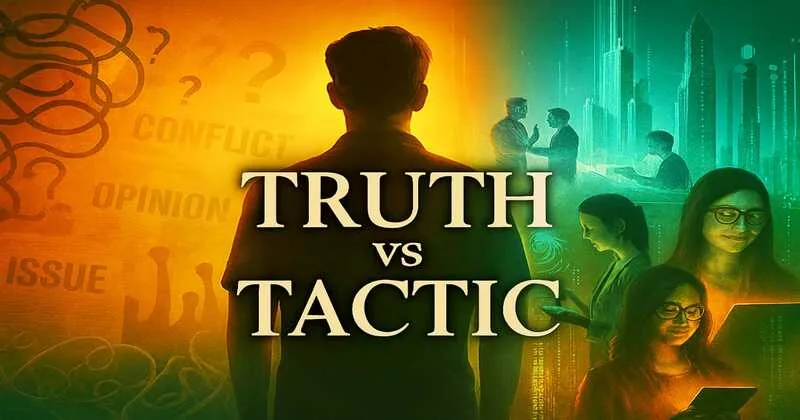
Representative Image

Representative Image

FacebookTwitterWhatsAppTelegramEmail

The BBC has done it again. Draped in the sanctimony of “independent journalism,” it has once more unleashed a hit job on India, this time targeting the nation’s 370 million young citizens. In its latest feature, the broadcaster claims that India’s Gen Z is disenchanted, suppressed, and fragmented, teetering on the brink of unrest.

But behind the dramatic prose lies something darker–a pattern of colonial cynicism dressed up as concern. The BBC is not reporting India, it is resisting India’s rise.

The Old Empire’s New Weapon: Narrative Manipulation

The British once ruled India through divide and rule. Today, they attempt to do it again, through division and narration.

For decades, the BBC has sought to frame India’s every success as suspicion and every struggle as collapse. Its language is always the same, patronizing pity for India’s poor, and veiled contempt for India’s power.

Now that India is leading on AI, space, digital governance, and diplomacy, the empire’s old mouthpiece finds comfort in questioning our cohesion. Because a strong, confident, and self-reliant India threatens the old Western template, where the Global South must remain a story of chaos, not competence.

Target: India’s Youth

By portraying Gen Z as a generation “afraid to speak,” the BBC attempts to fracture the very pillar of India’s future. This is no accident, it’s psychological warfare.

If India’s youth can be made to doubt their democracy, their nation, and their identity, then the West reclaims its moral upper hand. The BBC’s article does precisely that, it cherry-picks anecdotes of protests in Ladakh or Rahul Gandhi’s unverified claims of voter fraud to fabricate an illusion of unrest.

But India’s youth are not burning down systems; they’re building them. They’re not running from nationalism; they’re redefining it with confidence, not fear.

The Real Numbers the BBC Won’t Mention

The facts dismantle the fiction.

India’s youth voter turnout in 2024 crossed 66 per cent, higher than the UK or US.

India’s startup ecosystem– powered by young founders is now the third-largest in the world, worth over $350 billion (Hurun India, 2025).

India’s GDP is growing at 6.8 per cent (IMF 2025) faster than every major Western economy.

Government programs like Skill India, Startup India, and Digital India have empowered millions, creating one of the world’s largest youth employment networks.

Does this sound like a nation on the brink of rebellion? Or one marching confidently toward global leadership?

BBC’s Bias: Colonialism in Disguise

The BBC’s coverage of India has always carried a moral superiority complex–a hangover of empire dressed in journalistic neutrality. From its distorted documentaries on Kashmir to its one-sided coverage of CAA protests, the BBC’s lens has been consistently anti-India, anti-Hindu, and anti-truth.

It seeks not to inform, but to implant doubt to whisper that India’s democracy is a façade, that India’s growth is a myth, and that India’s youth are chained by fear.

But what it cannot accept is that India is now narrating its own story, without British permission, without Western approval.

Why the West Fears India’s Confidence

In truth, the BBC’s anxiety is not about India’s democracy , it’s about India’s dominance.
A billion people thinking for themselves, coding their own technologies, writing their own future , that’s the real threat to the Western media order.

India is no longer the “subject” of the global story; it is becoming the storyteller. And that terrifies those who once claimed to be the moral compass of the world.

When the BBC compares India to Bangladesh or Madagascar, it exposes not analysis but arrogance, the inability to accept that the former colony has outgrown the former colonizer.

The Great Hypocrisy

The same BBC that lectures India on “freedom of expression” has silenced journalists exposing grooming gangs in Britain. The same outlet that moralizes about “caste divides” turns a blind eye to racism, Islamophobia, and class inequality in its own country.

It glorifies protests in London as “democratic expression” but calls peaceful student rallies in India “signs of instability.”

This is not journalism. This is imperial nostalgia masquerading as news.

The Truth: India’s Gen Z is Not Fragile, It’s Fearless

India’s youth are not angry at their nation, they are inspired by it. They are coding for the world, defending their borders, creating art, music, and science that transcend geography. They do not need validation from London or New York. They seek partnership, not patronage. And they know as their ancestors did, that those who could not conquer India by force will always try to conquer it by narrative.

The Final Word

Let the BBC and its ideological cousins write their elegies for Indian democracy, India will write its own destiny.

The empire that once claimed to civilize the East now hides behind hashtags, trying to demonize the very civilization that taught the world pluralism, peace, and perseverance.

India’s Gen Z is not the child of colonial guilt. It is the heir of civilizational pride – “awake, aware, and unstoppable”.

So when the BBC laments India’s “silent youth,” it reveals not the silence of a generation, but the irrelevance of its own voice.

The British once ruled India with force. Today, they attempt it with falsehood. But this time, India’s youth aren’t listening– they’re leading.


Topics: British Broadcasting CorporationGen ZIMFBBC
ShareTweetSendShareSend
✮ Subscribe Organiser YouTube Channel. ✮
✮ Join Organiser's WhatsApp channel for Nationalist views beyond the news. ✮
Previous News

Karnataka: Chaos erupts at Kalaburagi peace meeting over RSS Path Sanchalan

Next News

Union Home Minister Shah commend Naxals joining mainstream as another top Maoist Bandi Prakash surrenders with arms

Related News

, RSS Akhil Bharatiya Prachar Pramukh Sunil Ambekar at a special interaction programme organised by the Pune Shramik Patrakar Sangh at Navi Peth

Gen Z is making a significant contribution to positive and constructive social change: Sunil Ambekar

Everest Survivor being taken to the hospital on a stretcher

Everest Survivor ICU Interview: BBC under fire for interviewing Sherpa without family’s consent

Sunil Ambekar, Akhil Bharatiya Prachar Pramukh while addressing a special seminar of journalists and editors in Nagpur

RSS harbours no enmity towards anyone; it embraces the spirit of dialogue with all: Sunil Ambekar

Cockroach Janta Party: A bid to indoctrinate Gen Z against the government

Representative image

Cockroach Syndrome: The new face of anti-India tech cynicism

Representative Image (This image has bene generated by AI)

Gen-Z Neopreneurs – The Ecosystem of Social Capital – Statutory policies institutionalizing the Gujarati ‘Kutumb’ Model

Load More

Latest News

Moshiur Khan alias Aman Khan ( Image Courtesy- Janam TV Keralam

Keralam: Another Bangladeshi national arrested from Islamic madrasa in Kollam with forged Indian documents

For 40 years, Bastar’s “Badi Didi” Dr. Budhri Tati walked across 570 villages to educate tribal girls and transform lives

Bastar’s ‘Badi Didi’: Inspiring story of Padma Shri Dr Budhri, who walked across 570 villages to educate tribal girls

The landmark India-UK FTA balances greater market access with domestic industry interests while opening new export opportunities for India's rapidly growing electric vehicle sector

India-UK FTA: How the trade deal opens new global markets for Made-in-India EVs

US Congressman Sanford Bishop(File Photo)

US: “We must stand against Hinduphobia”; Congressman Sanford Bishop hails Georgia’s anti-Hindu hate resolution

Tamil Nadu Higher Education Minister P. Viswanathan (Black T Shirt)

Tamil Nadu: TVK minister faces POCSO complaint over alleged inappropriate conduct with girl athletes in viral videos

Emergency Anniversary: Jaishankar says 1975 tested India's Democracy

Samvidhan Hatya Diwas: EAM Jaishankar recalls 1975 Emergency, lauds those who stood up for constitutional values

Ghar Wapsi in Khandwa: Azad Pathan after embracing Sanatan Dharma at Mahadevgarh temple becomes Ajay Kashyap

RSS struggle to defend the Constitution during the Emergency

Samvidhan Hatya Diwas: Revisiting RSS’s role in defending India’s Constitution & democratic freedoms during 1975-77

Fresh plea in Odisha High Court seeks CBI probe into Swami Laxmanananda murder case amid missing Naidu Commission report

Swami Laxmanananda Murder Case: Fresh plea in Odisha HC cites missing Naidu Commission report, seeks CBI inquiry

For the first time, NCERT adds Emergency to class 9 curriculum, highlights suspension of rights and democratic struggles

NCERT includes Emergency chapter in class 9 textbook, describes 1975-77 period as a major challenge to Indian democracy

Load More
  • Privacy
  • Terms
  • Cookie Policy
  • Refund and Cancellation
  • Delivery and Shipping

© Bharat Prakashan (Delhi) Limited.
Tech-enabled by Ananthapuri Technologies

  • Home
  • Search Organiser
  • Bharat
    • Assam
    • Bihar
    • Chhattisgarh
    • Jharkhand
    • Maharashtra
    • View All States
  • World
    • Asia
    • Africa
    • North America
    • South America
    • Europe
    • Australia
  • Editorial
  • Operation Sindoor
  • Opinion
  • Analysis
  • Defence
  • Culture
  • Sports
  • Business
  • RSS @ 100
  • Entertainment
  • More ..
    • Sci & Tech
    • Vocal4Local
    • Special Report
    • Education
    • Employment
    • Books
    • Interviews
    • Travel
    • Health
    • Politics
    • Law
    • Economy
    • Obituary
  • Subscribe Magazine
  • Read Ecopy
  • Advertise
  • Circulation
  • Careers
  • About Us
  • Contact Us
  • Policies & Terms
    • Privacy Policy
    • Cookie Policy
    • Refund and Cancellation
    • Terms of Use

© Bharat Prakashan (Delhi) Limited.
Tech-enabled by Ananthapuri Technologies