Digital Bharat Speaks in 22 Languages: How India is using technology to preserve its linguistic diversity
June 24, 2026
  • Read Ecopy
  • Circulation
  • Advertise
  • Careers
  • About Us
  • Contact Us
Android AppiPhone AppArattai
Organiser
  • ‌
  • Bharat
    • Assam
    • Bihar
    • Chhattisgarh
    • Jharkhand
    • Maharashtra
    • View All States
  • World
    • Asia
    • Europe
    • North America
    • South America
    • Africa
    • Australia
  • Editorial
  • International
  • Opinion
  • RSS @ 100
  • More
    • Op Sindoor
    • Analysis
    • Sports
    • Defence
    • Politics
    • Business
    • Economy
    • Culture
    • Special Report
    • Sci & Tech
    • Entertainment
    • G20
    • Azadi Ka Amrit Mahotsav
    • Vocal4Local
    • Web Stories
    • Education
    • Employment
    • Books
    • Interviews
    • Travel
    • Law
    • Health
    • Obituary
  • Subscribe
    • Subscribe Print Edition
    • Subscribe Ecopy
    • Read Ecopy
  • ‌
  • Bharat
    • Assam
    • Bihar
    • Chhattisgarh
    • Jharkhand
    • Maharashtra
    • View All States
  • World
    • Asia
    • Europe
    • North America
    • South America
    • Africa
    • Australia
  • Editorial
  • International
  • Opinion
  • RSS @ 100
  • More
    • Op Sindoor
    • Analysis
    • Sports
    • Defence
    • Politics
    • Business
    • Economy
    • Culture
    • Special Report
    • Sci & Tech
    • Entertainment
    • G20
    • Azadi Ka Amrit Mahotsav
    • Vocal4Local
    • Web Stories
    • Education
    • Employment
    • Books
    • Interviews
    • Travel
    • Law
    • Health
    • Obituary
  • Subscribe
    • Subscribe Print Edition
    • Subscribe Ecopy
    • Read Ecopy
Organiser
  • Home
  • Bharat
  • World
  • Operation Sindoor
  • Editorial
  • Analysis
  • Opinion
  • Culture
  • Defence
  • International Edition
  • RSS @ 100
  • Magazine
  • Read Ecopy
Home Bharat

Digital Bharat Speaks in 22 Languages: How India is using technology to preserve its linguistic diversity

From Sanskrit to Santali and Manipuri to Malayalam, India is scripting a digital revolution that speaks in every tongue. With AI platforms such as Bhashini, BharatGen, and Adi-Vaani, the country is transforming its linguistic diversity into digital strength, making governance, education, and communication truly multilingual

Shashank Kumar DwivediShashank Kumar Dwivedi
Oct 27, 2025, 10:00 pm IST
in Bharat
Follow on Google News
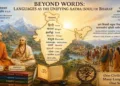
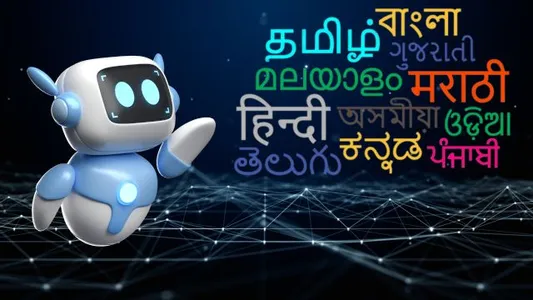
A representative image

A representative image

FacebookTwitterWhatsAppTelegramEmail

Making India’s digital transformation truly inclusive, the government is using artificial intelligence (AI) to bridge the nation’s linguistic divide. Through AI-powered platforms like Bhashini, BharatGen, and Adi-Vaani, all 22 Scheduled Languages, along with dozens of tribal and endangered dialects, are being integrated into the country’s expanding digital infrastructure.

This transformation is not just technological; it’s cultural. As Prime Minister Narendra Modi has often remarked, “A language is not just a means of communication, it is the soul of a civilisation.” That belief lies at the heart of India’s effort to ensure that no citizen is excluded from the digital revolution because of language.

AI-powered inclusion for every Indian

Over the last decade, advancements in Natural Language Processing (NLP), speech recognition, and machine translation have helped India move closer to its dream of Digital Bharat. The flagship platform Bhashini, launched under the National Language Translation Mission (NLTM), provides real-time translation and voice assistance in 22 Indian languages, as well as several tribal ones.

From government portals to parliamentary debates, Bhashini is ensuring that information is accessible to all citizens, not just English or Hindi speakers. Projects such as Sansad Bhashini have even made parliamentary proceedings multilingual, allowing people to listen to debates in their mother tongue.

Complementing Bhashini is BharatGen, an advanced AI initiative that develops text-to-text and text-to-speech translation models. Using datasets sourced from the Scheme for Protection and Preservation of Endangered Languages (SPPEL) and Sanchika, BharatGen is training large multilingual models that enhance accessibility in governance, education, and healthcare sectors where linguistic barriers have long excluded millions.

Preserving the voices of India’s tribal communities

India’s linguistic map is not limited to the 22 scheduled languages. The country is home to hundreds of tribal and endangered tongues, many spoken by fewer than 10,000 people, and many at risk of extinction.

To preserve and empower these languages, the government launched Adi-Vaani in 2024, India’s first AI-driven system for real-time translation and preservation of tribal languages such as Santali, Bhili, Gondi, and Mundari. By combining NLP with speech recognition, Adi-Vaani records oral traditions, digitises tribal literature, and enables local-language use in education and administration.

This builds upon the foundation laid by SPPEL, implemented by CIIL Mysuru since 2013, which documents and digitally archives endangered Indian languages. Its companion platform Sanchika stores dictionaries, storybooks, folk songs, and audiovisual recordings, all used to train AI models that can understand and translate rare languages with greater accuracy.

Further, the Ministry of Tribal Affairs’ TRI-ECE scheme deploys AI-based translation tools to render English and Hindi educational and administrative content into tribal languages, ensuring both linguistic precision and cultural sensitivity.

AI’s role in the NEP vision

India’s education system is also witnessing a linguistic transformation. In line with the National Education Policy (NEP) 2020, which promotes learning in one’s mother tongue, AI is playing a crucial role in breaking linguistic barriers in education.

The AICTE’s e-KUMBH portal offers free access to technical books and learning materials in multiple Indian languages, giving students from smaller towns the same opportunities as those in metros. Similarly, the Anuvadini app uses AI to translate complex engineering, law, and medical textbooks into regional languages, making higher education more inclusive and equitable.

Platforms like SWAYAM, which already has over five crore learners, are now being integrated with AI translation tools to ensure that digital courses can be accessed in local languages. Together, these initiatives are reshaping the educational landscape, creating a truly multilingual learning ecosystem.

India’s AI backbone

Behind India’s multilingual leap lies a robust technological ecosystem. AI technologies such as automatic speech recognition (ASR), text-to-speech synthesis (TTS), neural machine translation (NMT), and natural language understanding (NLU) form the backbone of platforms like Bhashini and BharatGen.

AI models like IndicBERT, mBART, and other India-specific language models are trained on massive datasets drawn from digitised manuscripts, folklore, government records, and educational materials. This ensures that the AI not only translates words but also understands context, tone, and cultural nuance, an essential factor in India’s linguistically diverse environment.

Moreover, the integration of datasets from SPPEL and Sanchika ensures that even the most remote and rare dialects are not left behind. The government’s open-source AI policy encourages innovation and collaboration among research institutions, universities, and startups to further strengthen India’s multilingual AI capacity.

Digital governance for every citizen

The multilingual transformation is already reshaping how citizens engage with the government. From voice-based digital assistants on government websites to multilingual chatbots that help people file grievances or check welfare benefits, AI is making governance more accessible than ever.

For rural and semi-literate citizens, language is no longer a barrier to digital access. AI-driven platforms can translate, transcribe, and even speak government notifications, agricultural advisories, and health information in native languages, empowering citizens at the grassroots level.

This aligns with the government’s Digital India mission, which envisions a society where every Indian can participate in the digital economy, regardless of geography, literacy, or language.

Preserving the past, powering the future

Language preservation isn’t just about documentation; it is about keeping cultural memory alive. Initiatives like the National Translation Mission (NTM) and National Mission on Manuscripts (NMM) are digitising India’s ancient texts and manuscripts, ensuring that the wisdom of Sanskrit, Pali, Tamil, and Prakrit traditions is accessible in the digital age.

By integrating these heritage efforts with modern AI translation tools, India is ensuring that ancient knowledge systems coexist with contemporary innovation, a fusion of tradition and technology that defines the spirit of Atmanirbhar Bharat.

Future that speaks every Indian language

As India moves toward becoming a trillion-dollar digital economy, its success will depend not just on connectivity and innovation but on linguistic inclusion. Platforms like Bhashini, BharatGen, and Adi-Vaani are redefining what digital access means, turning India’s linguistic diversity from a challenge into an opportunity.

From the bustling cities to the remotest tribal villages, the digital India of tomorrow will speak in many voices,  yet act as one.

In this multilingual revolution, every Indian language finds its space online, and every Indian finds their voice in the nation’s digital story.
Topics: multilingual AIAI in IndiaBharatGenAdi-VaaniNational Language Translation Missiondigital inclusionBhashiniIndian Languages
ShareTweetSendShareSend
✮ Subscribe Organiser YouTube Channel. ✮
✮ Join Organiser's WhatsApp channel for Nationalist views beyond the news. ✮
Previous News

MHA asked to act on LRPF plea over Pune based Christ Embassy’s Nigerian pastors violating visa norms in Hyderabad event

Next News

Telangana Goseva Vibhag honours young students exploring scientific role of cows in saving environment

Related News

G7 Summit: A strategic opportunity for India to script human-centric AI ecosystem with sovereign models

ABVP’s National Executive Council Meeting began in Bhubaneswar with Prof. Raghuraj Kishore Tiwari, Dr Virendra Singh Solanki and Shri Ashish Chauhan inaugurating the event

ABVP National Executive Council Meet: “Three-language policy to strengthen Indian languages,” says Dr Virendra Singh

Bharatiya Bhasha Sangam 2.0 in Gujarat

Bharatiya Bhasha Sangam 2.0 concludes in Gujarat with focus on linguistic unity

Nyaya Setu AI Chatbot, along with its official mascot “Dishika”, was unveiled at the DISHA programme organised by the Department of Justice at Vigyan Bhawan by the Vice President of India, C.P. Radhakrishnan, and the Minister of State (Independent Charge) for Law and Justice, Arjun Ram Meghwal

Digital India BHASHINI division powers ‘Nyaya Setu’ for multilingual legal access; VP launches mascot Dishika

Representative Image

From cultural preservation to cultural participation, AI is securing civilisational journey of Bharat

A representative image

Can Sarvam AI lead India’s Made in India Artificial Intelligence revolution?

Load More

Latest News

Gem-quality diamonds found during exploration in Chhattisgarh's Mahasamund

From Panna to Mahasamund: Could Chhattisgarh be India’s next diamond frontier?

External Affairs Minister S Jaishankar

Kanishka Bombing Anniversary: Jaishankar reaffirms India’s commitment to combat terrorism in all its forms

Rani Durgawati

Remembering Rani Durgavati: A woman can be a mother, an empress and an embodiment of an immortal resolve

Karan Singh Kept in Dark: Sheikh Abdullah Never Informed J&K’s Sadr-e-Riyasat of Syama Prasad Mookerjee’s Death (This image is generated by AI)

Syama Prasad Mookerjee Death Mystery: Karan Singh says Sheikh Abdullah never informed him

On the occasion of Dr Syama Prasad Mookerjee’s State-Level Balidan Diwas , Chief Minister Shri Mohan Charan Majhi and others at an event organized at Jayadev Bhawan on June 23, 2026

“Article 370 abrogation fulfilled Dr Syama Prasad Mookerjee’s dream,” says Odisha CM Majhi at Balidan Divas programme

Prakash Raj in Fresh Controversy as Court Issues NBW in Voter Registration Case (This image is generated by AI)

Karnataka: Prakash Raj faces legal scrutiny over alleged multiple voter IDs; Bengaluru Court issues NBW

The fall of Keir Starmer highlights a broader crisis in British governance, where leadership changes have failed to reverse long-term national decline

From Brexit to Starmer: Why Britain’s crisis lies beyond changing leaders in Westminster

Tribute to Rani Durgawati on her Martyrdom Day

Rani Durgavati Martyrdom Day: Immortal Warrior rani, defender of Tribal Pride, national honour & Sanatan values

President Droupadi Murmu confers the Padma Shri on former civil servant R.V.S. Mani on June 23, 2026.

Former MHA official RVS Mani honoured with Padma Shri for contributions to internal security

Tamil Nadu: Temple funds only for temple property; TVK govt concedes before Madras High Court

Load More
  • Privacy
  • Terms
  • Cookie Policy
  • Refund and Cancellation
  • Delivery and Shipping

© Bharat Prakashan (Delhi) Limited.
Tech-enabled by Ananthapuri Technologies

  • Home
  • Search Organiser
  • Bharat
    • Assam
    • Bihar
    • Chhattisgarh
    • Jharkhand
    • Maharashtra
    • View All States
  • World
    • Asia
    • Africa
    • North America
    • South America
    • Europe
    • Australia
  • Editorial
  • Operation Sindoor
  • Opinion
  • Analysis
  • Defence
  • Culture
  • Sports
  • Business
  • RSS @ 100
  • Entertainment
  • More ..
    • Sci & Tech
    • Vocal4Local
    • Special Report
    • Education
    • Employment
    • Books
    • Interviews
    • Travel
    • Health
    • Politics
    • Law
    • Economy
    • Obituary
  • Subscribe Magazine
  • Read Ecopy
  • Advertise
  • Circulation
  • Careers
  • About Us
  • Contact Us
  • Policies & Terms
    • Privacy Policy
    • Cookie Policy
    • Refund and Cancellation
    • Terms of Use

© Bharat Prakashan (Delhi) Limited.
Tech-enabled by Ananthapuri Technologies