One marriage, One law: Assam echoes gender equality
June 13, 2026
  • Read Ecopy
  • Circulation
  • Advertise
  • Careers
  • About Us
  • Contact Us
Android AppiPhone AppArattai
Organiser
  • ‌
  • Bharat
    • Assam
    • Bihar
    • Chhattisgarh
    • Jharkhand
    • Maharashtra
    • View All States
  • World
    • Asia
    • Europe
    • North America
    • South America
    • Africa
    • Australia
  • Editorial
  • International
  • Opinion
  • RSS @ 100
  • More
    • Op Sindoor
    • Analysis
    • Sports
    • Defence
    • Politics
    • Business
    • Economy
    • Culture
    • Special Report
    • Sci & Tech
    • Entertainment
    • G20
    • Azadi Ka Amrit Mahotsav
    • Vocal4Local
    • Web Stories
    • Education
    • Employment
    • Books
    • Interviews
    • Travel
    • Law
    • Health
    • Obituary
  • Subscribe
    • Subscribe Print Edition
    • Subscribe Ecopy
    • Read Ecopy
  • ‌
  • Bharat
    • Assam
    • Bihar
    • Chhattisgarh
    • Jharkhand
    • Maharashtra
    • View All States
  • World
    • Asia
    • Europe
    • North America
    • South America
    • Africa
    • Australia
  • Editorial
  • International
  • Opinion
  • RSS @ 100
  • More
    • Op Sindoor
    • Analysis
    • Sports
    • Defence
    • Politics
    • Business
    • Economy
    • Culture
    • Special Report
    • Sci & Tech
    • Entertainment
    • G20
    • Azadi Ka Amrit Mahotsav
    • Vocal4Local
    • Web Stories
    • Education
    • Employment
    • Books
    • Interviews
    • Travel
    • Law
    • Health
    • Obituary
  • Subscribe
    • Subscribe Print Edition
    • Subscribe Ecopy
    • Read Ecopy
Organiser
  • Home
  • Bharat
  • World
  • Operation Sindoor
  • Editorial
  • Analysis
  • Opinion
  • Culture
  • Defence
  • International Edition
  • RSS @ 100
  • Magazine
  • Read Ecopy
Home Bharat

“One Marriage, One Law”: Assam takes a stand towards gender equality

If the "One marriage, One law" is implemented, it could mark a decisive step toward reconciling faith with fairness. It is not just about regulating marriage, but about defining equality in the most personal of human relationships

Debika DuttaDebika Dutta
Oct 26, 2025, 06:30 pm IST
in Bharat, Assam, Law
Follow on Google News
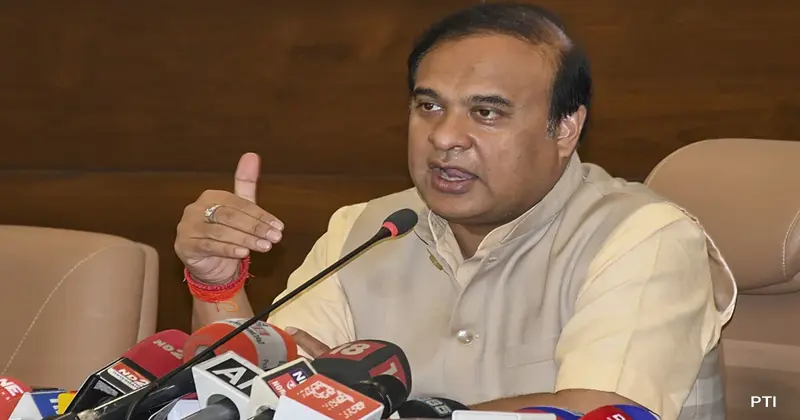
Chief Minister of Assam Himanta Biswa Sarma

Chief Minister of Assam Himanta Biswa Sarma

FacebookTwitterWhatsAppTelegramEmail

In a move that fuses law, morality and social reform, the Assam government announced its plan to introduce a bill banning polygamy in the winter session of the state legislature on November 25, 2025. If enacted, the law will criminalize polygamy, prescribing imprisonment of up to seven years. Chief Minister Himanta Biswa Sarma has defended the initiative as part of a wider campaign for gender justice and women’s rights—extending the government’s earlier crusade against child marriage.

At its essence, the proposal seeks to align personal laws with the constitutional promise of equality under Article 14. While polygamy is already prohibited under the Hindu Marriage Act (1955), the Indian Christian Marriage Act (1872), and the Special Marriage Act (1954), it remains permissible under Muslim personal law. Assam’s initiative attempts to address this anomaly by banning the practice across all communities, except those protected under the Sixth Schedule.

Supporters argue that selective exemptions perpetuate inequality. Even though polygamy is statistically rare—NFHS-5 (2019–21) records its prevalence at about 1.9%—research shows that women in such marriages suffer disproportionate emotional, social and financial hardship. The Law Commission of India (Report No. 227, 2010) found that polygamy often leads to psychological distress and economic insecurity among women and children. The argument, therefore, is not about how widespread the practice is, but about what it symbolizes—an enduring contradiction to the constitutional principle of equal rights.

The Assam government has placed the proposed law within a continuum of social reform. Its earlier campaign against child marriage, which led to the arrest of over 5,000 offenders in 2023, was justified on the same grounds—protection of women and social equity. Together, these measures indicate an attempt to synchronize traditional practices with modern legal standards, especially for women from marginalized backgrounds.

However, critics view the move through a different lens. Certain religious and community leaders, particularly from the Muslim community, contend that the bill infringes upon the right to religious freedom under Article 25, as Muslim personal law historically permits limited polygamy under specific conditions. Others believe the move carries political overtones—an indirect push toward a Uniform Civil Code, a concept long debated for its perceived majoritarian undertones.

The government has responded that the bill concerns only the criminalization of polygamy and does not affect other aspects of personal law such as inheritance, succession, or divorce. Tribal communities under the Sixth Schedule remain exempt. Moreover, legal scholars and reformists point out that several Muslim-majority nations have already undertaken similar reforms. Turkey outlawed polygamy in 1926 under Atatürk’s modernist reforms; Tunisia banned it in 1956 through the Code of Personal Status; while Bangladesh and Indonesia allow it only under stringent legal regulation. These examples demonstrate that gender equality and faith need not be irreconcilable—reform can thrive within the spirit of religion and constitutionalism alike.

Yet, as sociologists caution, legislation alone cannot dismantle deeply rooted customs. For genuine change, legal reform must be supported by education, awareness, and women’s economic empowerment. Without such reinforcement, a punitive law risks driving the practice underground—resulting in secret or unregistered marriages that further disadvantage women. Meaningful progress demands a careful balance between deterrence and empowerment: punishing offenders while ensuring that women are informed, independent and secure.

From a political perspective, the proposed law positions Assam as a pioneer among Indian states in pursuing the ideals underlying a Uniform Civil Code, though the Chief Minister has described it as “Assam-specific.” The initiative is widely seen as a test case for broader national reform. However, its long-term legitimacy will depend less on the law’s text and more on its execution—with fairness, dialogue and a respect for India’s plural identity.

Historically, India’s social reform movements have had to navigate the tension between faith and equality. When the Hindu Code Bills were debated in the 1950s, critics voiced similar fears of state intrusion into religion, yet those laws became foundational to gender justice within Hindu society. Assam’s anti-polygamy bill may mark a comparable turning point—controversial at present, but potentially transformative in the long run.

Beyond the immediate debate, the issue compels India to reflect on the broader meaning of equality in a diverse democracy. The framers of the Constitution envisioned the gradual evolution of personal laws toward constitutional morality, but without coercion or cultural erasure. Assam’s initiative, therefore, must be judged not merely by its ability to criminalize a regressive practice, but by the dignity with which it sustains dialogue and inclusion.

Also Read: After Bihar, Election Commission set to begin Special Intensive Revision (SIR) in West Bengal from November

If implemented sensitively, the law could mark a decisive step toward reconciling faith with fairness. It is not just about regulating marriage, but about defining equality in the most personal of human relationships. In a democracy that seeks both diversity and justice, true governance lies in the capacity to reform without alienation—to legislate equality without erasing identity.

Assam’s anti-polygamy bill, in that sense, goes beyond legal reform. It embodies India’s ongoing search for equilibrium between the sanctity of faith and the sovereignty of law—between the rights of individuals and the conscience of a modern nation.


Topics: Gender equalityAsam Chief Minister Himanta Biswa SarmaPolygamy banOne Marriage One Law
ShareTweetSendShareSend
✮ Subscribe Organiser YouTube Channel. ✮
✮ Join Organiser's WhatsApp channel for Nationalist views beyond the news. ✮
Previous News

Decoding the relations of Tokyo with Washington and New Delhi under Prime Minister Sanae Takaichi

Next News

India to continue Russian oil imports; Trump visits Asia aiming for trade deals amid rising tensions with Canada

Related News

Assam CM Himanta Sarma alleges Congress-Pakistan Nexus

Congress taking help from Pakistani to defame me and influence election: Himanta Sarma hits back at Pawan Khera

AI generated fake evidences produced by the Congress Party

Assam Election: Congress imposes corruption charges on CM Himanta Sarma using AI video as evidence; CM to lodge FIR

Welfare and Identity: The new grammar of voting in Assam

(Left) Congress MP Gaurav Gogoi and his wife Elizabeth Gogoi (Right), Assam Chief Minister Himanta Biswa Sarma

Assam CM Himanta Biswa claims Congress MP Gaurav Gogi’s wife received Rs 82 lakh salary from Pakistan-based entity

Assam CM Himanta Biswa Sarma

In defence of Himanta Biswa Sarma: The “AntiGaslighting” chief minister

Supreme Court orders to ensure menstraul hygiene in schools

Supreme Court sets 3 months deadline for states to ensure menstrual hygiene in schools

Load More

Latest News

(Left) Russian President Vladimir Putin (Right) Prime Minister Narendra Modi (Image Credit: ANI)

Russia Day 2026: The ancient civilisational bond between India and Moscow

After the conclusion of the 11th Governing Body meeting of NITI Aayog, the Chief Minister of Tamil Nadu, Joseph Vijay, met Prime Minister Narendra Modi in Delhi

Tamil Nadu: At first NITI Aayog meet, CM Joseph Vijay charts cooperative course with Modi govt unlike DMK

Keralam ex- CM Pinarayi Viajayan and his daughter Veena Vijayan

Keralam: Former CM Pinarayi Vijayan’s daughter Veena Vijayan gets fresh ED summons in Rs 2.78 crore CMRL case

Radical Islamists forced to stop the construction of Bhagwan Ram idol in Bangladesh

Bangladesh: Construction of Bhagwan Ram murti halted amid threats by Islamists; Reflects spiking anti-Hindu hostility

Subash Chander of Bajrang Dal Telangana

Telangana Shocker: VHP demands strict punishment for Md Ghouse in Khammam 12-year-old girl sexual assault case

Rare Rashtrakuta-Era inscription unearthed in Karnataka

Karnataka: Rare Rashtrakuta-Era inscription unearthed, reveals extraordinary bond between king and servant

RBI revokes registration of 135 NBFCs over regulatory violations; 125 financial entities were from West Bengal

Prime Minister Narendra Modi

Even the US bows to PM Modi’s long-standing leadership!

A representative image

A Decade of Revolution: 25 crore out of poverty, 15.8 crore homes with tap water – How Govt schemes changed lives

India–Myanmar Civilisational Connect: Significance of President U Min Aung Hlaing’s visit to India

Load More
  • Privacy
  • Terms
  • Cookie Policy
  • Refund and Cancellation
  • Delivery and Shipping

© Bharat Prakashan (Delhi) Limited.
Tech-enabled by Ananthapuri Technologies

  • Home
  • Search Organiser
  • Bharat
    • Assam
    • Bihar
    • Chhattisgarh
    • Jharkhand
    • Maharashtra
    • View All States
  • World
    • Asia
    • Africa
    • North America
    • South America
    • Europe
    • Australia
  • Editorial
  • Operation Sindoor
  • Opinion
  • Analysis
  • Defence
  • Culture
  • Sports
  • Business
  • RSS @ 100
  • Entertainment
  • More ..
    • Sci & Tech
    • Vocal4Local
    • Special Report
    • Education
    • Employment
    • Books
    • Interviews
    • Travel
    • Health
    • Politics
    • Law
    • Economy
    • Obituary
  • Subscribe Magazine
  • Read Ecopy
  • Advertise
  • Circulation
  • Careers
  • About Us
  • Contact Us
  • Policies & Terms
    • Privacy Policy
    • Cookie Policy
    • Refund and Cancellation
    • Terms of Use

© Bharat Prakashan (Delhi) Limited.
Tech-enabled by Ananthapuri Technologies