Even fish, eggs, and meat, items Americans once took for granted, have now become “worth gold.” Beef prices have surged by 15 per cent, bananas by 7 per cent, and electricity bills by 5 per cent. Inflation has ironically “blessed” President Donald Trump, even as the soaring cost of everyday essentials continues to hurt American consumers. US retail inflation, which measures the increase in prices of goods and services purchased by consumers, rose to 3 per cent in September from 2.9 per cent in August. Core inflation, excluding food and energy, also climbed to 3 per cent. Both figures are well above the Federal Reserve’s target of 2 per cent.
Yet, despite high inflation, there is growing speculation that the Federal Reserve may cut interest rates at its upcoming monetary policy meeting. This move, considered a significant victory for President Trump, appears unconventional. Typically, central banks raise or maintain interest rates to control inflation. So, why is the US preparing to lower rates? The answer lies in the details of the data. although inflation rose both monthly and annually, the increase was smaller than analysts had predicted. The Dow Jones had projected inflation to hit 4 per cent on a monthly basis and 3.1 per cent annually. However, the actual figures came in lower, up just 0.3 per cent monthly and 3 per cent annually. In August, monthly inflation had risen by only 0.1 per cent.
The key driver behind the current inflationary pressure is Trump’s decision to increase tariffs on nearly all imported goods entering the United States. As a result, prices of most consumer products and services have climbed sharply. Still, Trump defends his tariff policy, arguing that it will ultimately strengthen the American economy by boosting domestic investment, creating more jobs, and promoting industrial growth. He also believes that lowering interest rates could help offset the political fallout from rising prices and redirect public attention toward economic growth. However, the price spikes have been significant. Gasoline prices rose 4.1 per cent last month alone, while imported textiles increased by 0.7 per cent. These developments have reignited concerns that Trump’s trade and monetary policies could trigger a resurgence of inflation, which had been gradually easing in recent months.
Compounding the situation, the Bureau of Labor Statistics delayed the release of official inflation data earlier this month. The reason behind it was that several government offices were closed because the federal administration temporarily ran out of funds to sustain operations. This funding shortfall led to a brief interruption in the publication of key economic reports.
Trump targets China over Fentanyl as trade tensions escalate ahead of Xi meeting
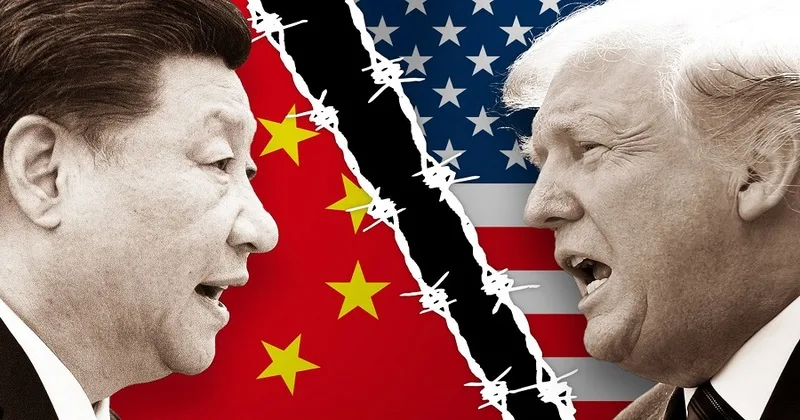
Meanwhile, US President Donald Trump’s latest accusations against China have reignited tensions and paved the way for a new phase in the US–China trade war. Trump is set to meet Chinese President Xi Jinping in South Korea next week in an attempt to resolve the long-standing trade conflict between the world’s two largest economies. However, his recent remarks have further strained the atmosphere. After targeting China over rare earths, port fees, software, corn, and soybeans, Trump has now launched a fresh attack, this time using ‘fentanyl’ as his weapon of choice.
Trump alleged that China is smuggling fentanyl into the United States through Venezuela, one of America’s political adversaries. According to him, China is using this indirect route to avoid higher US tariffs, costing the country billions of dollars in lost revenue. Fentanyl, a powerful opioid painkiller, has a high potential for abuse and addiction. It is also widely used as a narcotic in the United States. Trump’s move to curb fentanyl imports, therefore, has both economic and public health dimensions.
To counter what he calls China’s “unfair trade practices,” Trump has announced plans to impose a 155 per cent tariff on products imported directly from China starting November 1. The current average tariff on Chinese goods stands at around 30 per cent. Trump expressed anger over China’s practice of routing exports through countries like Venezuela, where US tariffs are as low as 20 per cent, thus bypassing the higher direct rates. He said he would raise the fentanyl issue as his “first question” to Xi Jinping during their meeting next week.
Trump also warned that China would face severe penalties if it continues such practices. While he noted that the high tariffs may not be permanent, he argued that China’s actions have forced his hand. The trade war has already hit American agriculture, with China halting soybean purchases, a major blow to US farmers. The escalating conflict between the two economic giants continues to disrupt global supply chains and unsettle markets worldwide.
Shares celebrate; Gold price to rise
Despite mounting inflationary pressures, Wall Street celebrated. US stock markets surged to record highs, driven by expectations that the Federal Reserve will soon cut interest rates. The Dow Jones Industrial Average jumped 472.51 points (+1.01 per cent) to close at 47,207.12, its first-ever finish above the 47,000 mark. The S&P 500 gained 0.79 per cent to reach 6,791.69, and the Nasdaq climbed 1.15 per cent to 23,204.87, both setting new records.
The rally was particularly strong in banking stocks, fueled by optimism that lower interest rates will stimulate lending and economic activity. Shares of major financial institutions, including JPMorgan Chase, Citigroup, Goldman Sachs, and Bank of America, rose by about 2 per cent. Investors interpreted these developments as signs of renewed economic momentum, even amid the paradox of rising inflation and falling interest rates.
Gold prices have reversed their recent decline and are once again on an upward trajectory. Meanwhile, leading financial institution Standard Chartered Bank has predicted that the international price of gold, currently hovering around $4,100 per ounce, is likely to surpass $4,500 soon. If this projection materialises, the price of gold in India could breach the ‘magic mark’ of Rs 1 lakh for 8 gram.
Today, gold prices rose by Rs 115 per gram to reach Rs 11,515, while the price of 8 gram climbed by Rs 920 to Rs 92,120. The price of 18-carat gold also increased by Rs 105 per gram to Rs 9,530. In contrast, silver prices fell slightly by Rs 5 per gram to Rs 165. However, some jewellers continue to sell 18-carat gold at Rs 9,470 per gram.
In global markets, retail inflation in the United States rose to 3 percent last month, higher than the Federal Reserve’s target of 2 per cent. Nevertheless, since the figure was lower than the 3.1 per cent forecast by analysts, there is growing optimism that the Federal Reserve may once again cut its benchmark interest rate. A potential rate cut would likely benefit gold prices. Lower interest rates make bank deposits and treasury investments less attractive, prompting investors to seek alternative assets. A reduction in interest rates typically weakens the US dollar, further increasing demand for gold and gold exchange-traded funds (ETFs). As investors turn to gold as a safer and more profitable option, prices are expected to rise further in both global and domestic markets.
.