Bharat develops first indigenous antibiotic Nafithromycin; Breakthrough for cancer and diabetic patients
September 13, 2026
  • Read Ecopy
  • Circulation
  • Advertise
  • Careers
  • About Us
  • Contact Us
Android AppiPhone AppArattai
Organiser
  • ‌
  • Bharat
    • Assam
    • Bihar
    • Chhattisgarh
    • Jharkhand
    • Maharashtra
    • View All States
  • World
    • Asia
    • Europe
    • North America
    • South America
    • Africa
    • Australia
  • Editorial
  • International
  • Opinion
  • RSS @ 100
  • More
    • World Hindu Congress 2026
    • Op Sindoor
    • Analysis
    • Sports
    • Defence
    • Politics
    • Business
    • Economy
    • Culture
    • Special Report
    • Sci & Tech
    • Entertainment
    • G20
    • Azadi Ka Amrit Mahotsav
    • Vocal4Local
    • Web Stories
    • Education
    • Employment
    • Books
    • Interviews
    • Travel
    • Law
    • Health
    • Obituary
  • Subscribe
    • Subscribe Print Edition
    • Subscribe Ecopy
    • Read Ecopy
  • ‌
  • Bharat
    • Assam
    • Bihar
    • Chhattisgarh
    • Jharkhand
    • Maharashtra
    • View All States
  • World
    • Asia
    • Europe
    • North America
    • South America
    • Africa
    • Australia
  • Editorial
  • International
  • Opinion
  • RSS @ 100
  • More
    • World Hindu Congress 2026
    • Op Sindoor
    • Analysis
    • Sports
    • Defence
    • Politics
    • Business
    • Economy
    • Culture
    • Special Report
    • Sci & Tech
    • Entertainment
    • G20
    • Azadi Ka Amrit Mahotsav
    • Vocal4Local
    • Web Stories
    • Education
    • Employment
    • Books
    • Interviews
    • Travel
    • Law
    • Health
    • Obituary
  • Subscribe
    • Subscribe Print Edition
    • Subscribe Ecopy
    • Read Ecopy
Organiser
  • Home
  • Bharat
  • World
  • Operation Sindoor
  • Editorial
  • Analysis
  • Opinion
  • Culture
  • Defence
  • International Edition
  • RSS @ 100
  • Magazine
  • Read Ecopy
Home Bharat

Bharat develops first indigenous antibiotic Nafithromycin; Breakthrough for cancer and diabetic patients

India has developed its first indigenously discovered antibiotic, Nafithromycin. The drug, effective against resistant respiratory infections, represents a major stride in India’s mission for self-reliance in biotechnology and healthcare innovation

Shashank Kumar DwivediShashank Kumar Dwivedi
Oct 21, 2025, 08:30 am IST
inBharat, Health
Follow on Google News
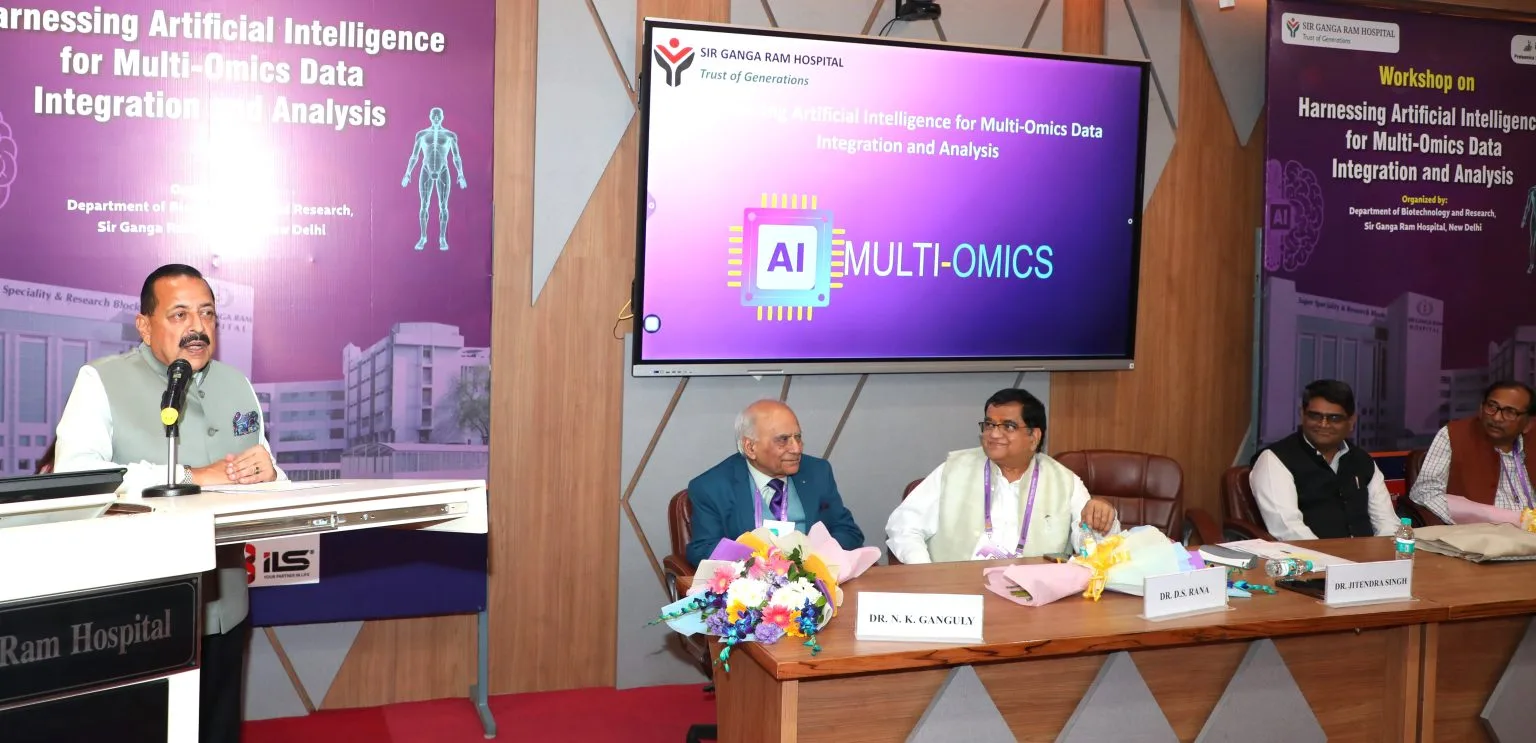
The antibiotic Naphithromycin has been developed by the Govt of India’s Department of Biotechnology in collaboration with well known private pharma house Wockhardt

The antibiotic Naphithromycin has been developed by the Govt of India’s Department of Biotechnology in collaboration with well known private pharma house Wockhardt

Facebook
Twitter
WhatsAppTelegramEmail

In a historic milestone for Indian science and medicine, Union Minister of State (Independent Charge) for Science and Technology Dr Jitendra Singh on October 18 announced the development of Nafithromycin, India’s first indigenously discovered antibiotic. The drug is effective against resistant respiratory infections, particularly benefiting cancer patients and individuals with poorly controlled diabetes who are more susceptible to such conditions.

The discovery marks a major step in India’s long-term pursuit of Atmanirbhar Bharat in the pharmaceutical and biotechnology sectors. The molecule is the first antibiotic to be entirely conceptualised, developed and clinically validated in India, achieved through a collaboration between the Department of Biotechnology (DBT) and Wockhardt, a leading Indian pharmaceutical company.

A model for industry-academia collaboration

Speaking at the inauguration of a three-day workshop on “Harnessing Artificial Intelligence for Multi-Omics Data Integration and Analysis” in New Delhi, Dr Singh hailed Nafithromycin as a model example of a successful industry-academia partnership.

He emphasised that this breakthrough showcases India’s growing ability to innovate from within and reduce dependency on foreign discoveries and imports.

“This molecule reflects India’s growing research capabilities and the power of public-private partnership. It is essential that we now move towards a self-sustaining innovation ecosystem, where the private sector and philanthropic funding play a key role alongside government initiatives,” Dr Singh said.

He stressed the need to strengthen the biotechnology innovation ecosystem, noting that sustained private participation would help India become a global hub of biomedical research and drug discovery.

Breakthrough in indigenous gene therapy for Hemophilia

Dr Singh also highlighted another significant scientific milestone, the first indigenous clinical trial for gene therapy in Hemophilia treatment. Conducted at Christian Medical College (CMC), Vellore, the trial was supported by the Department of Biotechnology.

According to Dr Singh, the therapy recorded a 60 to 70 percent correction rate with zero bleeding episodes among patients.

“The success of this trial has placed India among a select group of nations capable of advanced genetic medicine. The results have been published in the New England Journal of Medicine,” he informed.

This development positions India at the forefront of genomic medicine, furthering its ambitions in precision healthcare.

India’s genomic ambition: One million human genome sequencing goal

Dr Singh noted that India has already sequenced over 10,000 human genomes, with a goal to expand this number to one million in the coming years. The data generated will be instrumental in advancing personalised medicine, disease prediction, and indigenous drug development.

He said this effort aligns with India’s broader vision of leveraging biotechnology and genomics for preventive and precision healthcare, particularly for diseases with strong genetic linkages.

Anusandhan National Research Foundation

Referring to the establishment of the Anusandhan National Research Foundation (ANRF), Dr Singh described it as a paradigm shift in India’s research funding strategy.

The foundation, approved with an outlay of Rs 50,000 crore over five years, will see Rs 36,000 crore raised from non-government sources, such as industry and philanthropic contributions.

“ANRF represents a decisive move towards deeper public-private collaboration in research and innovation,” he said, adding that this approach will help India reduce reliance on government funding while fostering a culture of innovation-led growth.

The ANRF will focus on bridging the gap between academia, industry and R&D institutions, helping India transition from being a technology consumer to a technology creator.

AI revolution in healthcare and governance

Dr Singh also highlighted the transformative role of Artificial Intelligence (AI) across sectors, particularly in healthcare, governance and public service delivery.

He cited examples such as the deployment of AI-based hybrid mobile clinics to serve remote and rural populations, as well as an AI-driven grievance redressal system developed by the Department of Administrative Reforms and Public Grievances (DARPG).

The AI system, he said, has revolutionised citizen service delivery by achieving a 97-98 percent weekly disposal rate of complaints.

“AI is no longer a distant future, it is today’s reality shaping healthcare diagnostics, administrative efficiency, and citizen engagement,” Dr Singh said.

Integrating AI, biotechnology and genomics in modern healthcare

The minister also commended leading institutions like Sir Ganga Ram Hospital for their pioneering work in integrating AI, biotechnology, and genomics to improve patient care. He said such interdisciplinary collaboration represents the future of medicine.

“We must promote convergence between the government, private hospitals, and research institutions. Together, they can build the healthcare framework that defines Viksit Bharat 2047,” he remarked.

He underlined that India’s scientific community is now capable of transforming discoveries into accessible healthcare solutions through indigenous research and digital innovation.

Towards an Atmanirbhar scientific future

Concluding his address, Dr Singh said India is entering a new era of self-reliance in biotechnology, AI, and genomic medicine. He asserted that the nation’s scientific progress is driven by innovation, collaboration and compassion, which together form the foundation for a developed and globally competitive India by 2047.

“The convergence of technology, talent, and trust will define India’s journey from a knowledge consumer to a knowledge leader,” Dr Singh said.

The announcement of Nafithromycin, India’s first indigenously discovered antibiotic, stands as a historic milestone in the nation’s quest for scientific independence. Coupled with breakthroughs in gene therapy, AI integration in healthcare, and the establishment of ANRF, the developments collectively signal a transformative shift in India’s research ecosystem.

With a strong emphasis on self-reliance, innovation, and public-private collaboration, India is positioning itself not only as a biotech power but also as a global leader in health sciences and advanced research.

Topics: ANRFAI in HealthcareNafithromycinIndian antibioticindigenous researchgene therapy
Share
Tweet
SendShareSend
✮ Subscribe Organiser YouTube Channel. ✮
✮ Join Organiser's WhatsApp channel for Nationalist views beyond the news. ✮
Previous News

Karnataka: Congress government accused of intimidating citizens, violating court orders in caste census row

Next News

Trinidad and Tobago embraces plan for Ram Mandir as Hindu heritage gains momentum

Related News

The Rs 200-crore MAHA Water Mission seeks to boost water security and democratise research funding in India

From Rigveda to Research Labs: How ANRF’s Rs 200 crore water mission is securing India’s future

Union Minister for Health & Family Welfare, J P Nadda, and Emmanuel Macron, President of the French Republic

India, France launch Indo French Centre for AI in health at AIIMS, New Delhi

UP Chief Minister Yogi Adityanath

Uttar Pradesh emerges as India’s largest healthcare and MedTech hub under CM Yogi Adityanath

UP Chief Minister Yogi Adityanath at the conference on artificial intelligence (AI) in Lucknow

Uttar Pradesh to become national leader in healthcare services; CM Yogi launches Rs 2,000 crore AI mission

Representative image

MAHA MedTech Mission: Driving India toward affordable and indigenous healthcare innovation

A representative image

India launches Maha MedTech mission to boost indigenous medical innovation

Load More

Latest News

RSS Akhil Bharatiya Sah-Bauddhik Shikshan Pramukh Deepak Vispute addressing the gathering

‘Nation First’ should be the guiding principle for every individual, regardless of their Field: Deepak Vispute

‘India was not poor; it was made poor’: The truth re-emerges through Jema Ferrer’s perspective

Six years after talent manager Disha Salian was found dead, her father Satish Salian on September 11 recorded a detailed statement with the Central Bureau of Investigation (CBI), naming Shiv Sena (UBT) leader Aaditya Thackeray, actors Dino Morea and Sooraj Pancholi, and others.

Disha Salian Murder Case: Father names Aaditya Thackeray in CBI statement; Lawyer claims gang rape, murder cover-up

Release of a book at Vishwa Bandhutva Diwas programme that was organised in Ujjain

Bharat’s youth rooted in sacrifice, service & discipline can give new direction to World: Parag Abhyankar

AI Generated Representative Image

“Let Go” — But only when it suits you? Exposing the double standards of Kashmir’s political leadership

Bharatiya Kisan Sangh distributed free school uniforms, notebooks, pen bundles, bags to 7,000 students in flood-affected areas of Assam

Assam: Bharatiya Kisan Sangh distributes free school uniforms, notebooks & bags to 7,000 flood-affected students

Chinmoy Prabhu

When a Bengali Hindu suffers in Bangladesh, where does ‘Bangali-Prem’ go?

AI Generated Representative Image

BRICS Summit: Not de-dollarisation, but derisking from dollar; India scripts pragmatic shield against external shocks

RSS Sarsanghchalak Dr Mohan Bhagwat, attended the 37th annual prize distribution ceremony ‘Swaraj’ at L.K. Singhania Education Centre

Education must go beyond livelihood and focus on holistic human development: Dr Mohan Bhagwat

(Left) Prime Minister Narendra Modi and Russian President Vladimir Putin (Right) Prime Minister Narendra Modi and Chinese President Xi Jinping in the backdrop of the Rameshwaram temple corridor in the backdrop of the BRICS 2026 summit

Bharat’s civilisational pride at BRICS 2026: Rameswaram temple corridor frames world leaders

Load More
  • Privacy
  • Terms
  • Cookie Policy
  • Refund and Cancellation
  • Delivery and Shipping

© Bharat Prakashan (Delhi) Limited.
Tech-enabled by Ananthapuri Technologies

  • Home
  • Search Organiser
  • Bharat
    • Assam
    • Bihar
    • Chhattisgarh
    • Jharkhand
    • Maharashtra
    • View All States
  • World
    • Asia
    • Africa
    • North America
    • South America
    • Europe
    • Australia
  • Editorial
  • Operation Sindoor
  • Opinion
  • Analysis
  • Defence
  • Culture
  • Sports
  • Business
  • RSS @ 100
  • Entertainment
  • More ..
    • Sci & Tech
    • Vocal4Local
    • Special Report
    • Education
    • Employment
    • Books
    • Interviews
    • Travel
    • Health
    • Politics
    • Law
    • Economy
    • Obituary
  • Subscribe Magazine
  • Read Ecopy
  • Advertise
  • Circulation
  • Careers
  • About Us
  • Contact Us
  • Policies & Terms
    • Privacy Policy
    • Cookie Policy
    • Refund and Cancellation
    • Terms of Use

© Bharat Prakashan (Delhi) Limited.
Tech-enabled by Ananthapuri Technologies