India has agreed to purchase defence systems worth £350 million from Britain, marking a significant step in strengthening strategic and industrial ties between the two countries. The British Ministry of Defence announced that India will acquire air defence missiles and launchers under the deal, which is expected to generate hundreds of jobs in Northern Ireland. The Indian Army will receive lightweight multirole missiles manufactured in Belfast, the same variant currently being supplied by Britain to Ukraine.
According to British Defence Secretary John Healy, the agreement will create more than 700 jobs in Northern Ireland and demonstrates how deepening defence cooperation with India can drive growth across the UK’s industrial base. Healy noted that the deal will play a key role in advancing the development of electric engines for naval ships and air defence systems. Alongside the missile contract, India and Britain have also signed an agreement to jointly produce electric engines for naval ships, further enhancing defence collaboration. The initial cost of the deal is £250 million, representing the next phase of bilateral industrial cooperation between the two nations. It forms part of the UK’s Strategic Defence Review and aligns with India’s Make in India initiative, aimed at boosting indigenous manufacturing and technology partnerships.
This deal will support over 700 jobs in Northern Ireland, and paves the way for a deeper relationship between UK and Indian Defence industries 🇬🇧🇮🇳
This is how we are making the UK defence industry an engine for growth 👇https://t.co/otYbUqaowK
— John Healey (@JohnHealey_MP) October 9, 2025
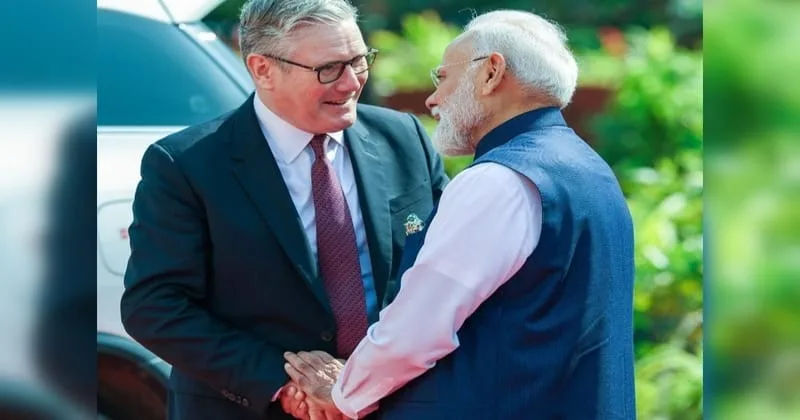
British Prime Minister Keir Starmer, who concluded his visit to Mumbai yesterday, described the agreements as clear evidence of the deepening strategic relationship between the UK and India. During his visit, the Royal Navy’s Carrier Strike Group, led by HMS Prince of Wales, conducted a joint naval exercise with the Indian Navy’s INS Vikrant in the Indian Ocean. After his meeting with Prime Minister Narendra Modi, Starmer remarked that the UK-India trade deal would serve as a “launchpad for closer ties” in trade, investment, and technology.
The bilateral trade deal signed between the two nations last July was hailed as a milestone in economic cooperation. During the Mumbai visit, Starmer was accompanied by over 100 CEOs, entrepreneurs, university vice-chancellors, and cultural leaders, making it the UK’s largest-ever trade delegation to India. Sources indicate that Starmer and Modi also discussed global geopolitical developments, including the ongoing Russia-Ukraine war. The British Prime Minister is reported to have raised the issue of India’s crude oil imports from Russia during their talks. Starmer further underlined that India is poised to become the world’s third-largest economy by 2028, underscoring the importance of stronger bilateral engagement.
Keir Starmer received a grand welcome in Mumbai, reflecting the significance of the visit for both nations. During his engagements, he announced that more UK universities would soon open campuses in India, expanding educational and research collaboration. Under the new India-Britain trade agreement, the UK will reduce import taxes on goods from India, including clothing, footwear, jewellery, and frozen seafood. In return, India will lower duties on imports of Scotch whisky, cosmetics, medical devices, and luxury cars from Britain. These reciprocal concessions are expected to boost trade volumes and benefit industries on both sides. The series of agreements and announcements during Starmer’s visit highlight a new phase in UK-India cooperation, anchored in shared economic interests, defence collaboration, and a commitment to long-term strategic partnership.