Karwa Chauth is one of the most cherished and significant festivals for married Hindu women, celebrated with deep devotion, tradition, and love. Symbolising marital fidelity, love, and the sanctity of marriage, this festival is observed with great enthusiasm across India, especially in the northern states.
On this day, married women observe a strict fast, Nirjala Vrat, abstaining from both food and water from sunrise until moonrise. The fast is believed to bring long life, good health, and prosperity to their husbands, making it a spiritual act of love and dedication.
According to Drik Panchang, Karwa Chauth in 2025 falls today. There was some confusion this year regarding the exact date due to the Chaturthi tithi spanning two days. The tithi begins late at 10:54 pm on October 9, and ends at 7:38 pm on October 10. Since the fast is observed on the day when the Chaturthi tithi is active during the daytime, October 10 is the correct date for the observance.
Puja Muhurat and Moonrise Time
Karwa Chauth Puja Muhurat: 5:57 pm – 7:11 pm
Fasting Duration: Begins at 6:19 am and ends at moonrise
Moonrise Time: Approximately 8:13 pm
The puja is performed during the auspicious evening muhurat. The fast is broken only after the moon is sighted and rituals are completed.
Karwa Chauth is deeply rooted in belief and tradition. It is believed that Maa Parvati observed a similar fast to win the love and companionship of Bhagwan Shiva. Inspired by her devotion, married women observe this fast seeking blessings for their husband’s longevity and the well-being of their families.
Women also worship Bhagwan Shiva, Maa Parvati, Bhagwan Ganesha, and Karwa Mata on this day, praying for a happy, harmonious, and prosperous married life.
Karwa Chauth Rituals
Sargi: The day begins before sunrise with a meal known as Sargi, traditionally prepared by the mother-in-law. It includes fruits, sweets, dry fruits, and other nourishing items to sustain the woman throughout the fast.
Nirjala Vrat (Fasting): From sunrise, women observe a complete fast without water or food. This intense fast continues until moonrise.
Puja (Evening Rituals): In the evening, women dress in festive traditional attire and gather with friends and family for the Karwa Chauth Puja. They listen to the Karwa Chauth Katha, a sacred story explaining the festival’s origin and spiritual meaning.
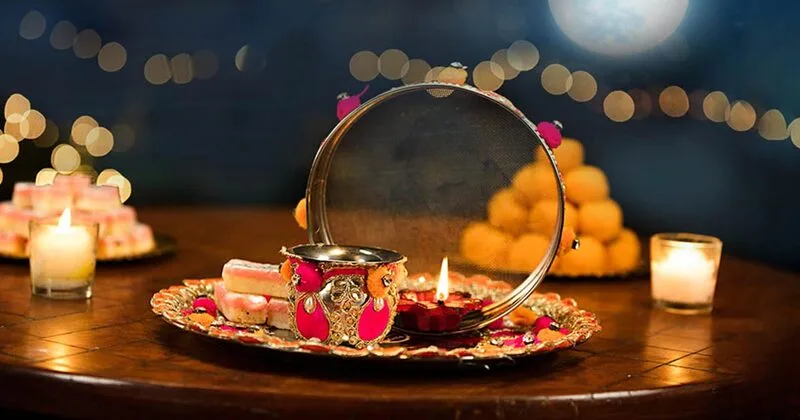
Moon Sighting and Breaking the Fast: Once the moon is visible, women perform rituals by viewing the moon through a sieve and then looking at their husband’s face. Water (argha) is offered to the moon, and the fast is broken, usually with the husband giving the first sip of water and bite of food.
Cultural and Social Importance
Karwa Chauth is more than a fast, it’s a celebration of love, faith, and togetherness. The festival strengthens the bond between couples and reaffirms family and community ties.
Across India, it’s also an occasion for social gatherings, the exchange of gifts, and wearing traditional attire. In recent years, modern adaptations such as virtual celebrations and group fasts have made the festival more inclusive, while still keeping its spiritual essence intact.
Karwa Chauth remains a timeless expression of love, devotion, and cultural pride. Through its rituals and celebrations, the festival honours the sacred bond of marriage, reinforces faith and commitment, and brings families closer. As the moonlight glows in the night sky, Karwa Chauth continues to illuminate hearts with enduring love, trust, and the beauty of Indian traditions.