The Uttar Pradesh government is set to organise Swadeshi Melas across all 75 districts from October 9 to 19, aligning with Prime Minister Narendra Modi’s renewed call for a ‘Swadeshi’ mass movement in response to the high tariffs imposed by the United States.
The ten-day festival of indigenous enterprise marks the largest coordinated state-level initiative to promote local artisans, micro-industries, and self-help entrepreneurs, showcasing Uttar Pradesh’s economic and cultural diversity ahead of Deepawali.
Announcing the initiative, Rakesh Sachan, Minister for MSME, Khadi, Handloom, and Textiles, said the state’s vision was deeply intertwined with PM Modi’s ‘Vocal for Local’ and Viksit Bharat missions.
“The initiative aims to give a robust platform to micro, small and medium enterprises (MSMEs), along with khadi, handloom, handicraft, and ODOP (One District, One Product) artisans,” Sachan stated. “Buying local this Deepawali will not only brighten homes but also empower lakhs of rural artisans and entrepreneurs. This is the first time such a massive effort is being rolled out simultaneously across the state,” he added.
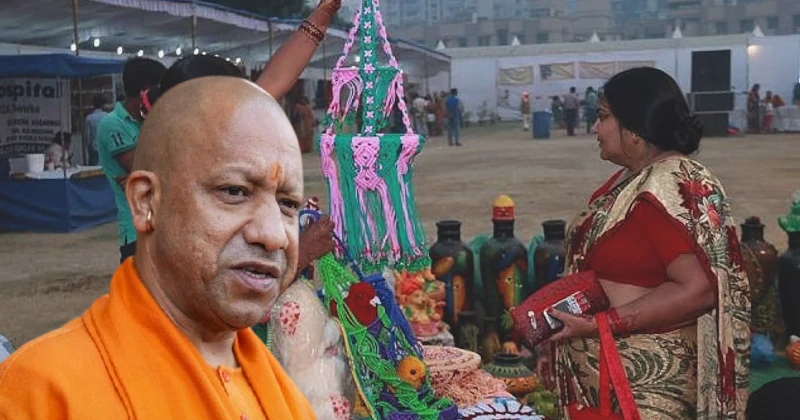
The Swadeshi Melas will be held in high-footfall zones across every district, featuring handcrafted goods, khadi products, textiles, pottery, brassware, wooden artifacts, and ODOP specialties. Alongside stalls, visitors can experience regional art performances, craft demonstrations, and traditional exhibitions that bring Uttar Pradesh’s living heritage to life.
Officials revealed that special logistical support including free stalls, transportation assistance, and marketing facilities — has been arranged to enable participation from remote and rural artisans, ensuring inclusivity beyond urban clusters. Temporary tent structures, vibrant decor, and open-air setups will be used to accommodate the expected surge in visitors.
Chief Minister Yogi Adityanath will inaugurate the Gorakhpur Mela on October 10, setting the tone for the state-wide celebration of local enterprise. Other districts will witness launches by ministers and MLAs, reflecting the government’s push to make the Swadeshi movement a mass participatory event. In Lucknow, the Mela will take place within a university campus, blending tradition with youthful energy.
The initiative follows the resounding success of the Uttar Pradesh International Trade Show (UPITS 2024) held in Greater Noida from September 25 to 29, which attracted over 5 lakh visitors, 2,200 exhibitors, and generated business inquiries worth Rs 12,500 crore from international buyers representing more than 80 countries.
Sachan highlighted how such platforms are integral to Uttar Pradesh’s evolving industrial narrative, “The Swadeshi Melas are not just exhibitions they are instruments of social and economic transformation. Every purchase made here directly uplifts a family dependent on traditional crafts.”
The event also complements the CM Yuva Udyami Yojana, under which over 95,000 young entrepreneurs have already received loans up to Rs 5 lakh for self-employment ventures. The fairs aim to boost their market reach and public visibility during the festive season.
Further, officials noted that the Swadeshi push aligns with PM Modi’s recent GST rate rationalisation, aimed at easing compliance and lowering tax burdens for small-scale industries a critical step in strengthening grassroots entrepreneurship.
The timing of the initiative coinciding with Deepawali and the global trade realignment triggered by US tariffs reflects India’s strategic pivot towards economic self-reliance and domestic value chains. The move carries both symbolic and practical significance, reaffirming the state’s leadership in implementing the central government’s ‘Make in India, Buy in India’ vision.
As Union Home Minister Amit Shah recently urged from Bastar, the Swadeshi movement is no longer a slogan but a national economic security imperative. His message urging 140 crore citizens to adopt local goods adds political heft to Uttar Pradesh’s efforts, transforming Deepawali 2025 into a festival of economic nationalism and cultural pride.
With melas lighting up every district, from Varanasi’s weavers to Moradabad’s metalworkers, Uttar Pradesh’s Swadeshi surge promises to be more than an economic event it is an assertion of Bharatiya identity, enterprise, and resilience. As Sachan concluded, “Every diya lit with a local product is a spark for Viksit Bharat. This Deepawali, we are not just celebrating light we are celebrating the hands that create it.”