The Reserve Bank of India (RBI) Governor, Shri Sanjay Malhotra, on Thursday (October 9) announced the launch of four next-generation fintech innovations at the Global Fintech Festival (GFF) 2025, reaffirming India’s leadership in digital payments and financial inclusion.
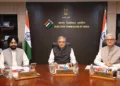
The four innovations, AI-based UPI HELP, IoT Payments with UPI, Banking Connect, and UPI Reserve Pay, were unveiled in the presence of Nandan Nilekani, co-founder and Chairman of Infosys and advisor to NPCI on Innovations & Public Policy, and Ajay Kumar Choudhary, Non-Executive Chairman of NPCI. Senior bankers, fintech founders, and representatives from global digital finance ecosystems also attended the event.
Governor Sanjay Malhotra, while addressing the gathering, said, “India’s digital payments journey is now entering its next phase, intelligent, inclusive, and interoperable. These innovations are designed to simplify financial access and enhance user experience while ensuring security and transparency.”
At the heart of the announcements was AI-based UPI HELP, an intelligent support system built on NPCI’s Small Language Model (SLM). This AI-powered assistant is designed to transform complaint redressal and mandate management for UPI users. It enables users to check transaction status, raise and track complaints, manage mandates, and receive contextual guidance, all within a unified interface.
Initially available in English, the system will soon expand to major Indian languages to ensure accessibility across regions and demographics. The model, trained on real payment data, is equipped with robust privacy safeguards to ensure user data confidentiality. For banks and payment aggregators, UPI HELP will help reduce repetitive complaint tickets, streamline grievance redressal, and enhance turnaround time.
Commenting on the development, Nandan Nilekani said, “UPI HELP embodies the fusion of AI and public digital infrastructure, it’s India’s way of making digital finance not just accessible, but truly intelligent.” The launch marks India’s entry into AI-driven fintech infrastructure that leverages domestic language models to make financial literacy and access more inclusive and contextual.
The IoT Payments with UPI feature, another major innovation, extends the reach of digital payments beyond smartphones to a wide range of connected devices such as smart cars, TVs, wearables, and home appliances. This new functionality enables user-authorised IoT devices to initiate UPI payments based on voice commands, text inputs, contextual triggers, or predefined routines. For instance, smart cars can automatically pay for fuel or EV charging, smart TVs can process subscription payments, and smart glasses can make instant retail transactions on the go. Built on NPCI’s secure IoT payment framework, the system ensures user consent, strong authentication, and transaction limits to maintain safety and trust.
Governor Malhotra remarked, “By merging IoT with UPI, we are unlocking the next frontier of convenience, making payments seamless, invisible, and secure.” This initiative is in line with the government’s Digital India vision, positioning India as a global leader in real-time, device-enabled payment ecosystems.
The third product, Banking Connect, developed by NPCI Bharat BillPay Limited (NBBL), introduces long-awaited interoperability in net banking. This innovation brings to life RBI’s Payments Vision 2025 of “E-payments for Everyone, Everywhere, Everytime” by addressing challenges such as fragmented integrations, inconsistent merchant onboarding, and complex settlement processes.
Banking Connect offers a unified merchant onboarding and settlement system, ensures seamless interoperability between banks and payment aggregators, and provides mobile-first QR and intent-based payment options. With just a single integration, payment aggregators can connect to all participating banks, significantly improving speed and efficiency.
“Banking Connect will do for net banking what UPI did for mobile payments, unify, simplify, and empower,” said Ajay Kumar Choudhary. For merchants, the platform offers standardised dispute resolution, faster settlements, and greater transparency, creating a more efficient digital payments environment.
The fourth and final innovation, UPI Reserve Pay, also known as Single Block Multiple Debt (SBMD), offers a revolutionary approach to managing credit card and credit line limits through UPI. The feature allows users to block a portion of their credit for specific categories such as food delivery, e-commerce, or mobility apps, and make repeat payments with full visibility of their utilisation and limits.
This system brings transparency, control, and flexibility to digital credit management while reducing risks of overspending and fraud. Users can track both blocked and utilised credit in real time, manage authorisations across UPI and merchant apps, and streamline recurring transactions securely.
Governor Malhotra described the feature as “a step toward building credit discipline and empowering consumers to make secure, informed choices.” By linking UPI with pre-sanctioned credit lines, Reserve Pay strengthens India’s financial inclusion agenda and enhances consumer trust in digital commerce.
Collectively, these four innovations reflect India’s vision of building a globally competitive, technology-led financial ecosystem that prioritises both innovation and inclusion. With NPCI as the technological backbone and the RBI providing regulatory direction, the country continues to lead the global digital payments transformation.
Concluding the event, Nandan Nilekani said, “This is not just fintech innovation, this is India setting the global standard for how technology and finance can serve society.” With the rollout of UPI HELP, IoT Payments, Banking Connect, and Reserve Pay, India is positioning itself at the forefront of AI-driven, interoperable, and IoT-enabled financial solutions that will define the next era of digital growth.
The National Payments Corporation of India (NPCI), established by the RBI and Indian Banks’ Association (IBA), serves as the umbrella organisation for retail payment and settlement systems in India. It has pioneered products such as UPI, RuPay, IMPS, AePS, and e-RUPI, revolutionising India’s digital payments landscape. NPCI’s subsidiaries, NPCI International Payments Limited (NIPL), NPCI Bharat BillPay Limited (NBBL), and NPCI BHIM Services Limited (NBSL), continue to drive innovation and financial inclusion by ensuring secure, scalable, and interoperable digital solutions.