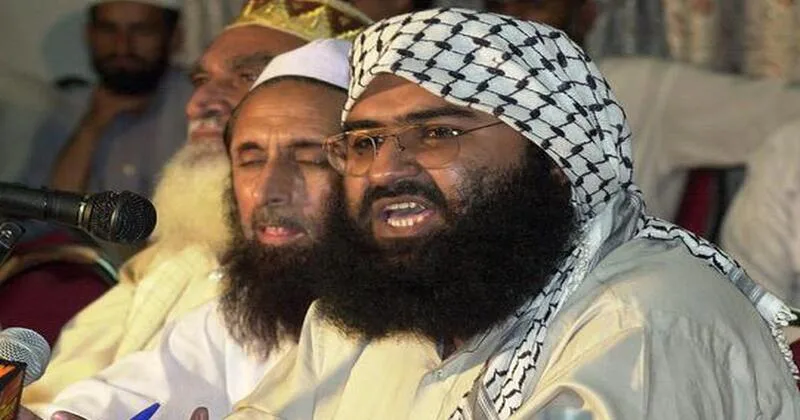
After being decisively crushed by India in Operation Sindoor, the Pakistan-based terrorist organization Jaish-e-Mohammed (JeM) has been unable to regain its footing. The Indian airstrike destroyed its headquarters at Markaz Subhanallah in Bahawalpur, Pakistan, killing several family members of its chief, Masood Azhar. There are reports suggesting that Azhar is currently hiding in Afghanistan. Despite these severe setbacks, Jaish-e-Mohammed is attempting to re-emerge and reorganize its operations.
As part of its revival strategy, the terror outfit has announced the formation of its first women’s wing, named ‘Jamaat-ul-Mominath’, which is led by Masood Azhar’s sister, Sadia Azhar. On May 7, Indian forces conducted a deep strike into Bahawalpur, nearly 100 kilometres inside Pakistan’s Punjab province, during which Sadia Azhar’s husband was reportedly killed. The creation of the women’s unit was later made public through a letter issued in the name of Maulana Masood Azhar, outlining its objective of reviving the group’s activities. Recruitment for the unit began in Bahawalpur on October 8.
Economically disadvantaged women and wives of JeM activists are being recruited into the women’s wing from the group’s bases in Bahawalpur, Karachi, Muzaffarabad, Kotli, Haripur, and Mansehra. The organization is promoting the new wing to facilitate grassroots recruitment, ideological propagation, and psychological warfare. To achieve this, Jamaat-ul-Mominath has launched campaigns through social media platforms, WhatsApp groups, and networks of affiliated madrasas across Pakistan. For the first time in its history, Jaish-e-Mohammed is involving women in its operational structure, marking a shift after India’s robust military response during Operation Sindoor. The decision to establish a women’s brigade was reportedly taken jointly by Masood Azhar and his brother Talha al-Saif.
Traditionally, JeM has refrained from including women in combat roles or armed jihad. However, following the devastating blow from Operation Sindoor, Azhar and his close associates have altered this long-standing policy. While groups such as ISIS, Boko Haram, Hamas, and the LTTE have historically deployed women in suicide missions and armed operations, South Asian extremist outfits like Jaish-e-Mohammed, Lashkar-e-Taiba, and Hizbul Mujahideen had previously avoided doing so.
Reports indicate that the women’s wing of Jaish-e-Mohammed is already operating through online networks in Jammu and Kashmir, Uttar Pradesh, and certain parts of Southern India. The group’s outreach is primarily digital, aiming to spread radical ideology via WhatsApp and other social media platforms.The new unit seeks to exploit religious sentiment to recruit women for extremist activities. The propaganda materials, often emotional in tone, are designed to attract educated urban Muslim women and are laced with religious imagery, including visuals of Mecca and Medina.
Jaish-e-Mohammed, which carried out the 2001 Indian Parliament attack and the 2019 Pulwama suicide bombing, suffered immense losses in India’s retaliatory strikes under Operation Sindoor. Ten members of Masood Azhar’s family and four close associates were killed, including his elder sister, her husband, nephew, wife, niece, and five children. The creation of Jamaat-ul-Mominath marks Jaish-e-Mohammed’s latest attempt to rebuild its network and expand its influence after facing one of the most severe blows in its history.