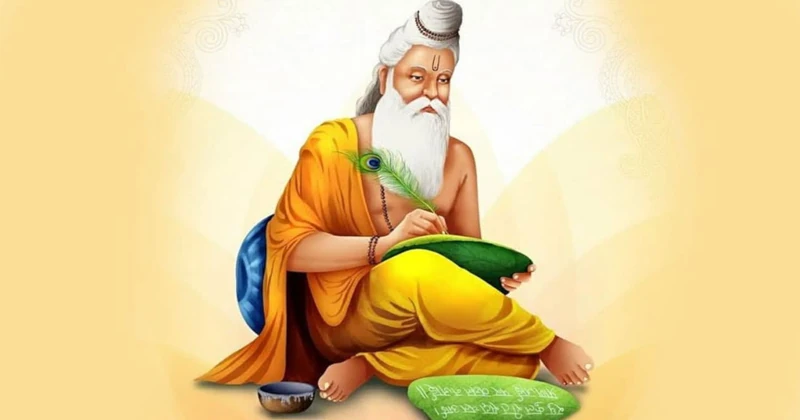
The birth anniversary of Maharishi Valmiki, the revered sage and poet, is a powerful reminder of the values of social equality and upliftment embedded in his life story. In a society that continues to grapple with divisions of caste, class, and privilege, the life and teachings of Valmiki hold immense relevance. His transformation from a feared dacoit to a revered sage symbolises the possibility of change, redemption, and dignity for every human being, irrespective of their past or social standing. Through this transformation and his literary contributions, particularly the Ramayana, Maharishi Valmiki laid the foundation for an inclusive moral and spiritual framework in Indian society.
Valmiki’s early life, as recorded in many texts and traditions, paints a picture of a man who was once entangled in sin and violence. He was known by the name Ratnakar and lived the life of a robber, attacking and looting travellers to support his family. However, a life-changing moment arrived when he encountered the sage Narada, who questioned his actions and asked him whether his family would share the consequences of his sins. This question triggered deep reflection in Ratnakar, leading to profound remorse and a spiritual awakening. He engaged in deep penance and meditation, eventually emerging as Valmiki, the first poet or Adi Kavi of Indian literature. This transformation has powerful socio-religious implications—it teaches that no individual is beyond redemption, and everyone deserves the opportunity to rise above their circumstances, regardless of their origins.
The essence of Valmiki’s story lies in the principle of human equality and the belief that every individual possesses the potential for greatness. In a society stratified by caste hierarchies, his life stands as a challenge to rigid social structures. Valmiki did not come from the so-called upper castes, and yet he became the author of the Ramayana, one of the most sacred and influential texts of Hinduism. His elevated status in India’s cultural and spiritual history is a testament to the fact that knowledge, wisdom, and devotion transcend caste and birth. By becoming a sage and the spiritual guide of none other than Bhagwan Ram’s sons, Lava and Kusha, Valmiki demonstrated that one’s karmas, actions, and inner transformation are what truly define a person, not their societal label.
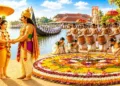
The observance of Valmiki Jayanti has gained prominence over the years, particularly among communities that see him as a symbol of dignity, resilience, and empowerment. It is not merely a ritualistic celebration; instead, it has evolved into a socio-cultural movement that asserts the right of all communities to participate equally in religious and social life. The day serves as a rallying point for discussions around social justice, equity, and the need to dismantle caste-based discrimination. In many parts of India, processions, recitations of the Ramayana, and public gatherings mark the day, often with the underlying message that spiritual greatness is not the monopoly of any one group.
Moreover, Valmiki’s life and works also reflect a deep empathy for the marginalized and the suffering. His Ramayana is not only a tale of divine heroism but also a narrative infused with human emotions, moral dilemmas, and social messages. Valmiki’s portrayal of characters like Sita, who undergo immense hardship and societal judgment, reflects his sensitivity to issues of justice, morality, and compassion. His poetic rendering of the Ramayana, written in the form of shlokas, made the text accessible and relatable to a wider audience, transcending the elite Brahminical traditions of Vedic knowledge. In doing so, Valmiki democratised spiritual wisdom and contributed to the upliftment of the common people.
In today’s context, where caste-based inequalities and social exclusion continue to plague many communities, Valmiki Jayanti assumes even greater importance. It invites society to reflect on how far we have come in achieving the ideal of equality and how much further we need to go. Celebrating Valmiki is not just about honouring a historical figure but about embracing a vision of society where every individual is valued for their inherent dignity, and not judged by their lineage or occupation. Educational institutions, civil society organisations, and government bodies can use this day as an opportunity to promote inclusive values, raise awareness about discrimination, and highlight the contributions of marginalised communities to the nation’s cultural fabric.
The symbolic importance of Valmiki in Dalit and backward communities cannot be overstated. For many, he is not just a saint but a forebear of social assertion. In a society where their voices were often silenced, Valmiki’s prominence offers a counter-narrative—one of visibility, voice, and respect. The proliferation of Valmiki temples and the growing popularity of Valmiki Jayanti parades and cultural programs are signs of this reclaiming of historical identity. They represent a collective aspiration for dignity and a reminder that spirituality belongs to all, not just a select few.
At the same time, there is a need to prevent the tokenistic celebration of Valmiki Jayanti. The real message lies not in the ritual but in the values his life embodies. Social equality is not achieved through annual observances alone—it requires structural change, inclusive policies, and a shift in public attitudes. Valmiki’s story should inspire educators to make their classrooms inclusive, encourage policy-makers to address systemic discrimination, and motivate religious institutions to open their doors to all without prejudice. His life is a testament to humility, perseverance, and the transformative power of self-awareness. These are values that can and should be integrated into the moral compass of society.
Furthermore, the presence of Maharishi Valmiki in India’s spiritual narrative challenges the often-exclusive retelling of religious history. It expands the boundaries of who is considered a saint, a guru, or a messenger of dharma. By including voices like Valmiki’s in our collective consciousness, we acknowledge that wisdom and truth are not the preserve of the powerful but often arise from the most unexpected quarters. It compels us to question the caste biases that persist in our cultural, religious, and social institutions and to move towards a more egalitarian and inclusive vision of India.
In the realm of literature and arts, Valmiki’s contribution as the Adi Kavi also opens discussions about representation and ownership of narratives. As the first poet of India, Valmiki gave voice to stories that would shape generations to come. That he came from a socially marginalised background yet rose to become a literary giant is a lesson in the transformative power of storytelling. Literature, like society, should be inclusive—allowing room for diverse experiences, especially those from the margins. Valmiki’s work invites us to nurture and honour the creative expressions of all communities and to ensure that platforms are available for everyone to tell their stories.
Valmiki Jayanti, therefore, must be viewed as more than a day of remembrance. It is a call to action—a call to uphold the ideals of equality, justice, and compassion that Valmiki’s life symbolises. It urges us to reflect on our social systems, to confront the hierarchies that divide us, and to create a world where no one is denied respect or opportunity because of their birth. As India continues to evolve as a democratic and pluralistic society, the values exemplified by Maharishi Valmiki will remain crucial in shaping a just and inclusive future.
In conclusion, the celebration of Valmiki Jayanti is a powerful socio-religious event that bridges the gap between spirituality and social reform. It honours a figure who defied societal norms and redefined the boundaries of religious and literary excellence. Through his life and works, Valmiki teaches us that true greatness is not inherited but earned through self-realisation, devotion, and service to humanity. His legacy challenges us to rise above prejudice and strive for a society where every individual is valued equally. In remembering Valmiki, we not only pay homage to a sage but also reaffirm our commitment to the ideals of social equality and human dignity.