In recent days, the renewed meeting between Donald Trump and Benjamin Netanyahu has drawn attention not only for its timing but also for the promises it carries. These promises are ambitious and hopeful, yet they contain contradictions concerning peace in West Asia. Much of the discussion has focused on the Abraham Accords, the normalisation agreements initiated in 2020, which many once believed could lead to a fair resolution between Israel and the Palestinians. However, can the Accords truly address a question as old and painful as the issue of Palestine? The meeting sharpens this question.
The Abraham Accords represented a new diplomatic approach. Instead of insisting that Israeli-Palestinian peace be the basis for Arab normalisation, they reversed the order. Israel would normalise relations with its neighbours, and this engagement might create new incentives and pressures to tackle the Palestinian issue. The thought was that trade, technology, tourism, and security cooperation, areas of shared interest that could gradually shift perspectives on all sides. However, the Accords were never intended to replace Palestinian self-determination. Their structure, which emphasised economic integration and gradual diplomacy, always left the deeper national question unanswered.
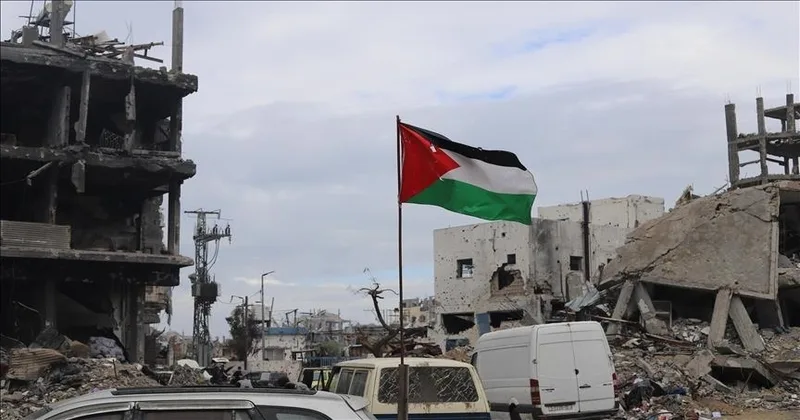
Now, in the aftermath of the devastating war in Gaza, with a rising death toll, mass displacement, deep trauma, and global outrage, the promise of the Accords faces significant challenges. Arab public opinion has grown increasingly uneasy. Even some of the states that signed the Accords are indicating red lines, warning Israel that ongoing expansion or annexation would jeopardise the diplomatic support they provide. The Trump-Netanyahu meeting has further fueled the discussion. Trump suggested expanding the Accords to include Iran, arguing that building peace through relationships helps nations overcome animosities. Netanyahu, meanwhile, has shown both openness to diplomatic frameworks and reluctance to give up security control, particularly in Gaza.
The peace plan introduced after the meeting—a roadmap for Gaza consisting of 20 or 21 points which relies on assumptions that echo the goals of the Abraham Accords. It outlines a demilitarised Gaza, a technocratic Palestinian administration under international oversight, and a security framework involving Israel, international forces, and newly trained Palestinian police. Additionally, the plan proposes that once reforms take hold, a credible path to eventual Palestinian statehood may emerge. This serves as an invitation for the Palestinian side to view normalisation and statehood not as mutually exclusive but potentially sequential.
However, even though these proposals seem promising, they face a tough reality. Many Palestinians see normalisation without justice as a betrayal. Their cause carries a moral and emotional urgency that cannot be postponed. The power imbalance is stark: Israel holds significantly more physical control, military power, and diplomatic support. Without real concessions on territory, rights, the right of return, and fundamental sovereignty, any diplomatic efforts may be seen as merely a cover for ongoing occupation.
Moreover, the proposed plan does not clarify who will truly control Gaza during the transition or how Palestinian voices will be genuinely included, especially those outside the current frameworks. Netanyahu has indicated that Gaza’s civilian administration would not be led by Hamas or the Palestinian Authority but by “those committed to genuine peace.” This leaves room for technocrats, international actors, and potentially Israel’s security interests to take charge. Critics argue that the plan lacks guarantees for basic rights protections and does not adequately address the root grievances that have led to decades of resistance.
However, it would be unjust to dismiss the Abraham framework entirely. The context has shifted: the war, the scale of suffering, regional dynamics, and global public opinion all inject new moral energy into peace efforts. The original Accords have endured through the Gaza conflict, at least at the state level, because states still see strategic value in regional integration, security cooperation, and economic resilience. The meeting between Trump and Netanyahu, along with Arab pressure urging Netanyahu to support the plan. That is to avoid West Bank annexation, suggesting that regional players still believe in the power of diplomacy. The UAE, in particular, has indicated that ongoing normalisation depends on progress regarding the Palestinian issue. In this sense, the Accords may be evolving from a sideline into a potential framework for a more inclusive, regionally engaged peace process.
Still, for this framework to be effective, it must be rooted in empathy and justice. Any agreement that overlooks the deep wounds of Palestinian life—the loss, the dispossession, the longing for dignity—risks failing entirely. A compassionate approach must guide negotiations, engaging not only through technical plans and security protocols but also through listening, acknowledging pain, and fostering trust among people, not just between states. The human experiences, for instance, a mother in Gaza searching for her child, the Israeli family held hostage, the children in refugee camps must remain central, rather than being abstracted into maps or negotiated agreements.
In this light, the Accords might contribute not by providing a just solution to the Palestinian question but by acting as a bridge. This could create a wider pathway through which Palestinians and Israelis can reconnect in their shared regional space. When a Palestinian scientist, student, or entrepreneur has the opportunity to travel, collaborate, and share experiences, and when younger generations can envision coexistence as possible, political creativity will flourish. Yet, these soft advances must be paired with hard guarantees: borders, access, sovereignty, and accountability measures.
Turning to India’s stance: New Delhi has watched these developments with cautious interest, balancing its strategic imperatives with its historic commitments. India has welcomed the Abraham Accords as part of reforming the West Asian order, while reiterating its “traditional support” for the two-state solution. The Accords have afforded New Delhi fresh diplomatic space, such as deepening ties with Israel, with Gulf states, and with the U.S., without forcing it into an exclusive bloc. The I2U2 format (India, Israel, UAE, U.S.) is often cited as a product of that latitude. But though India moves closer to Israel on technology, security, and energy, it has not abandoned support for Palestinian statehood: India recognised Palestine in 1988, maintains representative ties with the Palestinian Authority, and continues to voice support for UN resolutions and dialogue.
In recent global fora, India has called for diplomacy, hostages’ release, protection of civilians, and an end to hostilities. New Delhi’s policy is shaped by three realities: one, its energy and diaspora ties with the Gulf; two, the imperative to keep channels open with Israel (as a technology and defense partner); and three, the moral and political weight of its historical sympathy with the Palestinian cause.
India, positioned between moral belief and strategic necessity, can serve as a bridge: not an enforcer, but a convener. Its voice matters most if it insists that peace cannot be built on silence. In the end, any durable peace must be humane. Until the scores balance not just in maps but in lives, the Abraham Accords remain a tool, not a cure.
So, are the Abraham Accords, in their renewed form, the solution to Palestine? Not by themselves. However, they might evolve into a framework that allows parts of the solution to emerge if they are shaped by justice rather than convenience, and if the Palestinian voice is not merely acknowledged but empowered. The meeting between Trump and Netanyahu has reopened possibilities; these possibilities must focus on human dignity, fairness, and the understanding that peace cannot be built on erasure. While the Accords can open doors, they cannot walk through those doors for those who wait on the other side.