At 6 am on September 5, US President declared on Truth Social: “It looks like we have lost India and Russia to China. Hope their future will be good.” The statement was blunt and tinged with resignation, coming amid a 50 percent tariff wall that Washington had erected against Indian exports.
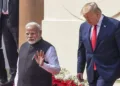
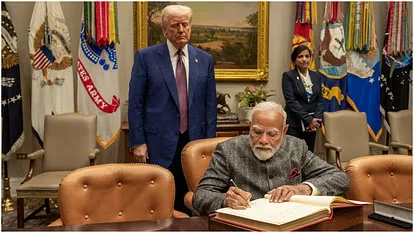
Yet, by evening, Trump was smiling at a White House press conference, hailing Narendra Modi as “a great Prime Minister” and “a good friend.” He added that he was always ready to “reset ties” with New Delhi, though he reiterated his disappointment with India’s Russian oil imports.
The next morning, Modi responded with his own dose of diplomatic courtesy: “I sincerely appreciate President Trump’s sentiments and his thoughts about our relations, and I fully support them. India and the US share a positive, visionary and global diplomatic partnership.”
External Affairs Minister S. Jaishankar later underlined that Modi values the US partnership deeply and that ties with Trump have always been personally cordial.
The quick exchange raised eyebrows worldwide. What had forced such a sharp pivot? Was it just Trump’s erratic style, or a calculated move to prevent India from drifting further towards Moscow and Beijing?
Why did relations sour in the first place?
The cracks in India-US ties under Trump are not new. His “America First” policy made him suspicious of partners who resisted his demands.
India refused to allow the entry of US genetically modified crops and milk from cattle raised on non-vegetarian diets, products that could have hurt Indian farmers and consumers. Frustrated, Trump imposed tariffs without a trade deal in place.
The tariff spiral
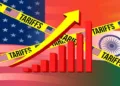
By August this year, Washington’s tariff spiral had reached new heights. On August 6, Trump announced a 25 percent “penalty tariff” citing India’s oil imports from Russia. A day later, the US imposed another 25 percent tariff on Indian goods, effective from August 27, raising the effective barrier to 50 percent.
India’s response was sharp but calculated. The Ministry of External Affairs declared: “Our oil purchases ensure energy security for 1.4 billion Indians. India will take every necessary step to protect its national interests.”
Prime Minister Modi went further, framing the standoff as a fight for sovereignty: “India will never compromise on the interests of its farmers, livestock owners and citizens. Personally, I may have to pay a heavy price, but I am ready for it.”
Defence Minister Rajnath Singh also weighed in, without naming Trump: “Some people cannot stand India’s development. They think they are the bosses of everyone. But how can they accept India rising so fast?”
Clashes over Pakistan and Kashmir
The disputes were not limited to trade. Trump repeatedly inserted himself into South Asia’s conflicts, claiming to have mediated ceasefires between India and Pakistan. After Operation Sindoor, he even suggested that he deserved credit for “calming tensions.”
New Delhi bristled. For decades, India has maintained that Kashmir is strictly a bilateral issue with Pakistan. Reports later surfaced of a tense 35-minute phone call between Modi and Trump in which the Indian Prime Minister firmly rejected any third-party role.
The China-Russia-India factor
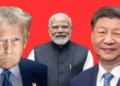
The timing of Trump’s U-turn is striking. Just days earlier, Modi attended the Shanghai Cooperation Organisation (SCO) summit in China alongside Xi Jinping and Vladimir Putin. Pictures of the three leaders standing together unsettled Washington.
Trump’s adviser Peter Navarro went so far as to call Modi’s presence with Xi and Putin “shameful,” accusing India of funding Russia’s war by buying its oil.
For the US, which has long sought India as a counterweight to China, the optics were worrying. Together, India, Russia and China represent over a third of the world’s population and nearly a third of global GDP in purchasing power terms. Their combined trade and military strength already rival, and in some areas surpass, that of the United States.
Trump’s friendlier words were partly driven by this fear. that if Washington keeps tightening tariffs and applying pressure, India may slip closer into the Russia-China orbit.
Trump’s contradictory style
Experts familiar with Trump’s style describe his diplomacy as transactional and unpredictable. He often mixes threats with friendly gestures, sometimes within hours.
Strategic expert Brahma Chellaney calls it a “pressure and reset” policy-hit hard with sanctions and words to show strength at home, then offer praise abroad to keep options open. Trump’s sudden praise of Modi fits this pattern.
Others point to domestic criticism inside the US. Former National Security Advisor John Bolton said Trump was pushing India away. National Security Adviser Jake Sullivan and Republican leader Nikki Haley also warned that alienating India was a strategic mistake. Trump’s softer remarks may be a tactical way to silence dissent at home.
Can words reset the relationship?
While Modi responded politely, seasoned diplomats caution against reading too much into tweets and soundbites. Former ambassador Navtej Sarna said a real reset requires mutual respect and trust, not just compliments.
Journalist Seema Sirohi, who tracks US-India relations closely, was quoted in media noting that Washington insiders view Trump’s tariffs as his “biggest mistake” in dealing with New Delhi. For now, both sides are keeping doors open but avoiding dramatic moves.
Notably, the US tariffs are hurting American businesses too, especially exporters dependent on India. This economic pressure, combined with strategic concerns about China, may eventually force Washington to ease its stance.
What next for tariffs and trade?
Despite Trump’s softer tone, his team continues to issue warnings. Treasury Secretary Howard Lutnick told Bloomberg that unless India stops buying Russian oil and joining blocs like BRICS, tariffs will remain. Peter Navarro repeated the same line.
India, meanwhile, has signalled it will not bow down. The Ministry of External Affairs has stressed that energy security for 1.4 billion people cannot be compromised. Modi too has said India will never abandon farmers or consumers to please foreign lobbies.
This leaves the future open-ended. India, however, shows no sign of backing down. Its oil imports from Russia continue, and its participation in BRICS and SCO signals a multipolar approach.
Donald Trump’s quick pivot from criticising India to praising Modi reflects his instinct for transactional diplomacy. But beneath the theatrics lies a deeper anxiety in Washington that India, long courted as a counterbalance to China, might drift towards Moscow and Beijing if pushed too hard.
For Modi, the exchange was an opportunity to reaffirm India’s independence while keeping doors open. The road ahead will likely see more turbulence, tweets, tariffs and tempers, but the fundamentals remain: India will guard its core interests, and the US will eventually realise it cannot afford to lose New Delhi.
(The views expressed in this article are solely those of the author who is a PhD in Political Communication from Indira Gandhi National Tribal University, Amarkantak)